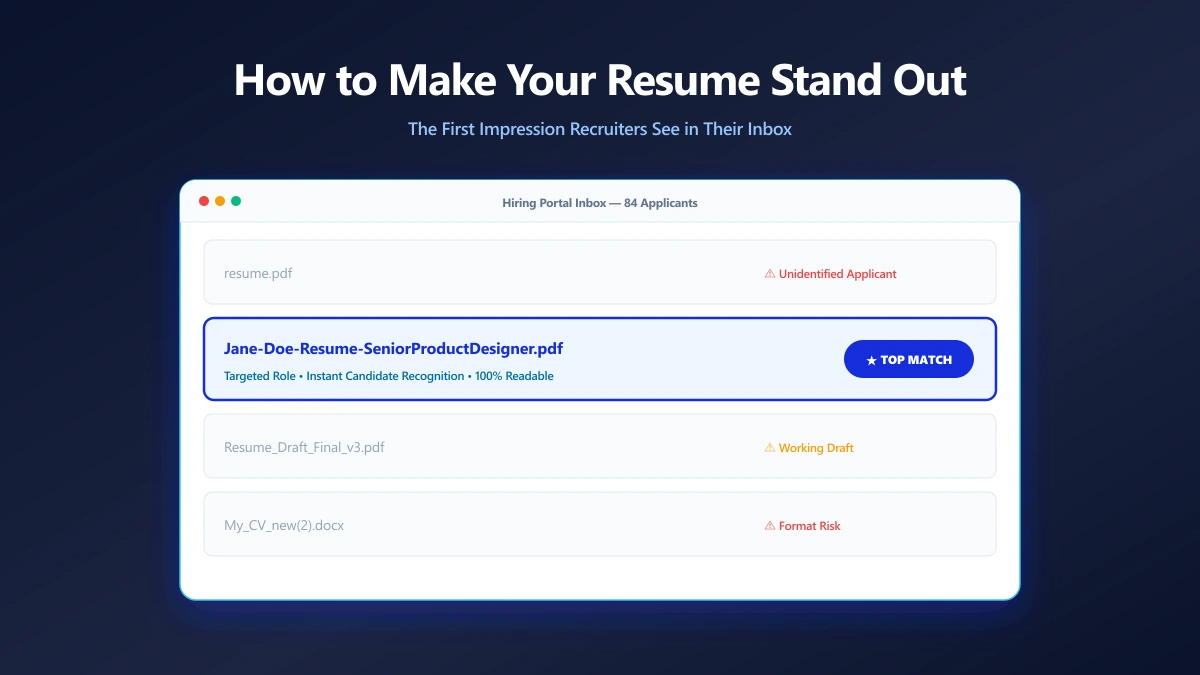
Will a Poorly Named Resume File Hurt My Job Chances?
Summary
An honest answer: what a bad filename actually costs you, what it does not, and which file mistakes genuinely end an application before it is read.
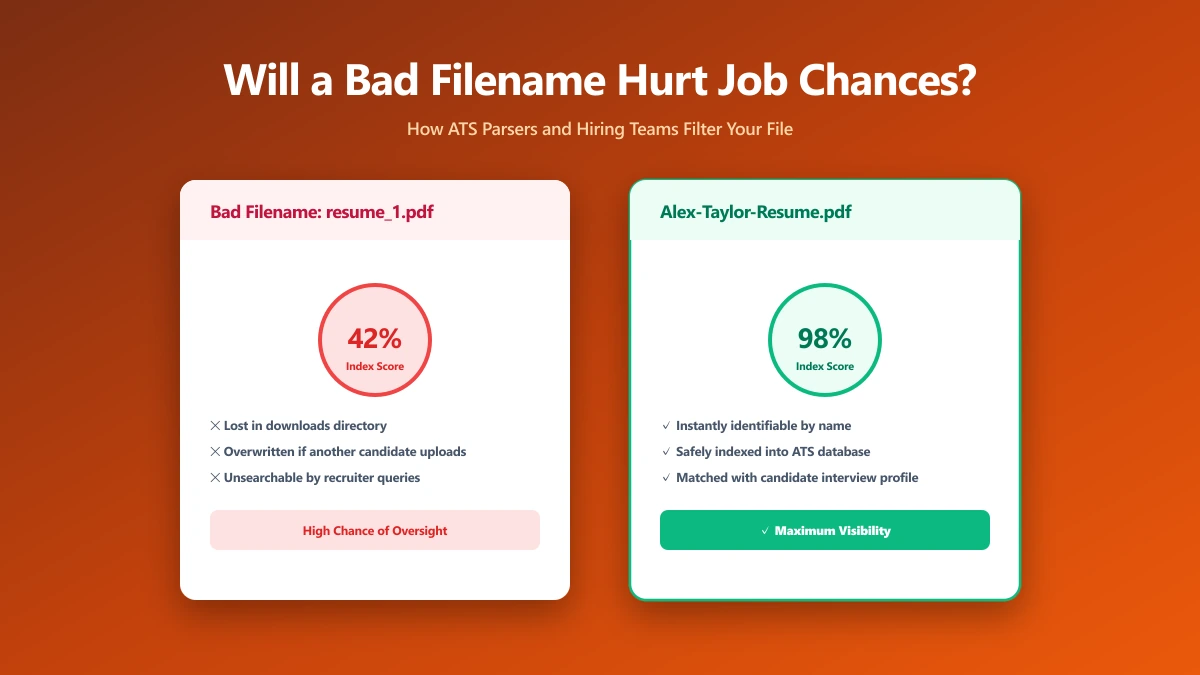
Short answer: rarely on its own, and never as much as career advice implies. But it is not nothing, and one related mistake genuinely does end applications.
It is worth separating the two, because the advice usually blurs them and leaves people anxious about the wrong thing.
What a Bad Filename Actually Costs You
No serious employer discards a strong candidate over a filename. What happens is quieter and harder to notice.
- ●You are harder to find again. A recruiter who wants to revisit your application has to open several files to locate it.
- ●You lose a small first impression, before anyone reads a word you wrote.
- ●In a close call between two similar candidates, presentation is one of the tiebreakers available.
None of that is fatal. All of it is avoidable in five seconds, which is why it is worth doing rather than worrying about.
What Genuinely Ends an Application
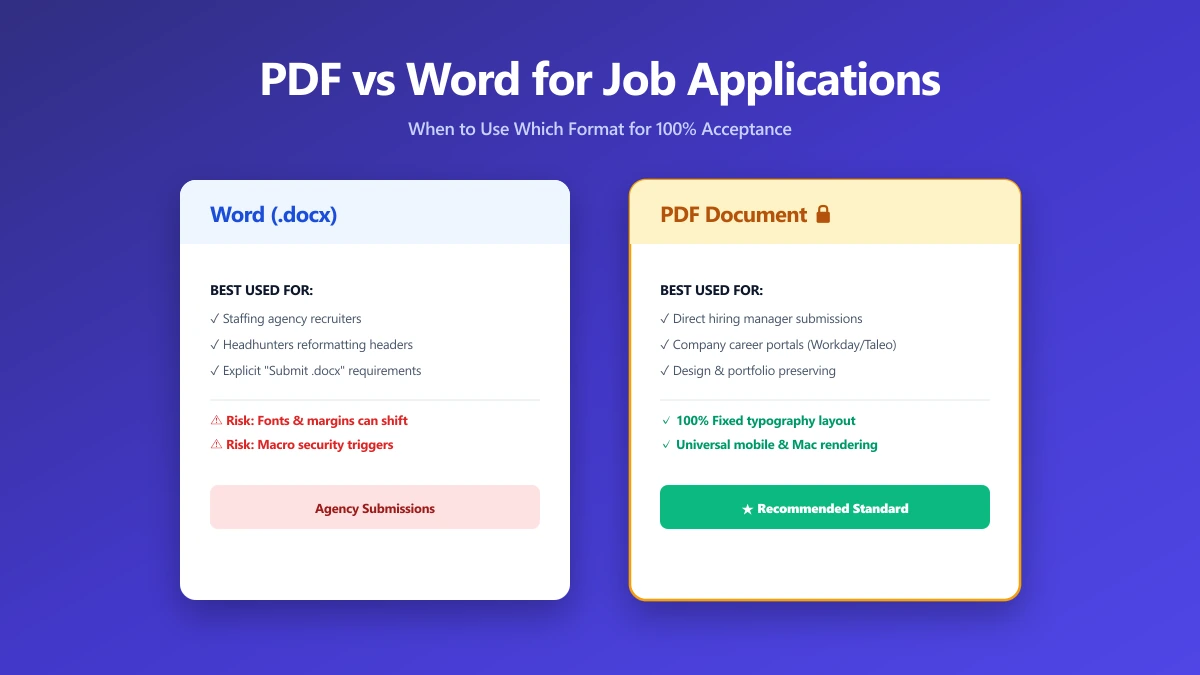
These are the file problems that stop your resume being read at all. They are mechanical, and unlike the filename they are not judgement calls.
| Problem | Consequence | Severity |
|---|---|---|
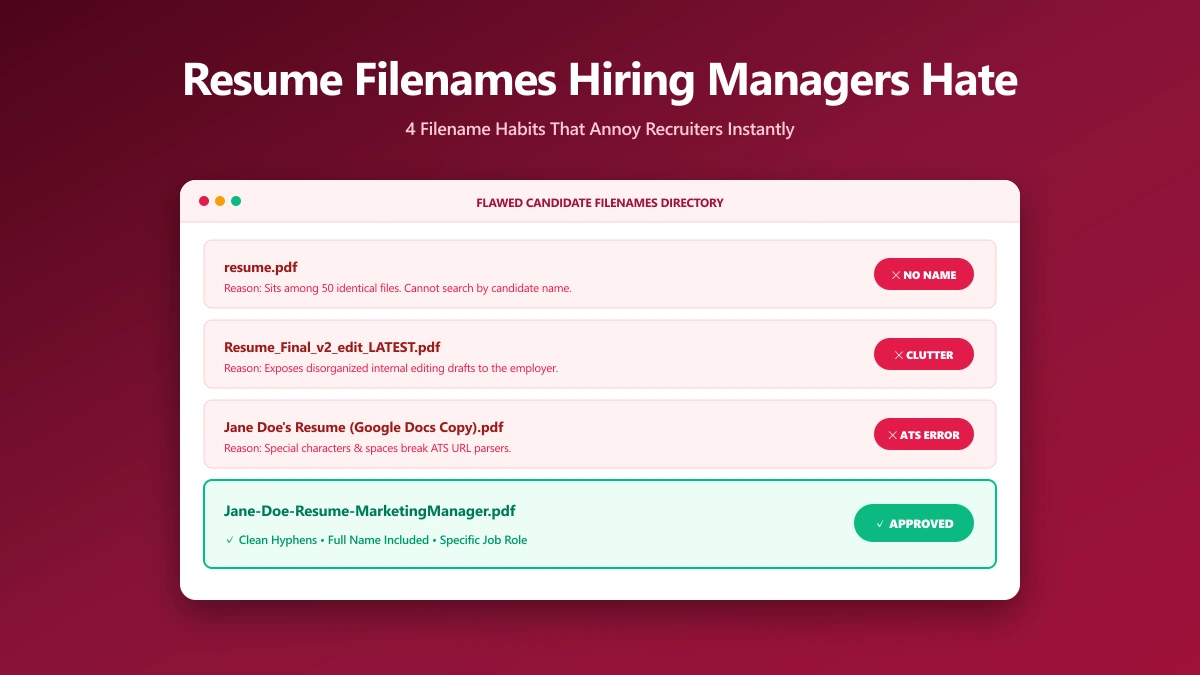
| Generic filename | Harder to find, weaker first impression | Minor |
| Version numbers in the name | Reads as careless | Minor |
| Naming a different employer | Signals you are applying elsewhere | Moderate |
| File over the upload limit | Upload rejected, no application submitted | Fatal |
| Wrong format for the portal | Upload rejected | Fatal |
| Resume exported as a flat image | Parses as an empty document | Fatal |
The pattern is clear enough. Filenames affect how you are perceived. Format and size affect whether you arrive.
The One Filename Mistake Worth Real Concern
Sending Resume-for-Acme.pdf to a company that is not Acme is the exception. It tells the reader something concrete rather than merely looking untidy.
The same information often hides in the file metadata, where you cannot see it. A PDF exported at work can carry your current employer in its author field.
Clear those fields with remove metadata or inspect them first in the metadata editor. Both run in your browser, so the file is not uploaded to be checked.
How Worried Should You Be?
If you have already applied with a generic filename, you have almost certainly not lost the role because of it. Rename it for the next application and move on.
If your file was oversized or in the wrong format, that is worth revisiting, because it may mean the application never arrived. Portals do not always make failures obvious.
Both are covered in the six-step check to run before uploading, and compressing the PDF fixes the size problem in seconds.
The Bottom Line
A poor filename costs you a little attention and a little polish. It does not cost you the job.
Spend your worry on the failures that stop the file arriving at all, and spend five seconds on the name while you are there. The formula is in what should I name my resume file.
Frequently asked questions
Can a bad file name get my resume rejected?
I already applied with resume.pdf. Should I resend?
What file mistakes actually stop an application?
Sources & references
This article was researched and written by Nikola, drawing on the following primary sources and documentation:
Ready to try it?
All tools run entirely in your browser, no uploads, no account required.
Compress PDF