
All Articles Center
Engineering guides on image compression, PDF tools, web performance, and zero-upload file privacy.
All categories: 110 articles
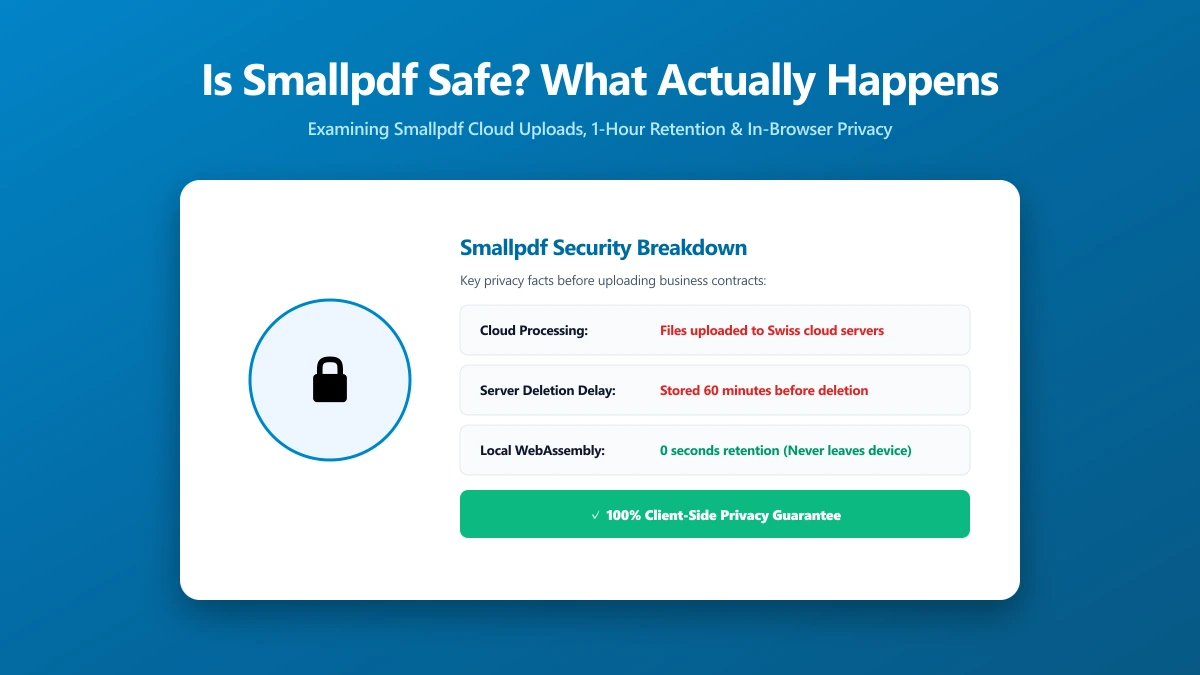
Is Smallpdf Safe? What Happens to Your File When You Upload It
Is Smallpdf safe to use? Here is exactly how it processes your file, what current user reviews say, and a no-upload alternative worth trying right now.
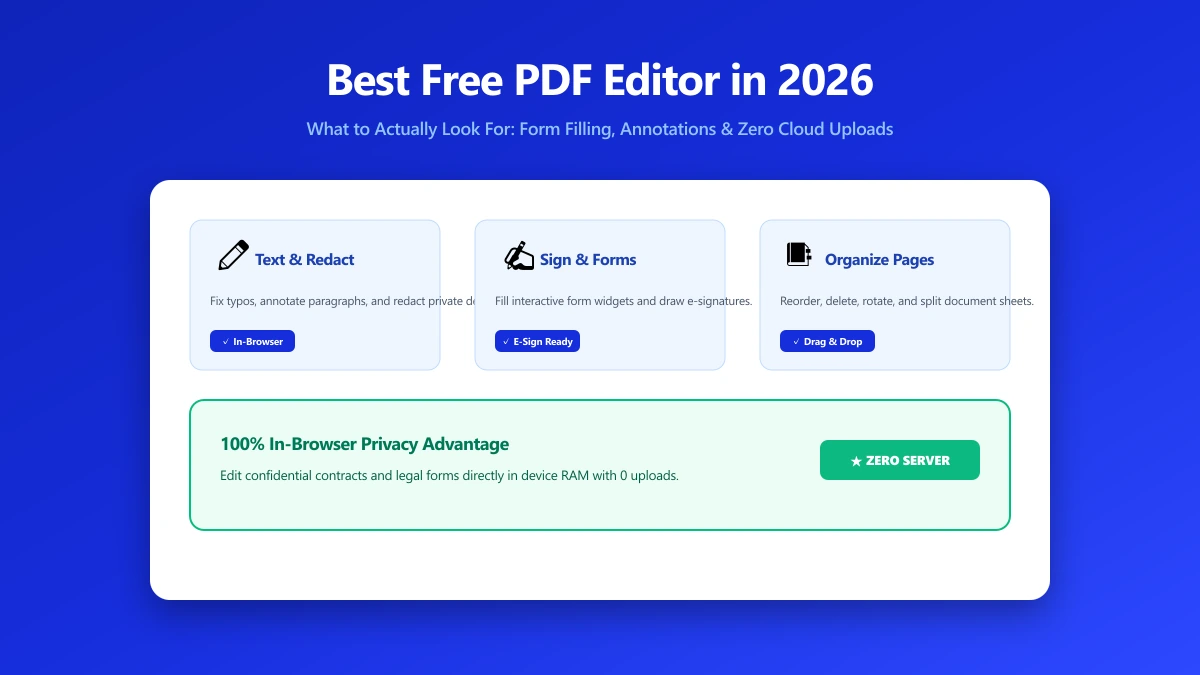
Best Free PDF Editor in 2026: What to Actually Look For
Searching for the best free PDF editor? Compare what real editing needs cover versus what a no-upload browser tool can do, with a practical checklist.
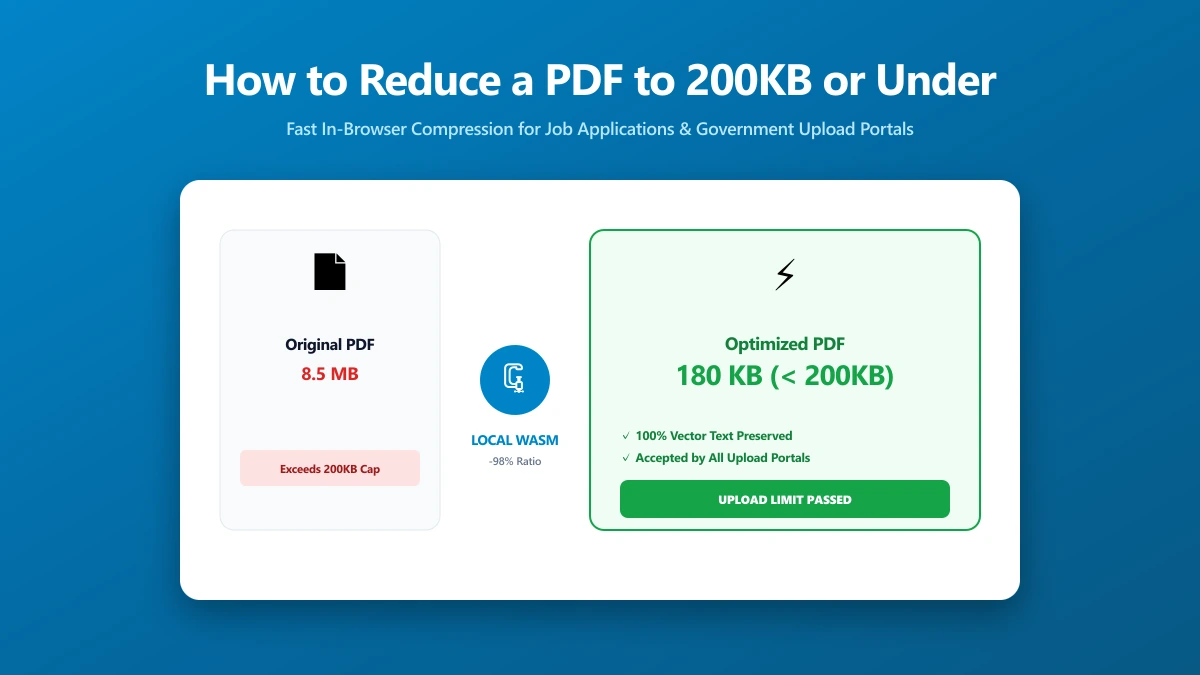
How to Reduce a PDF to 200KB or Under, Fast
Need to reduce a PDF to 200KB or under right now? Here is the fastest method, what actually shrinks file size, and what to do if it still will not fit.
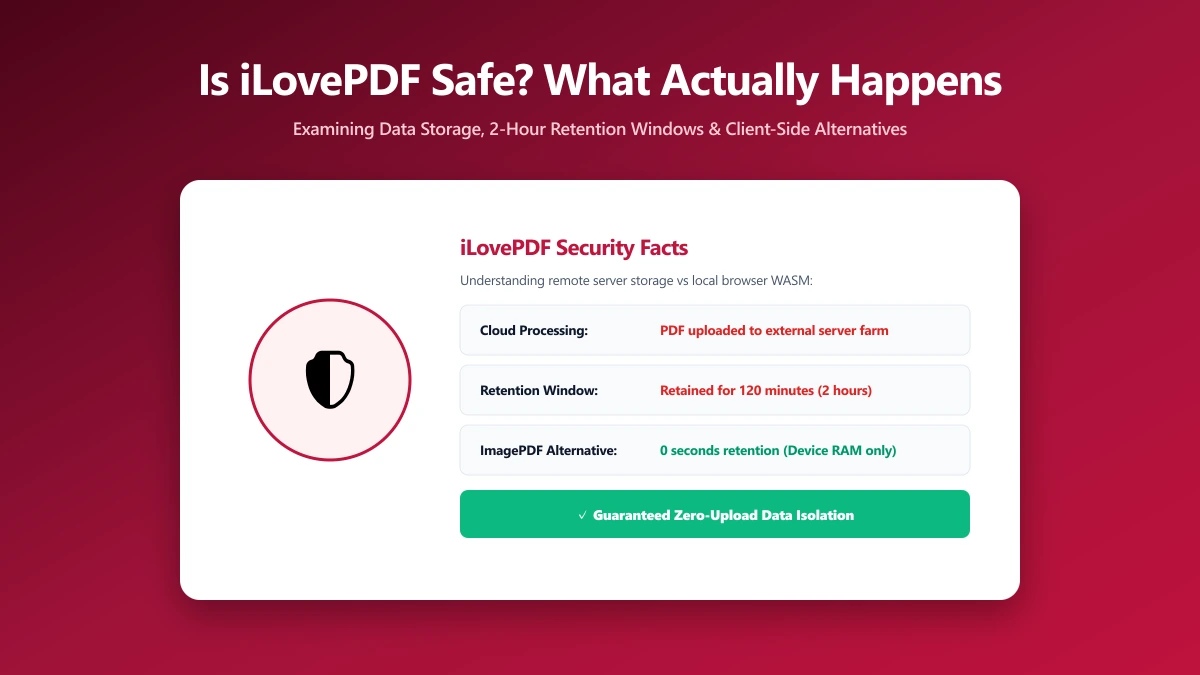
Is iLovePDF Safe? What Actually Happens to Your PDF
Is iLovePDF safe to use? Here is exactly how it processes your PDF, what its 4.9-star Trustpilot rating really tells you, and a private alternative to try.
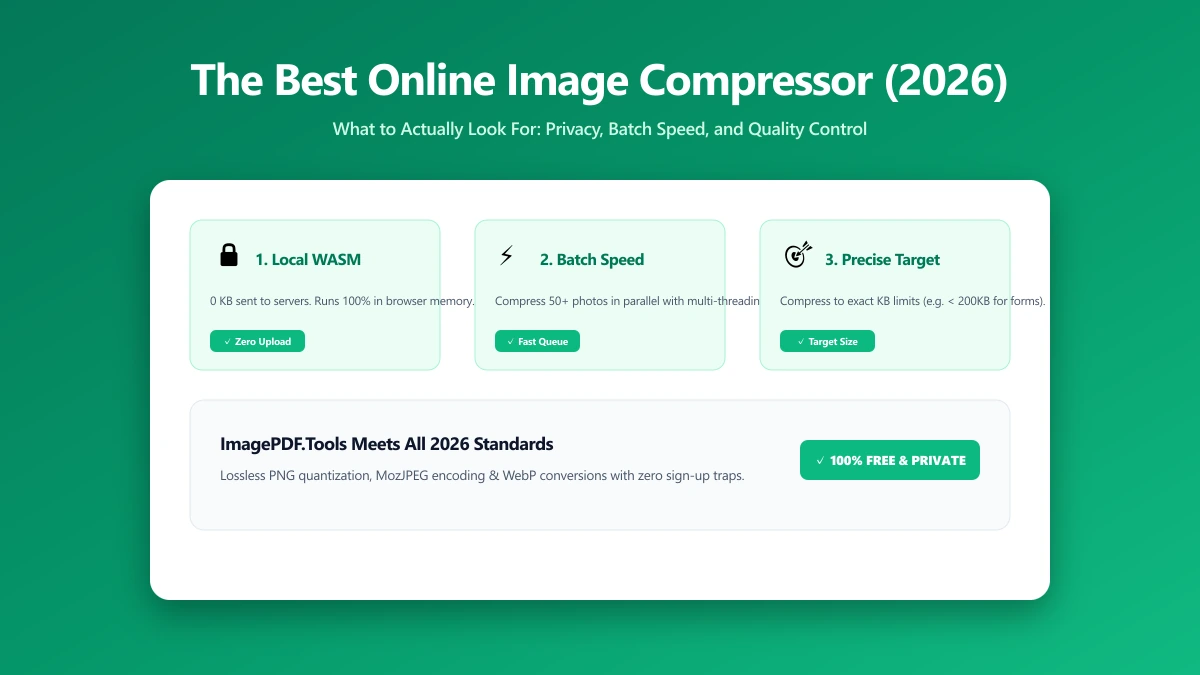
The Best Online Image Compressor in 2026: What to Actually Look For
Looking for the best online image compressor? Here is what actually matters: where processing happens, format support, quality control, and batch limits.
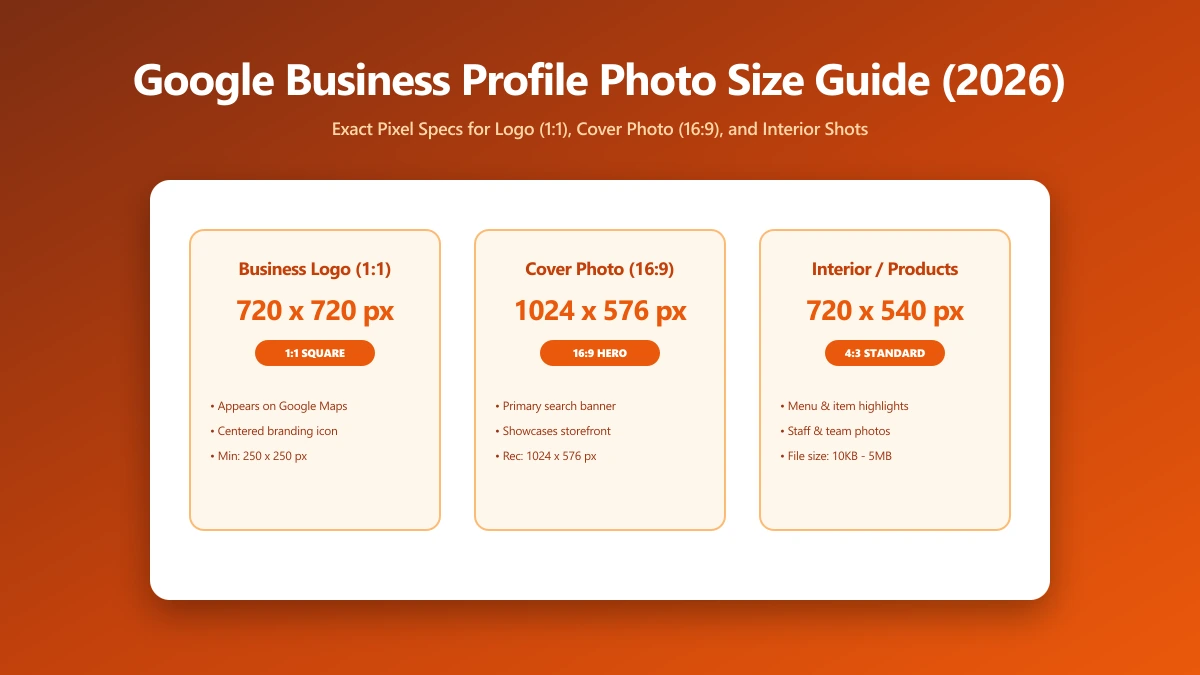
Google Business Profile Photo Size Guide: Logo, Cover, and Interior Photos (2026)
What size should Google Business Profile photos be? Google recommends 720x720px, 10KB to 5MB, JPG or PNG. Here is the exact spec, by photo type, for 2026.
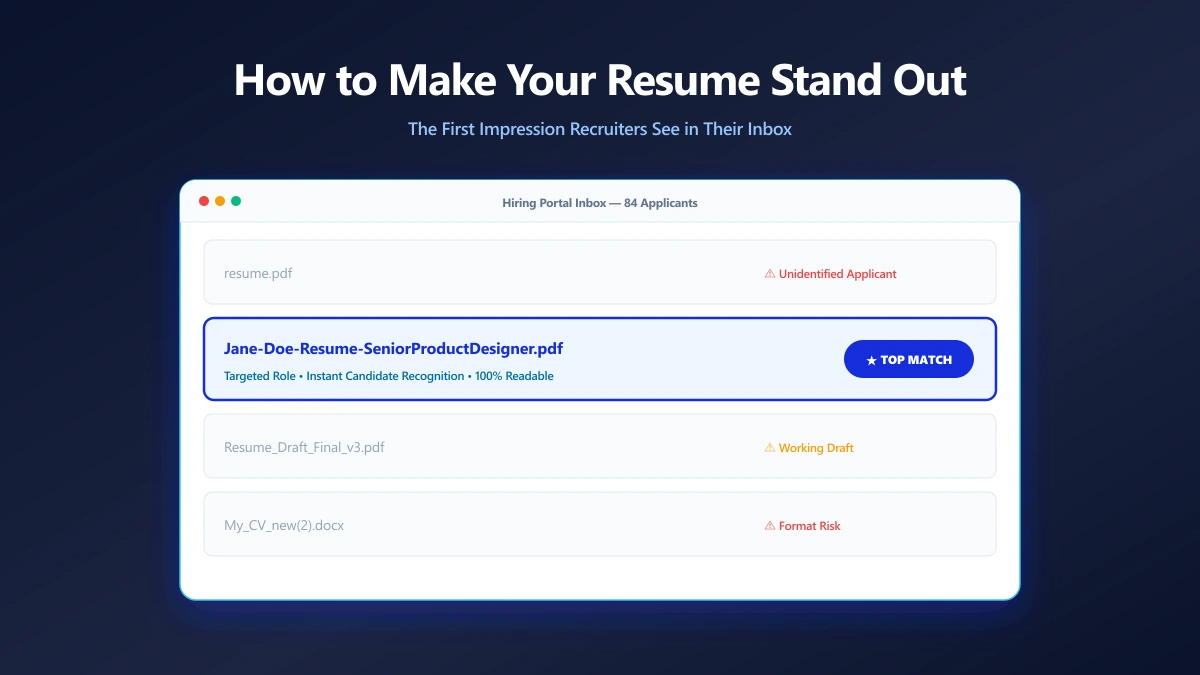
How to Make Your Resume Stand Out Before Anyone Opens It
Your filename is the first thing a recruiter reads. Small presentation choices that make your application look considered before the document opens.
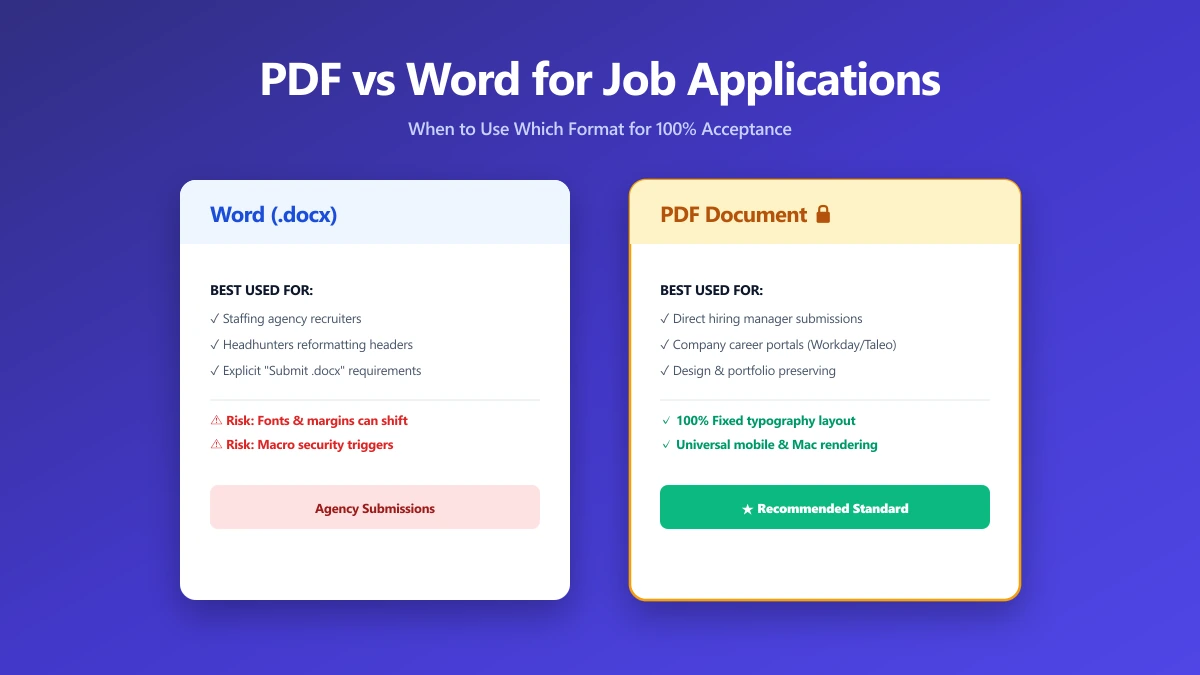
Should I Use PDF or Word for Job Applications?
PDF protects your layout, Word is sometimes required. A decision guide by employer type, plus what to do when the posting does not say either way.
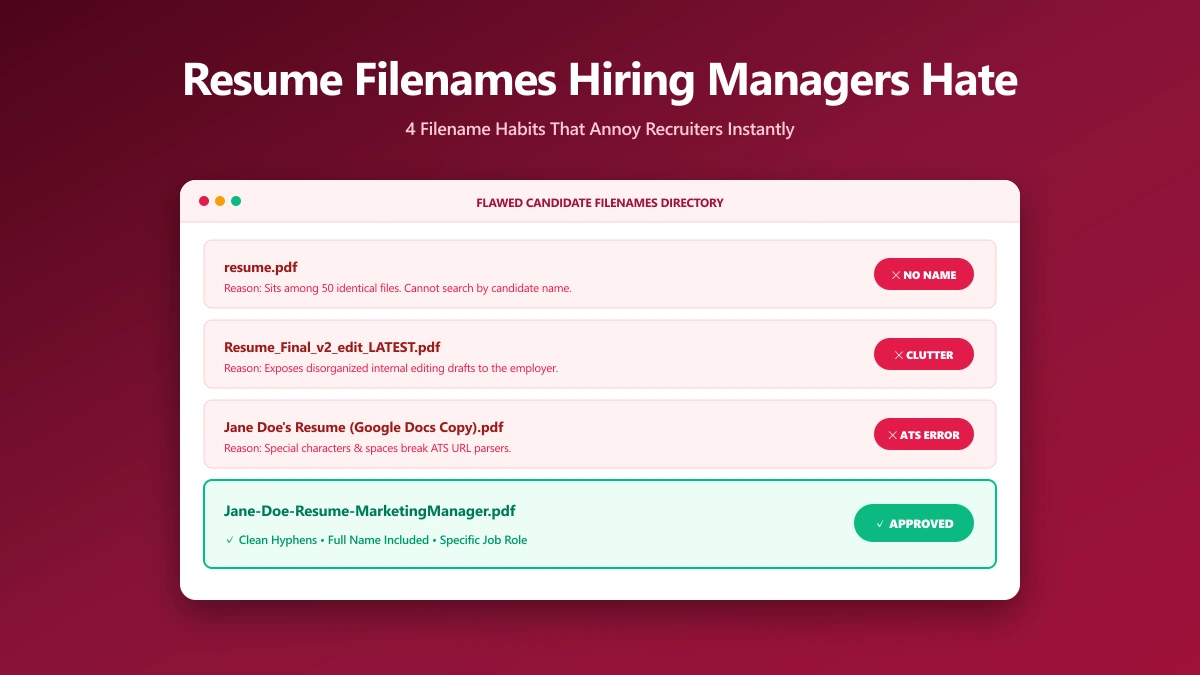
What Resume File Names Do Hiring Managers Hate?
The filename patterns that annoy recruiters, ranked by how often they show up, and what each one accidentally tells the person reading your application.
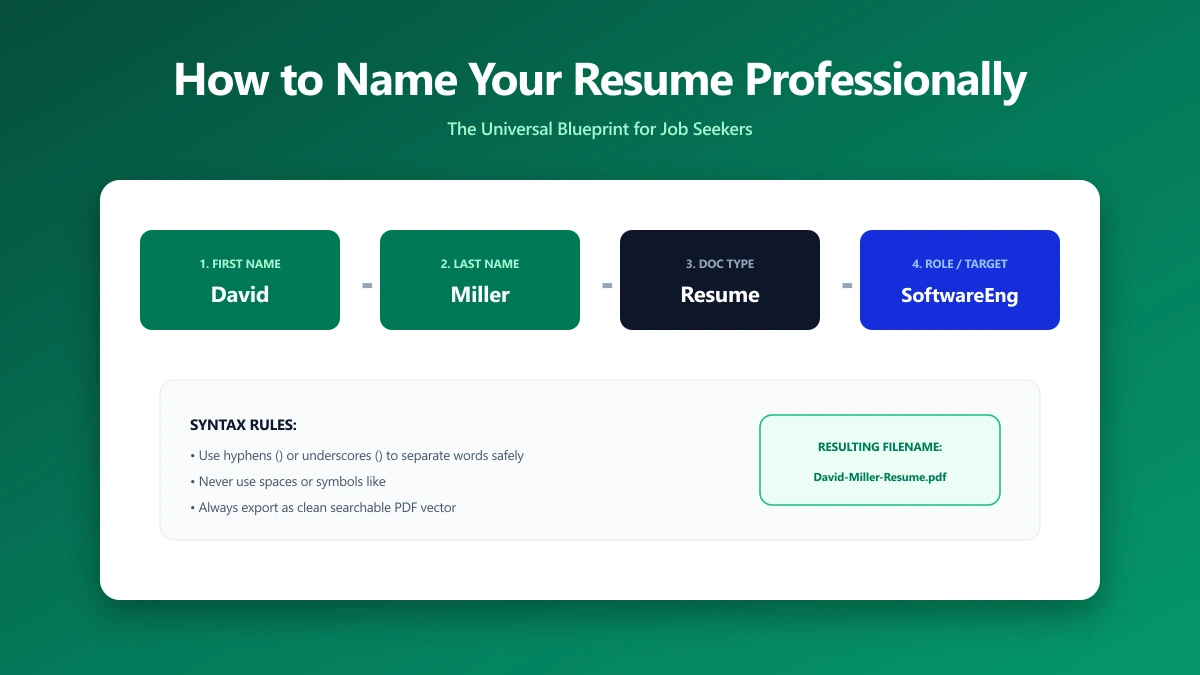
How to Name Your Resume File Professionally
A step-by-step naming convention that works for one application or fifty, including how to handle multiple versions, cover letters, and portal rules.
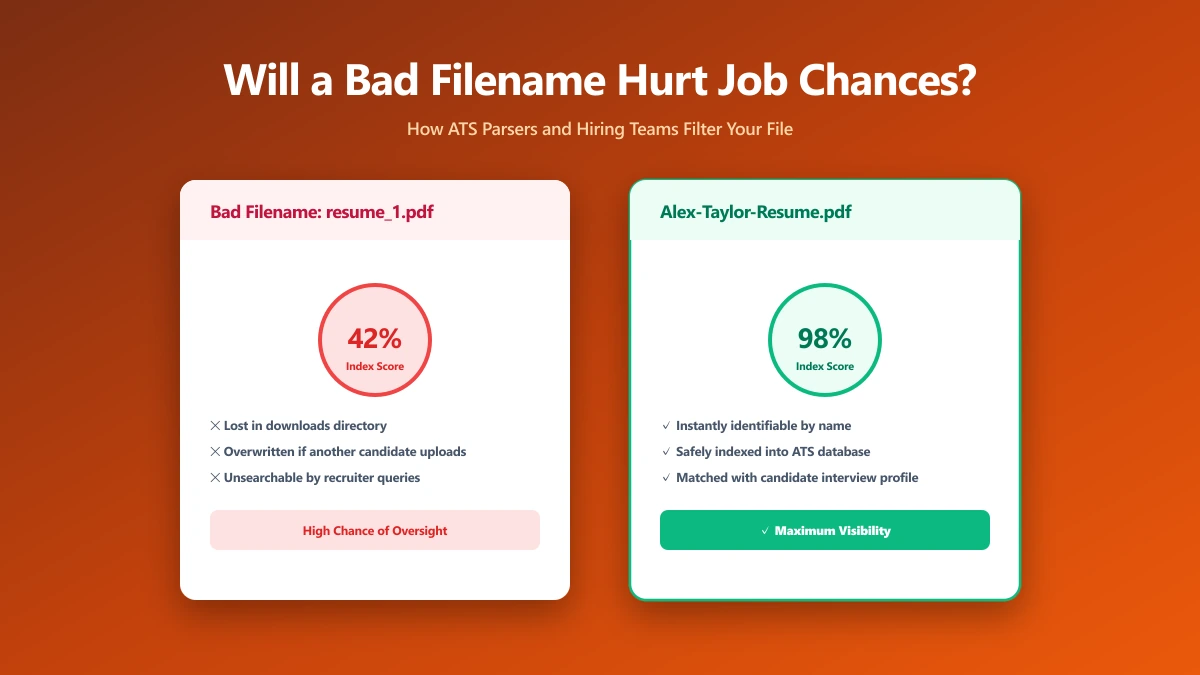
Will a Poorly Named Resume File Hurt My Job Chances?
An honest answer: what a bad filename actually costs you, what it does not, and which file mistakes genuinely end an application before it is read.
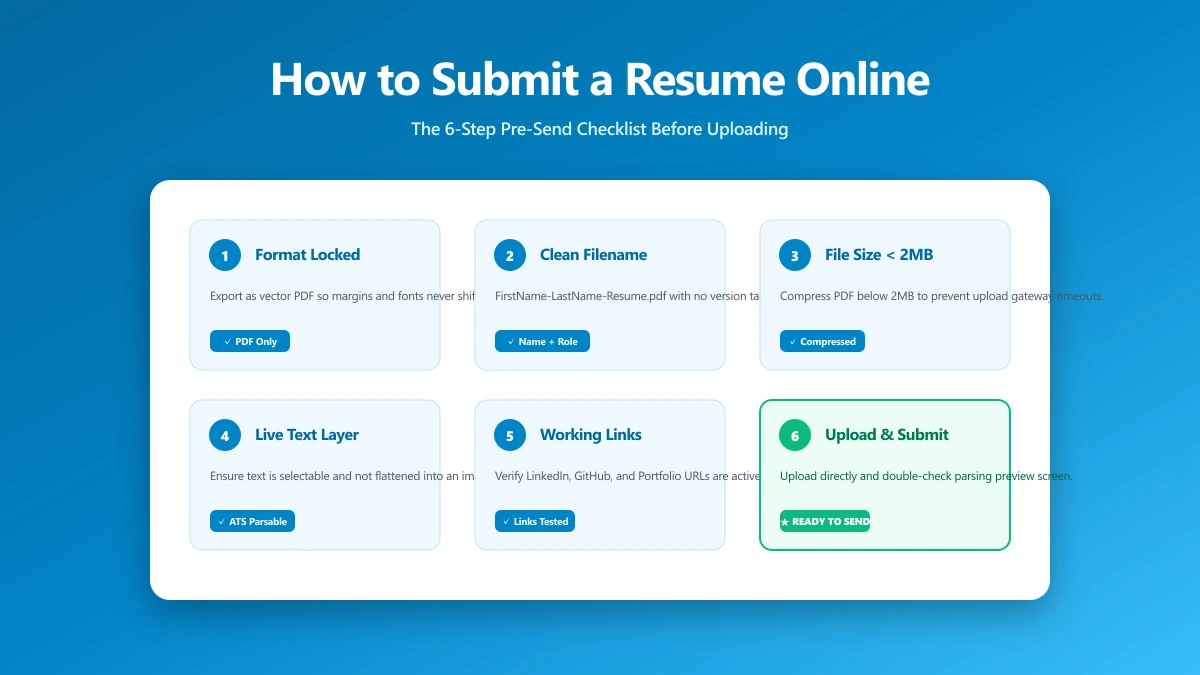
How to Submit a Resume Online: The 6-Step Pre-Send Check
A 6-step check to run before you upload: format, filename, file size, portal rules, hidden metadata, and a test send. Takes about a minute.
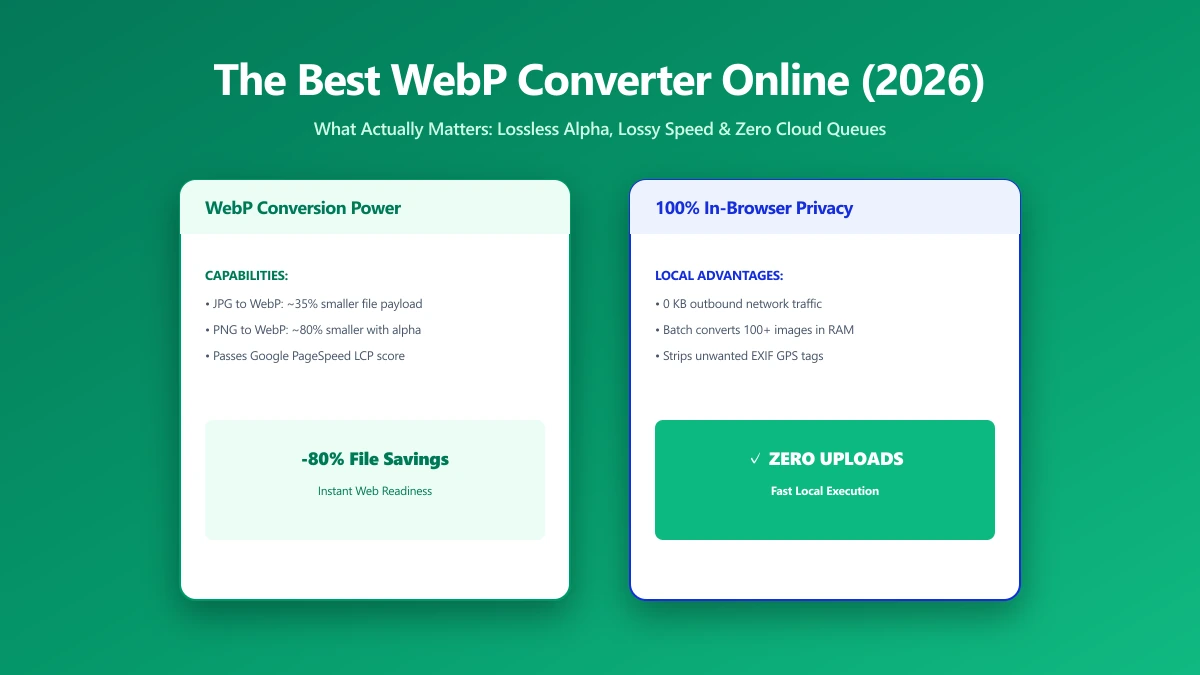
The Best WebP Converter Online: What Actually Matters (2026)
Comparing WebP converters? See what separates the best from the rest: batch limits, quality control, transparency, and whether your files get uploaded.
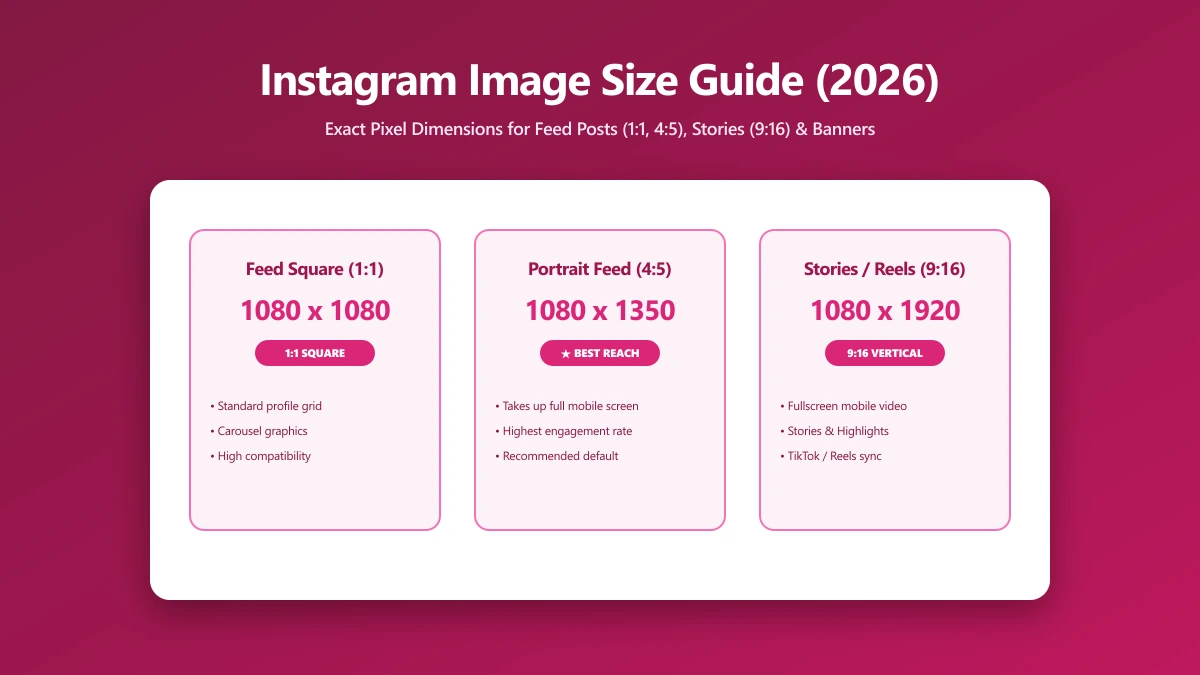
Instagram Image Size Guide 2026: The Exact Dimensions for Every Format
The exact Instagram image sizes for 2026: square posts, portrait posts, Stories, Reels, and profile photos, plus how to resize without losing quality.
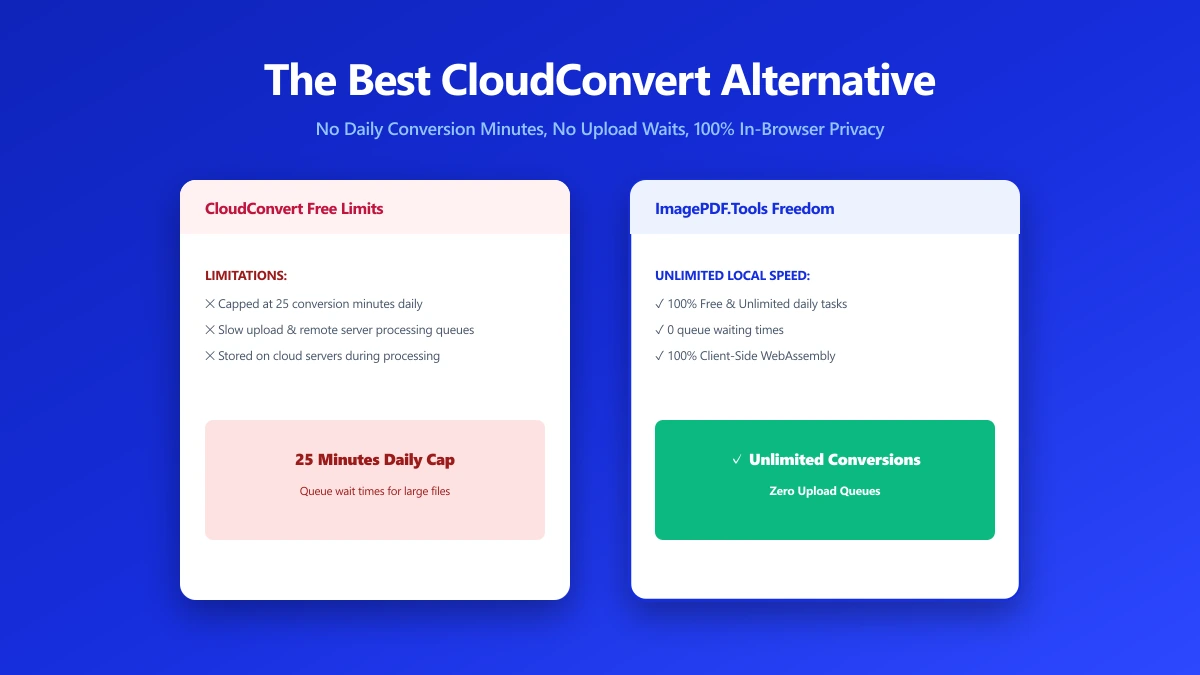
The Best CloudConvert Alternative for PDFs and Images (No Upload) (2026)
CloudConvert supports 200+ formats but every file still passes through its servers for up to 24 hours. ImagePDF.Tools converts PDFs and images locally.
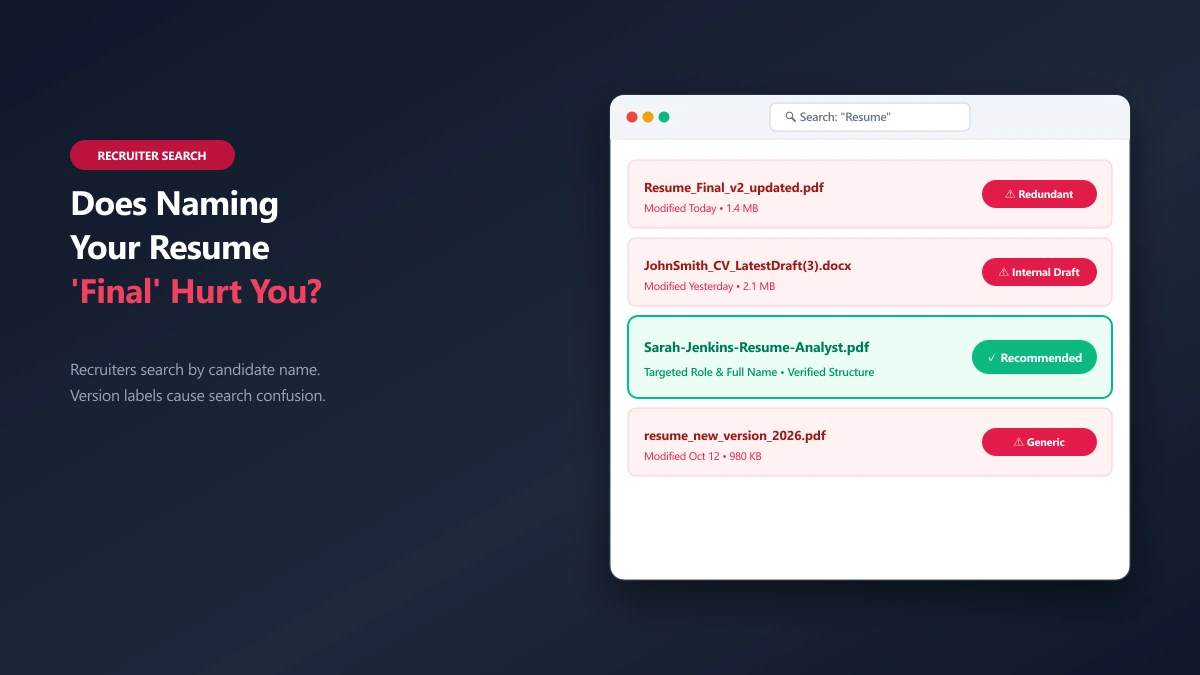
Does Naming Your Resume 'Final' or 'Updated' Hurt Your Chances?
Is naming your resume final or updated a bad idea? Learn how recruiters view file version numbers and what to do instead.
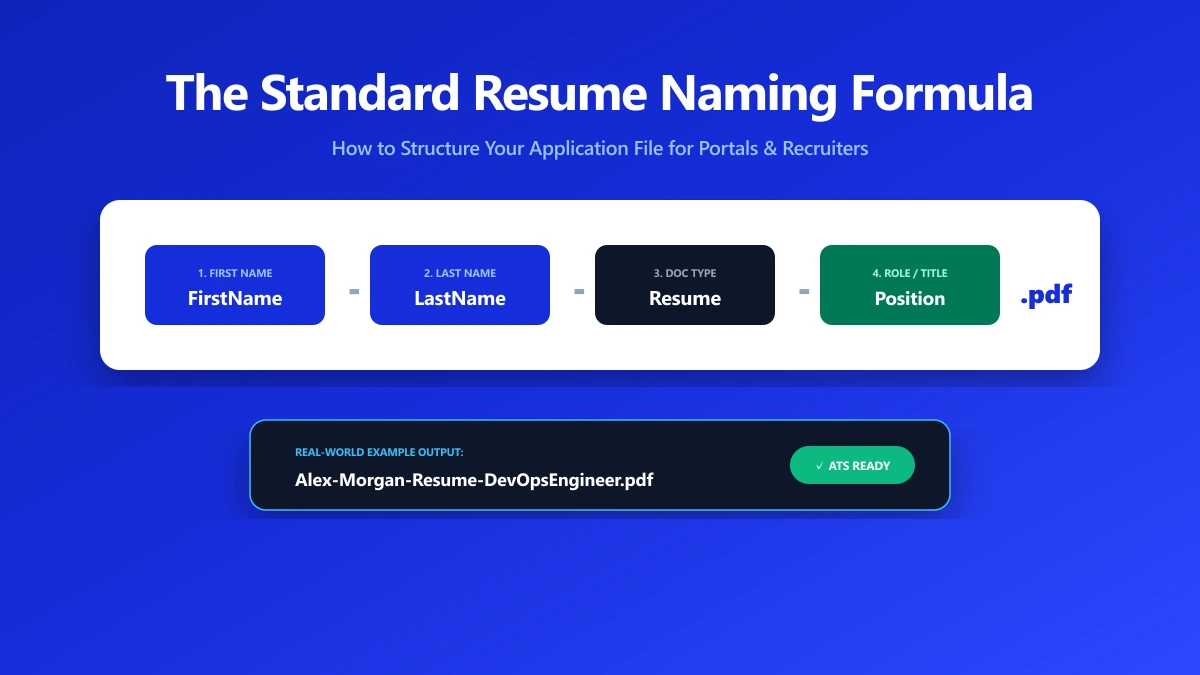
What's the Professional Way to Name Your Resume?
Get clear examples of professional resume filenames. Learn the step-by-step formula to name your PDF or Word document for job portals.
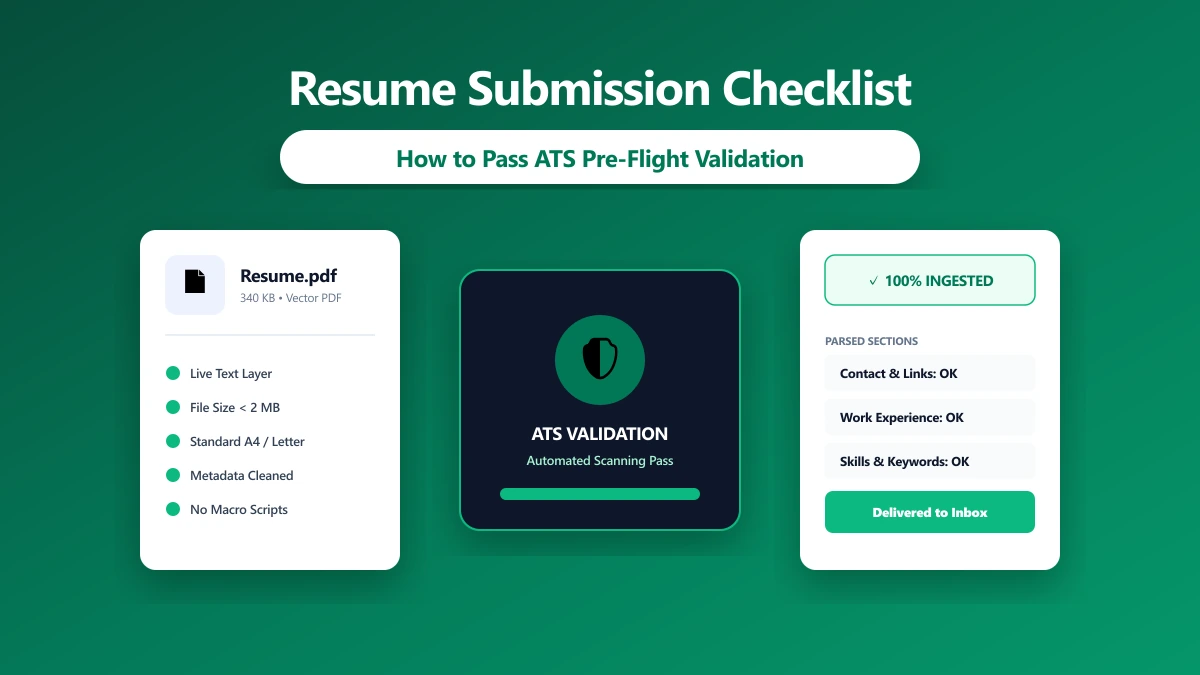
How to Submit a Resume That Hiring Managers Won't Delete
Avoid mechanical failures that get your application deleted. Follow this 6-step check for format, size, and metadata before uploading.
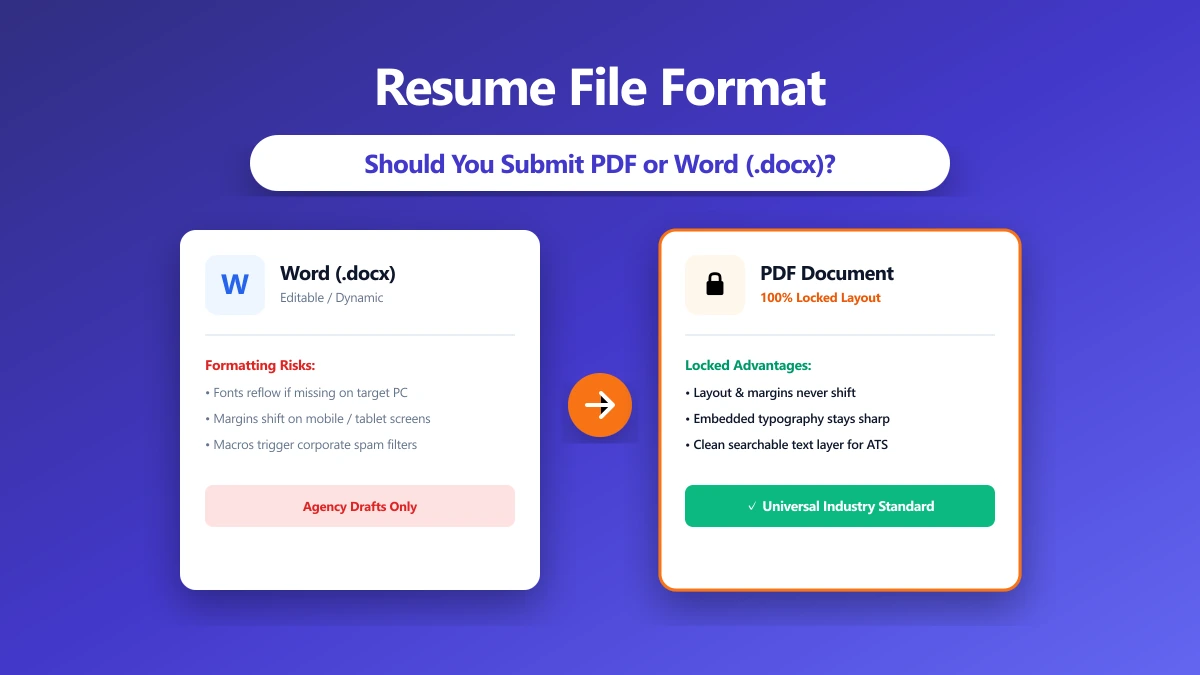
Resume File Format: PDF, Word, or Something Else?
PDF or Word for resume submissions? See how format choices affect applicant tracking systems (ATS) and recruiter views in 2026.
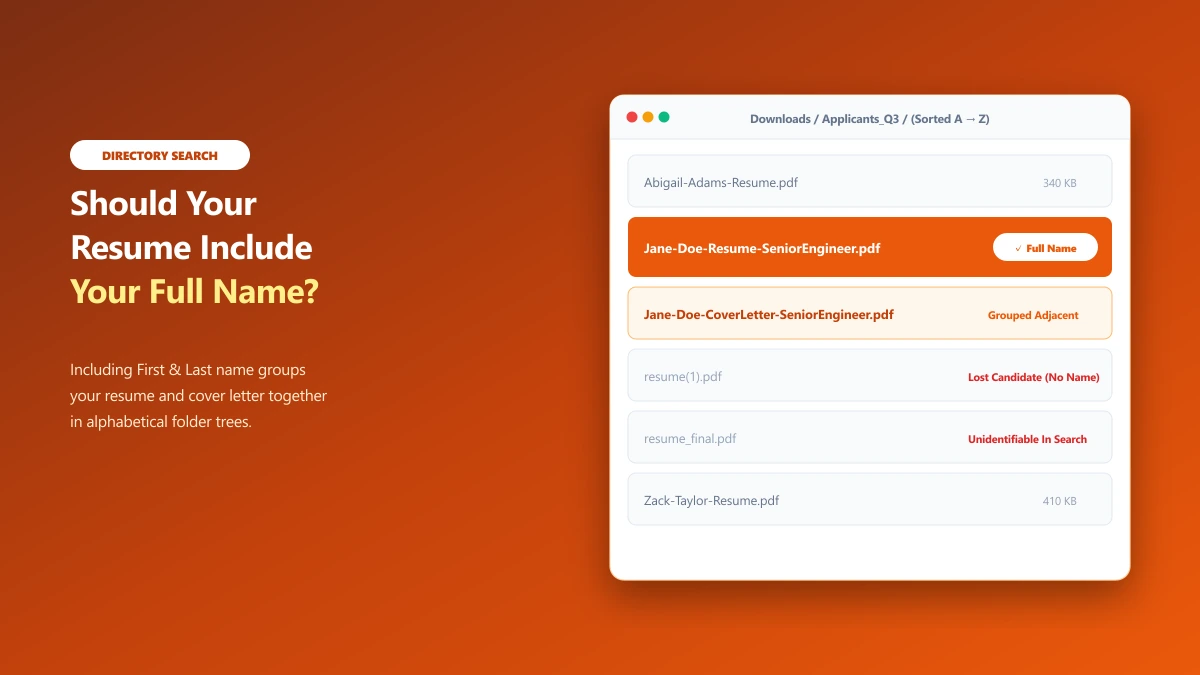
Should Your Resume File Name Include Your Full Name?
Should you put your full name in your resume file name? Learn the optimal naming rules for human recruiters and online portals.
How to Make Your Resume File Look Professional
Make your application look considered before the file is opened. Formatting and presentation tips for resume filenames and attachments.
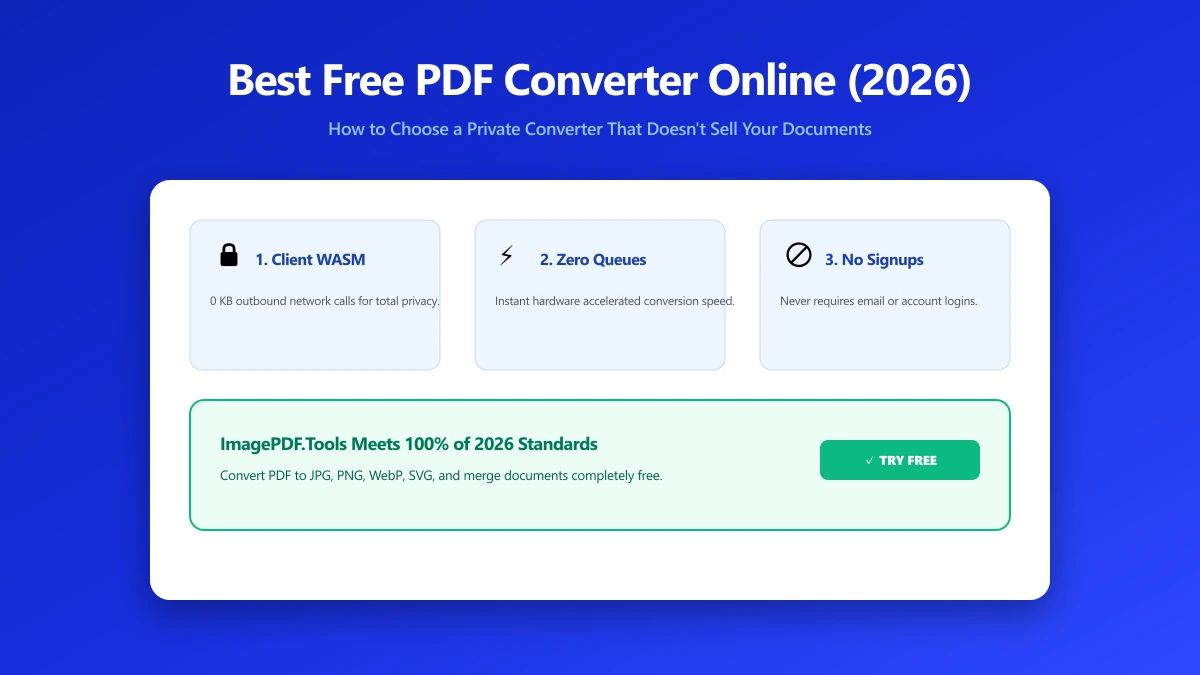
Best Free PDF Converter Online: How to Actually Choose One in 2026
Searching for the best free PDF converter? Compare upload risk, file caps, and watermarks across top tools, then see where ImagePDF.Tools honestly fits.
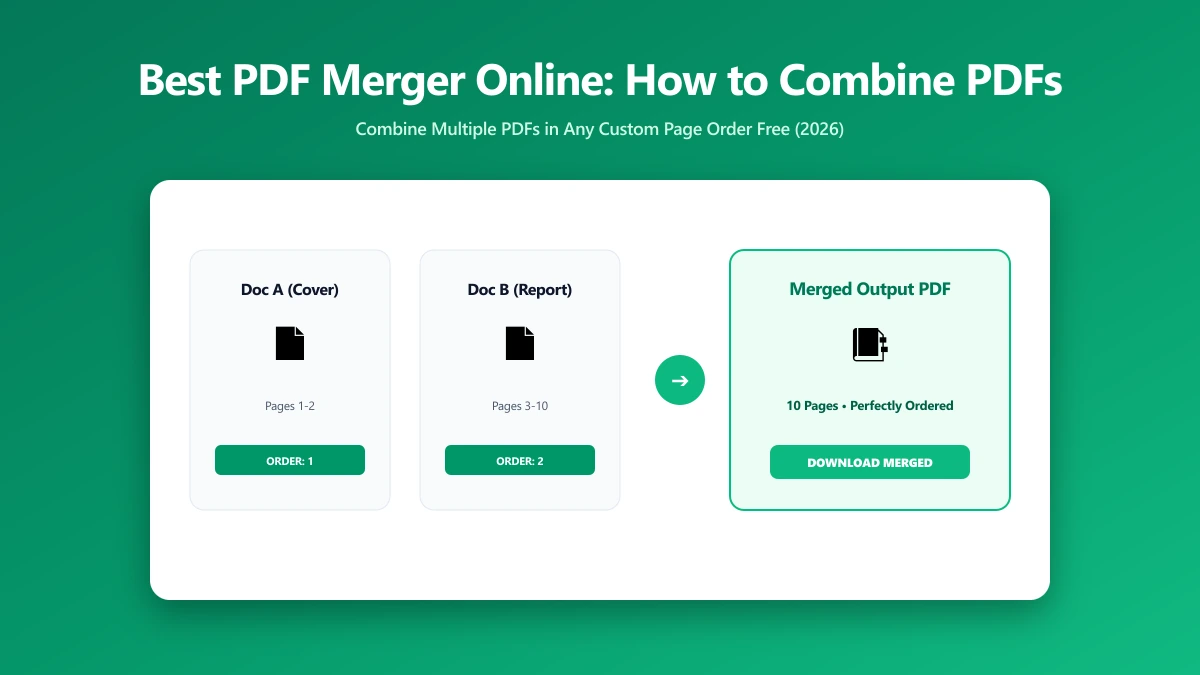
Best PDF Merger Online: How to Combine PDFs for Free in 2026
Looking for the best PDF merger online? See what makes one trustworthy, a step-by-step how-to guide, and a free browser-based option with no page limit.
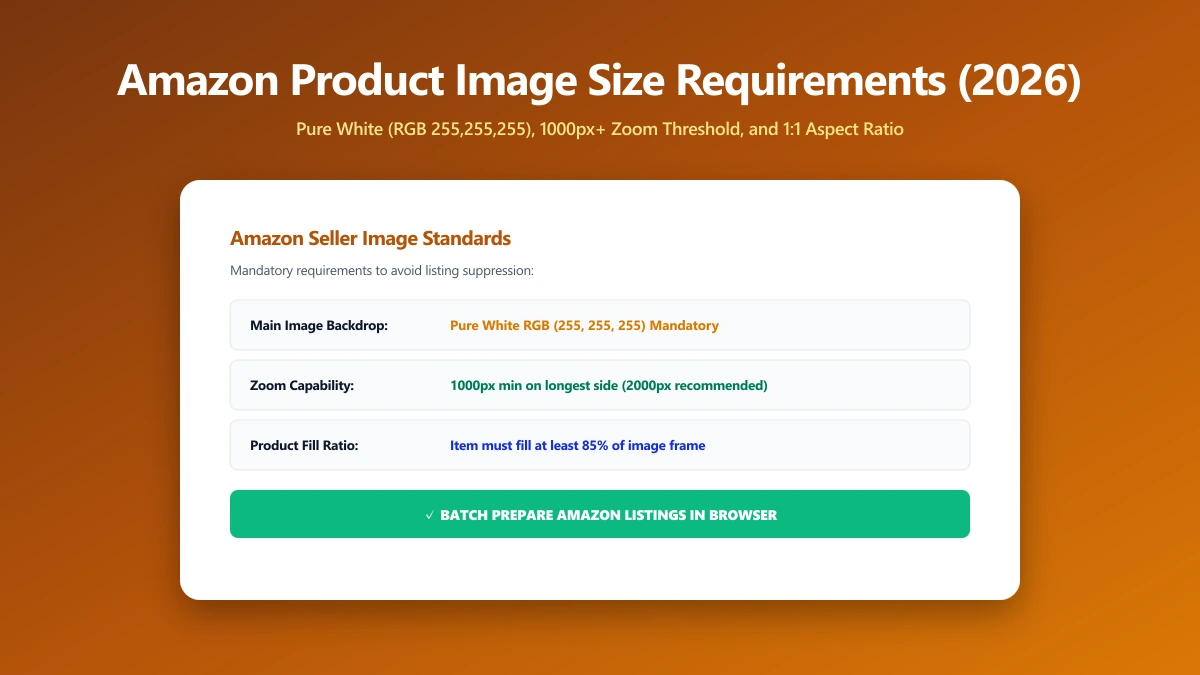
Amazon Product Image Size Requirements 2026: The Exact Dimensions Sellers Need
Amazon requires main images at least 1000px on the longest side on a pure white background. Here are the exact pixel specs sellers need to hit in 2026.
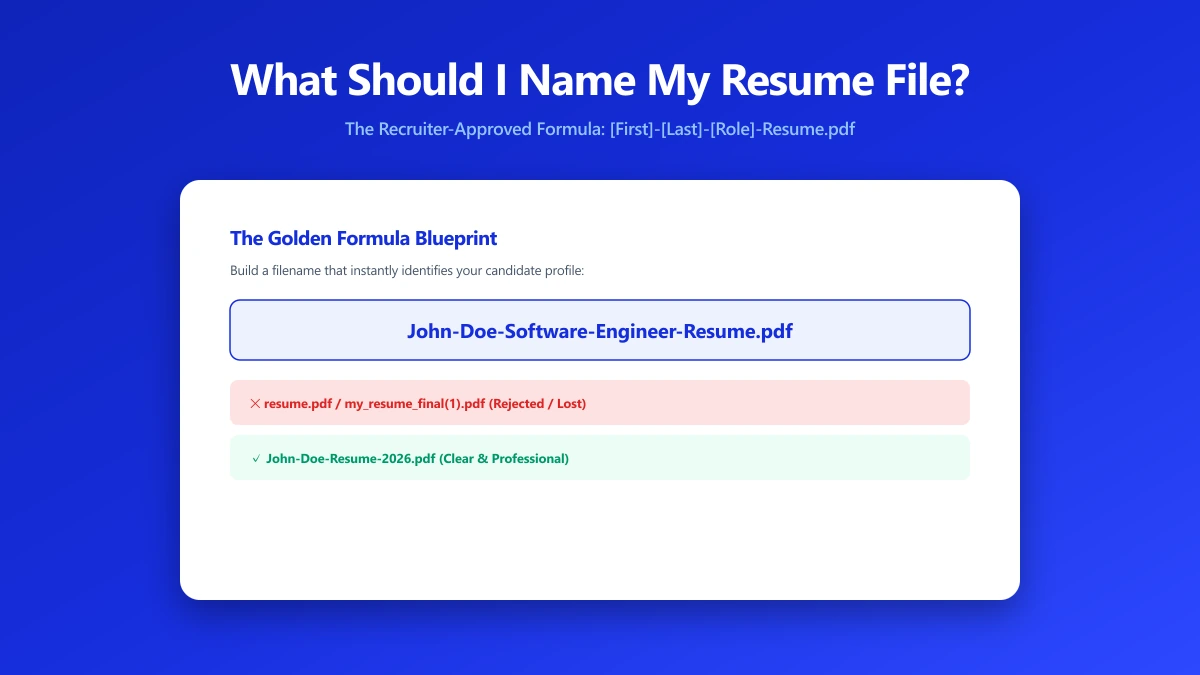
What Should I Name My Resume File? A Naming Formula That Works
Naming a resume file wrong can get it skipped by an ATS or a recruiter. Here is the exact naming formula to use, and the filenames to avoid.
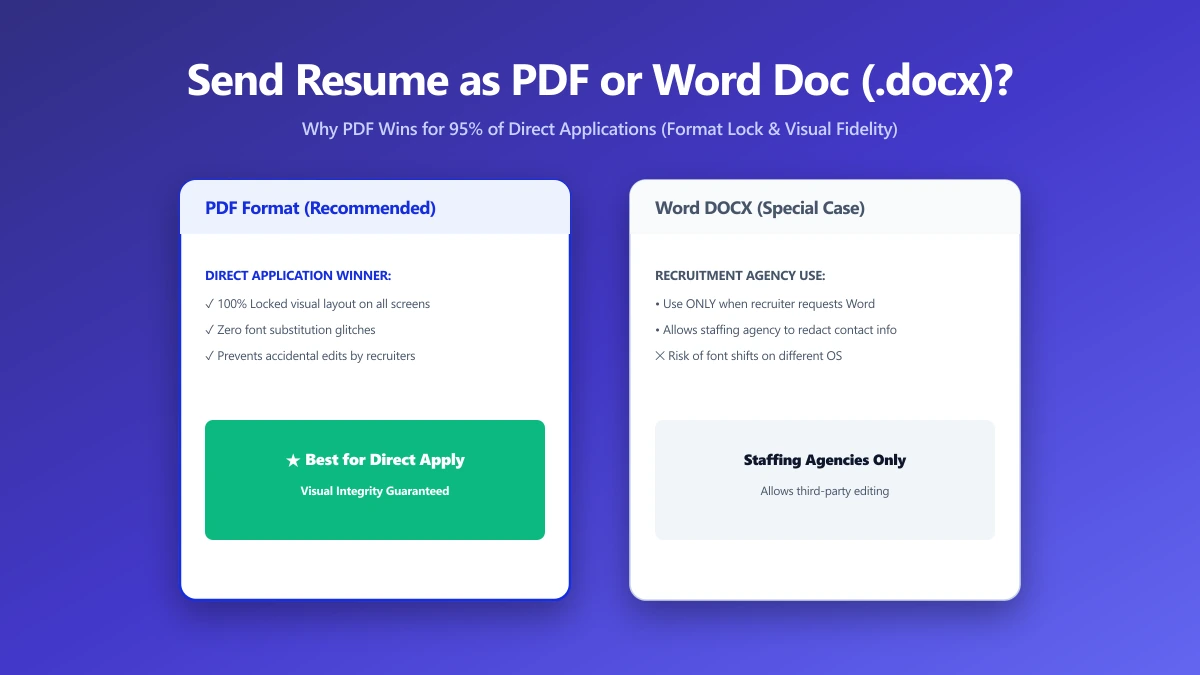
Should I Send My Resume as a PDF or Word Doc?
PDF or Word for your resume? Most recruiters and applicant tracking systems prefer PDF, but a few situations still call for a Word document.
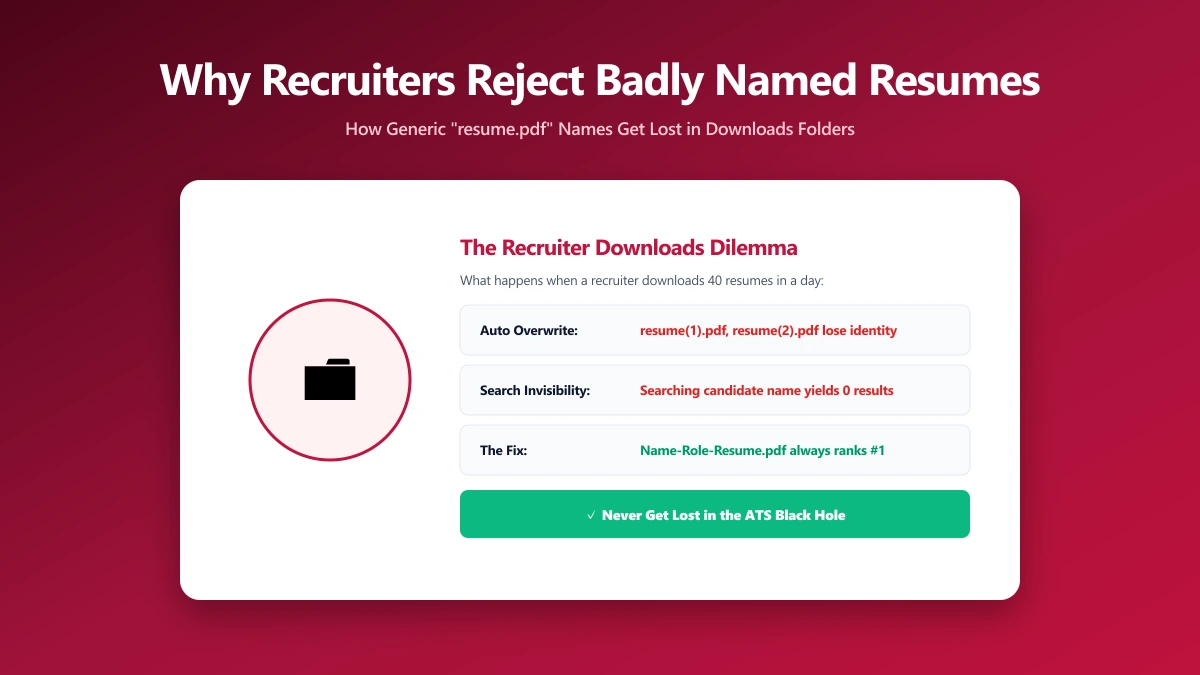
Why Recruiters Reject Poorly Named Resume Files
A poorly named resume file can get lost, mis-sorted, or skipped entirely. Here is exactly why recruiters reject them, and how to fix yours.
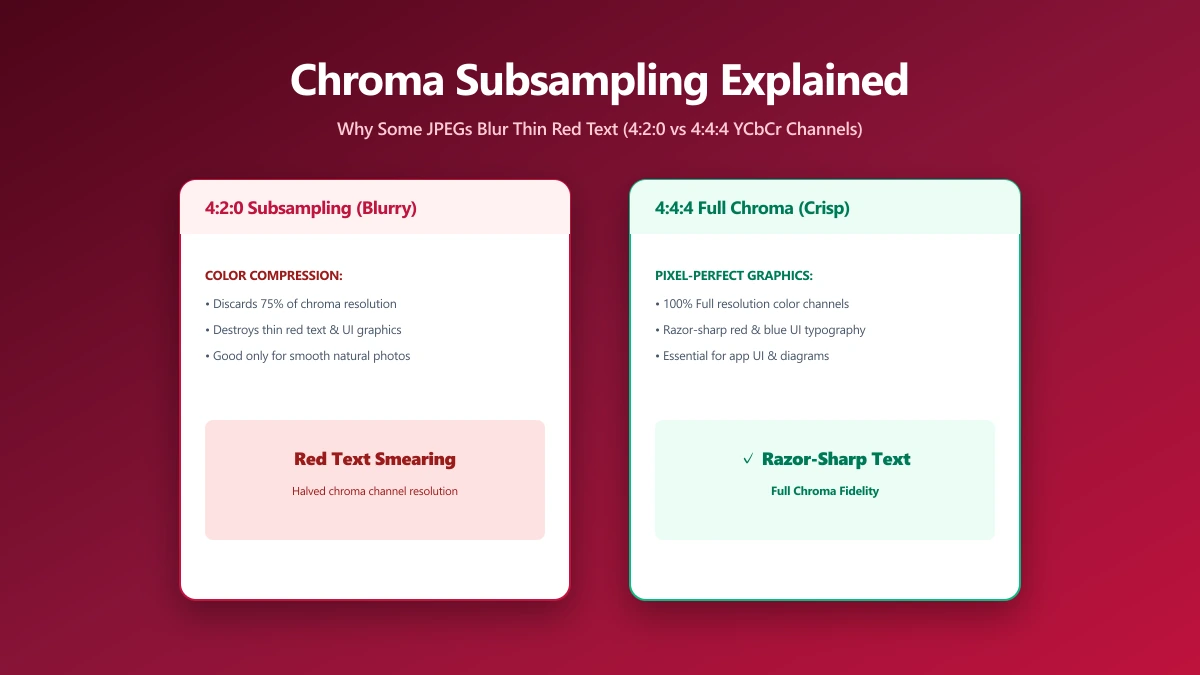
Chroma Subsampling Explained: Why Some JPEGs Blur Thin Red Text and Fine Lines
Notice blurred colored text in a sharp JPEG? That's chroma subsampling, a hidden compression trick most quality sliders never mention or expose to you.
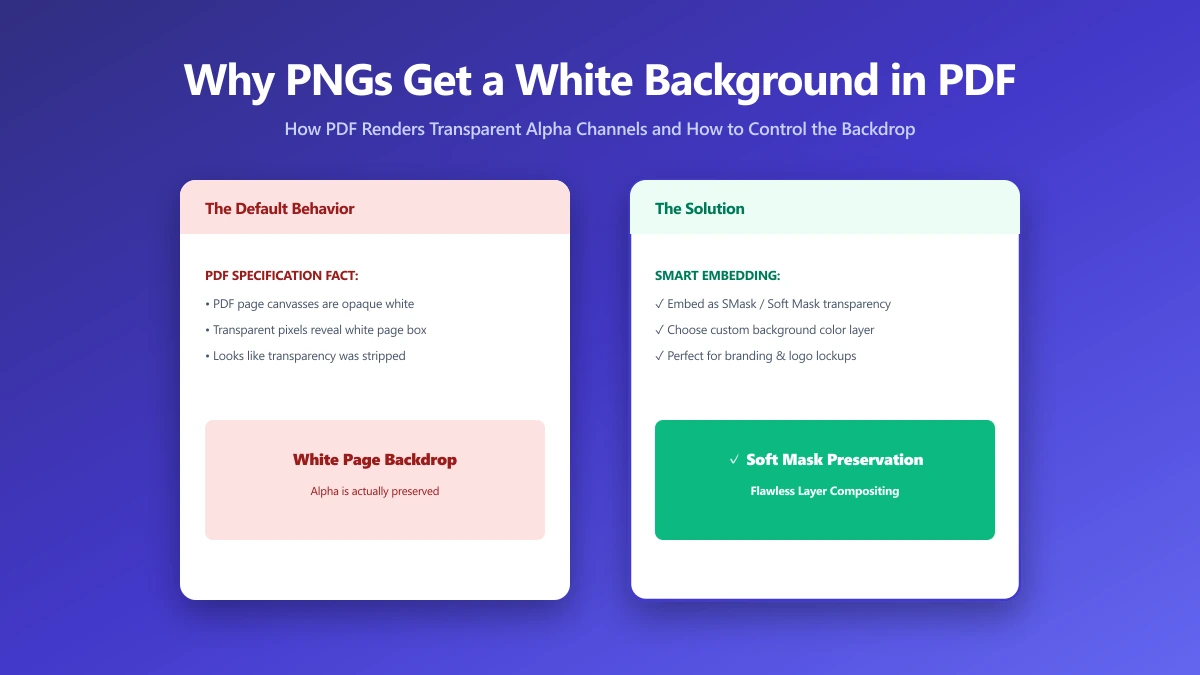
Why Your PNG Gets a White Background When You Convert It to PDF (and How to Fix It)
Convert a transparent PNG to PDF and get a solid white box instead? PDF has no native alpha channel like PNG. Here's why it happens and how to fix it.
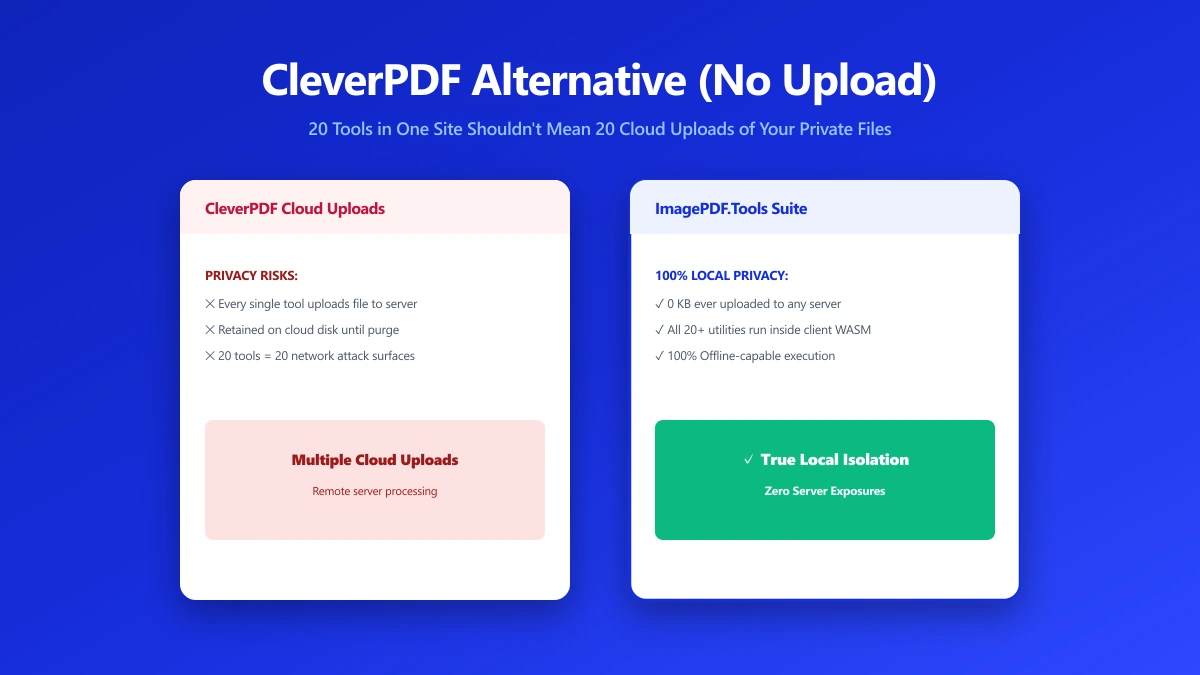
CleverPDF Alternative: 20 Tools in One Site Also Means 20 Uploads of Your Files
CleverPDF bundles about 20 tools into one site, but each one still uploads your file to a server. Here's a browser-based alternative for core PDF tasks.
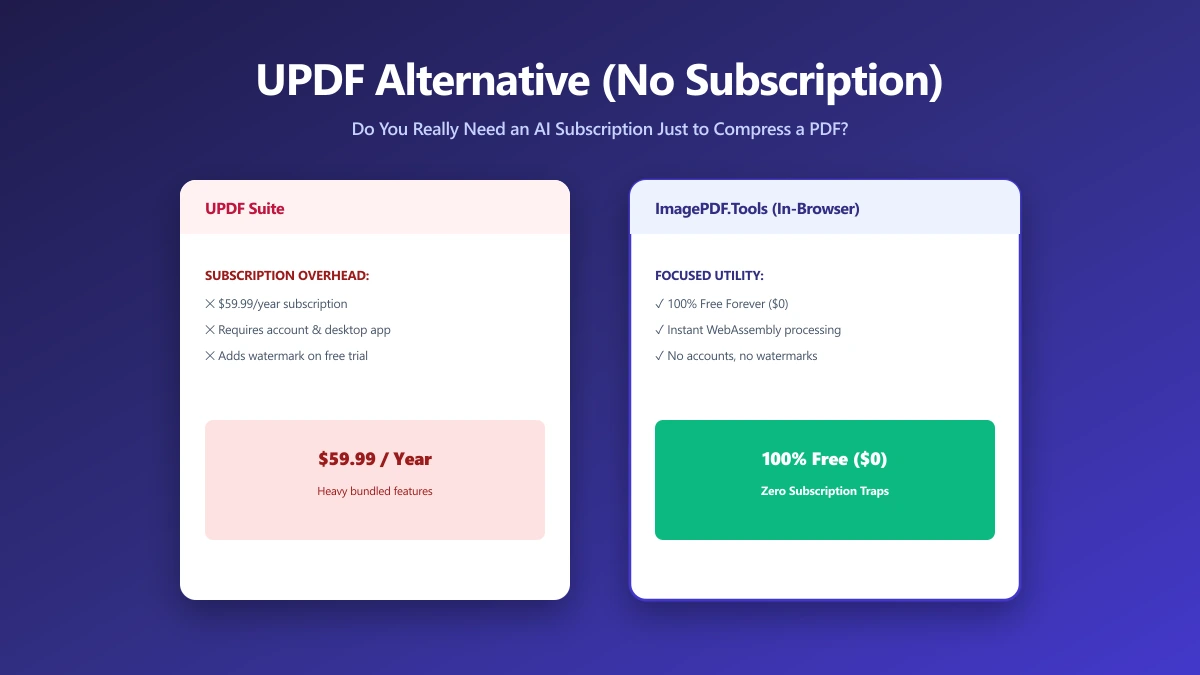
UPDF Alternative: Do You Need an AI PDF App Just to Compress One File?
UPDF bundles AI chat and summarization into a paid subscription. If you need to compress or convert a PDF, here is a free alternative with no AI upsell.
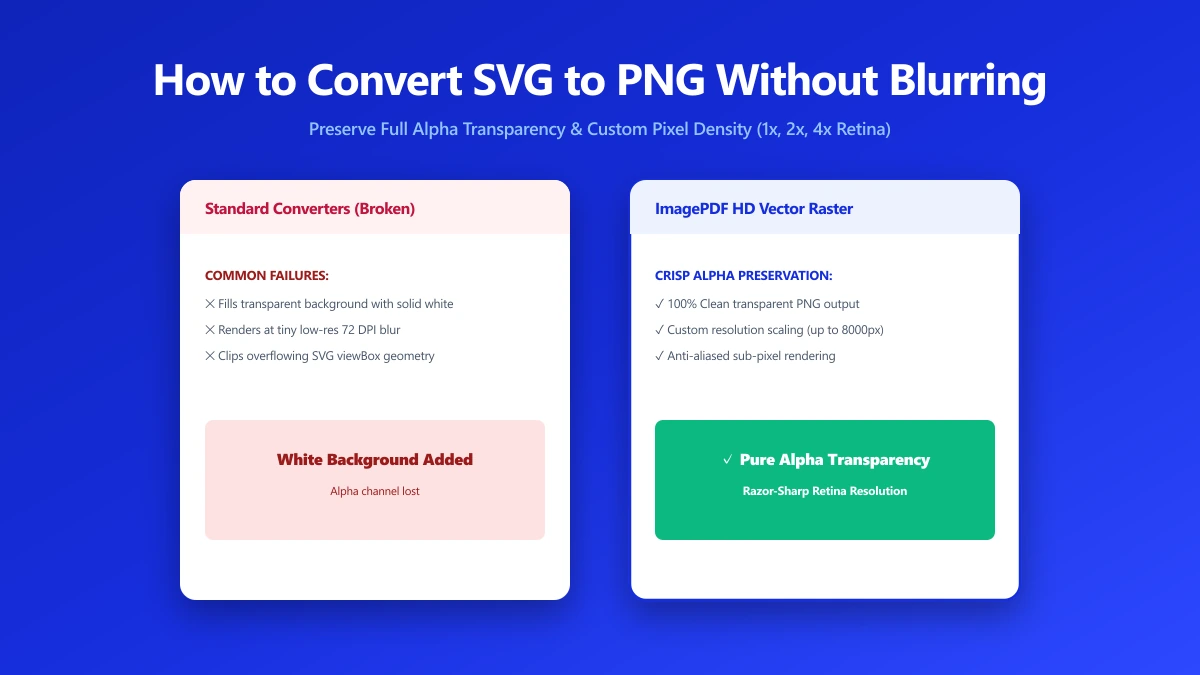
How to Convert SVG to PNG Without Losing Transparency or Going Blurry
Converting SVG to PNG the wrong way can blur your logo or fill transparency with solid white. Here is how to convert it correctly, free, in your browser.
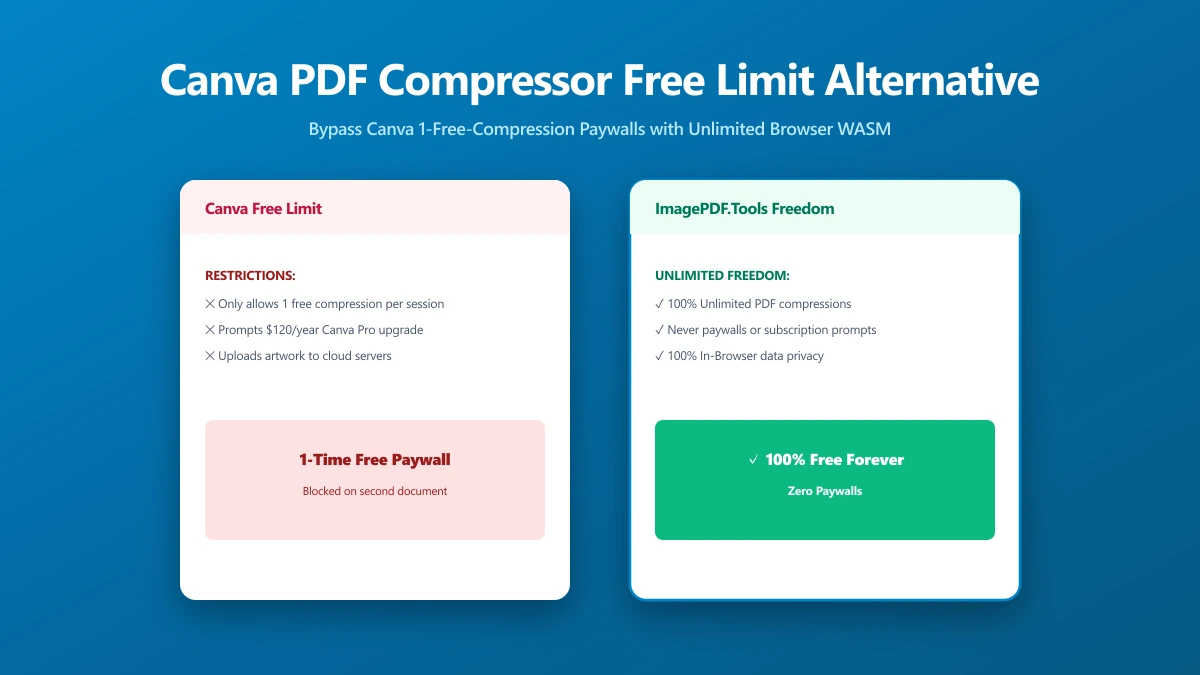
Canva's PDF Compressor Only Works Once for Free, Here's the Unlimited Alternative
Canva's PDF compressor caps free users at one use and requires an account sign-up. Here is an unlimited, browser-based alternative that needs neither.
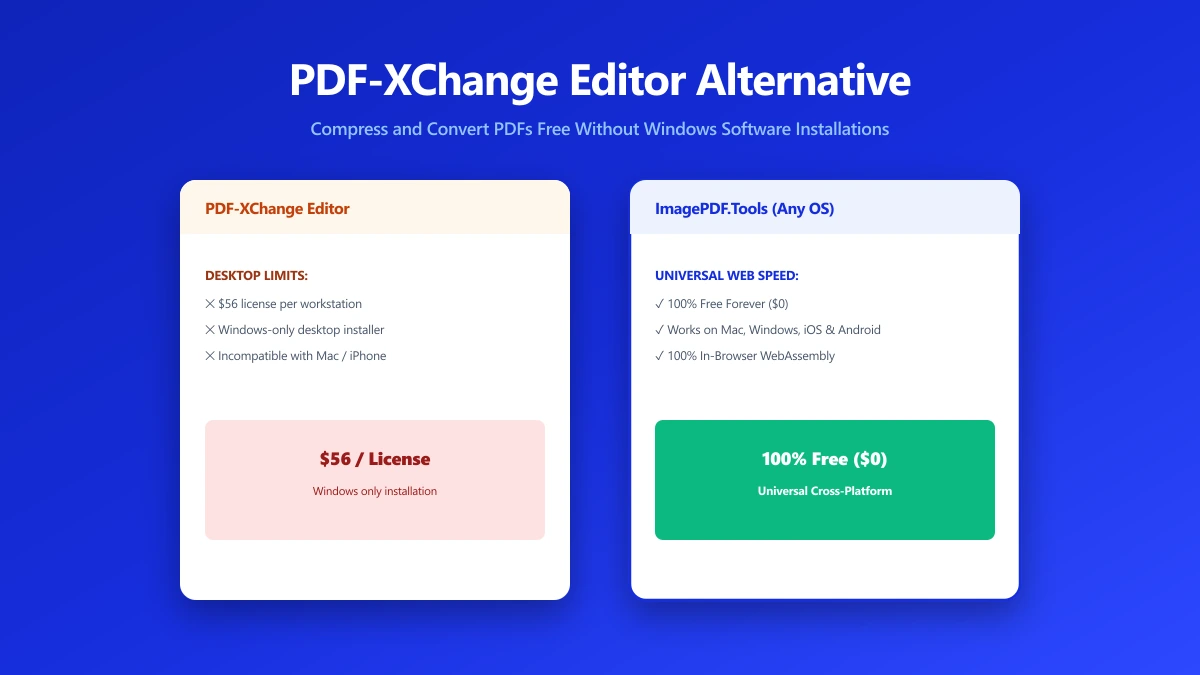
PDF-XChange Editor Alternative: Compress a PDF Without Installing Anything
PDF-XChange Editor is a solid Windows-only editor that requires installing. Try a free browser-based alternative that works on any device, no install.
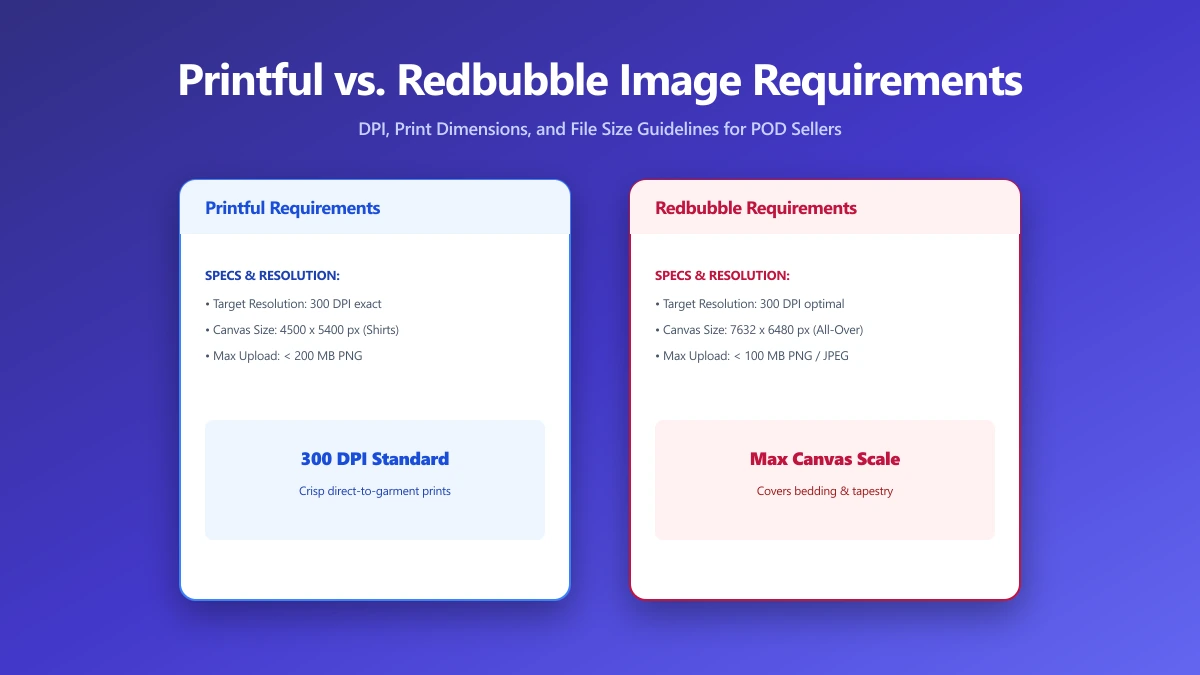
Printful vs. Redbubble Image Requirements: DPI, Resolution, and File Size Compared
Printful and Redbubble use different sizing rules for print-on-demand artwork. Upload the wrong file and risk rejected uploads or blurry prints online.
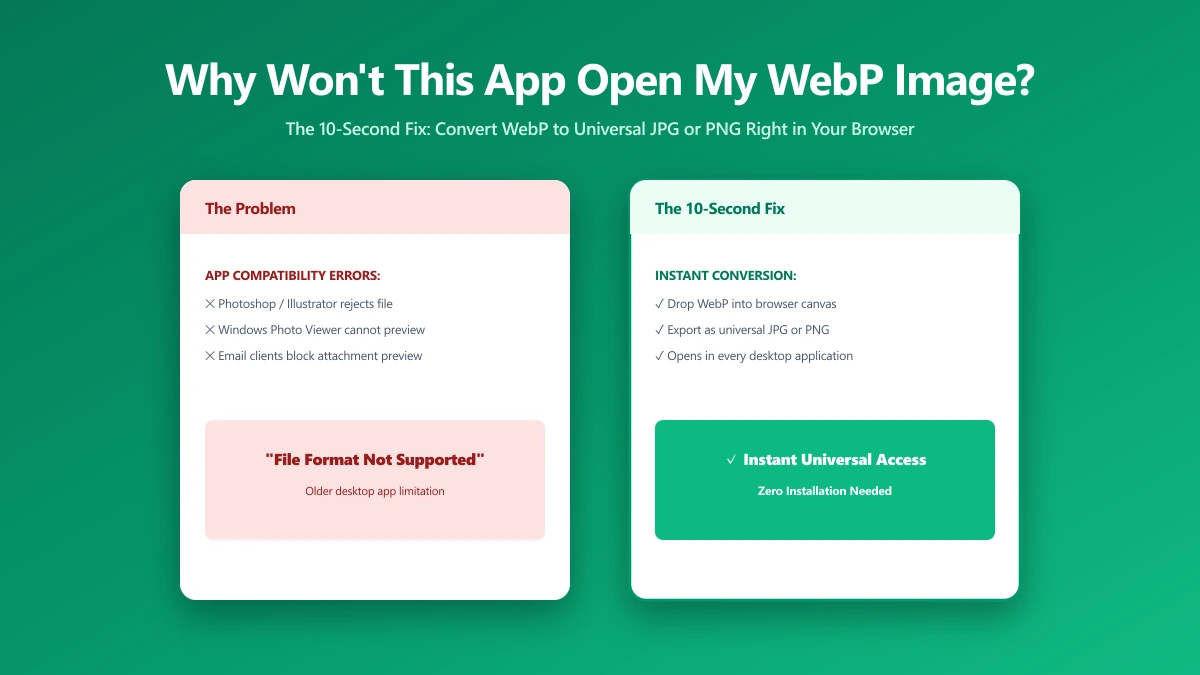
Why Won't This App Open My WebP Image? The 10-Second Fix
Saved an image from your browser and now Word or an older app refuses to open it? It is almost certainly a WebP file. Here is why, and the 10-second fix.
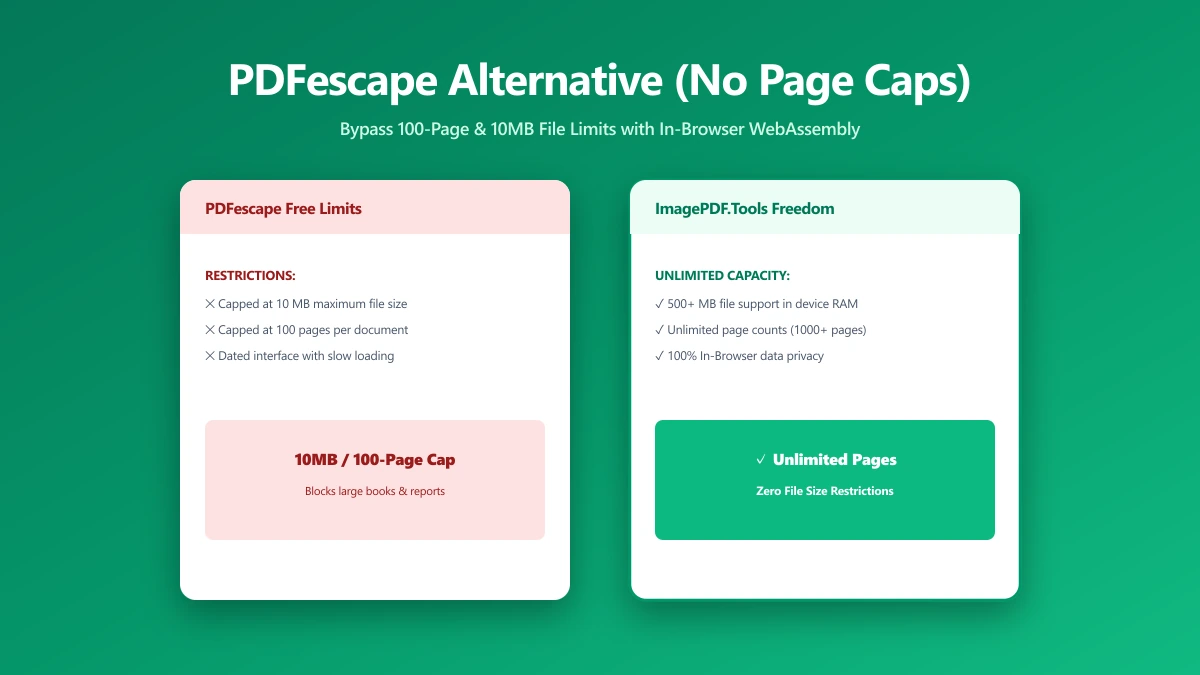
PDFescape Alternative: Compress PDFs Without the Page-Count or File-Size Caps
PDFescape's free tier caps page count, file size, and monthly documents, plus ads. Here's a browser-based alternative with no caps and nothing uploaded.
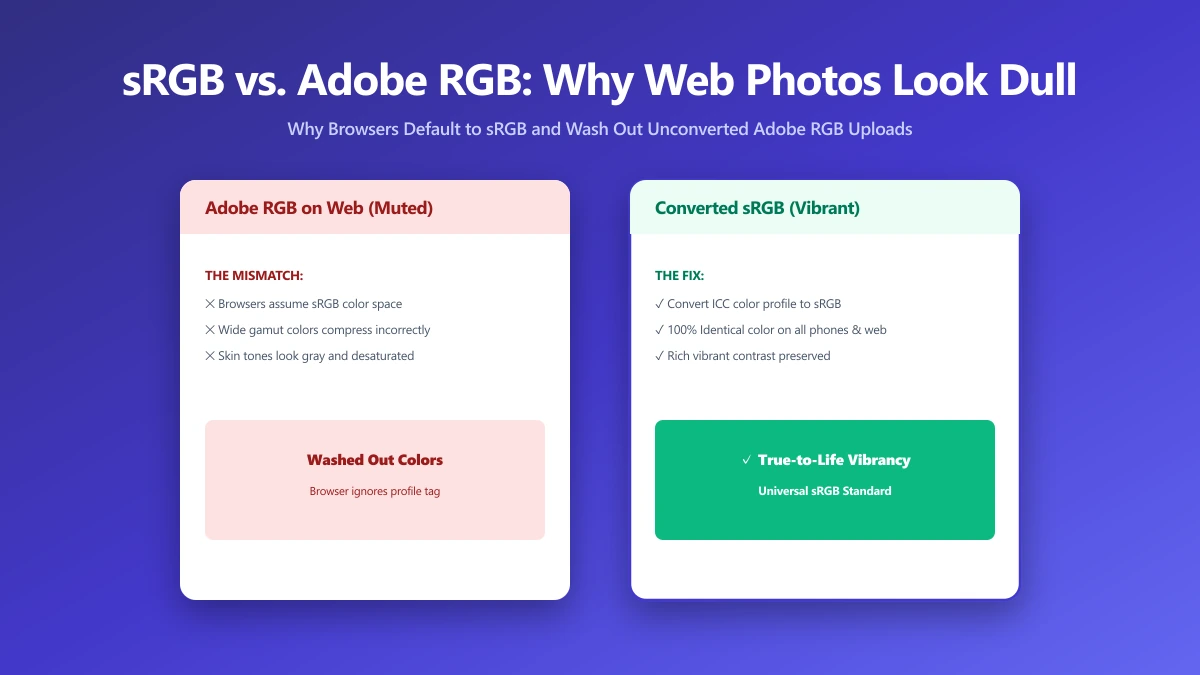
sRGB vs Adobe RGB: Why Your Photos Look Dull the Moment You Upload Them
Edit in Adobe RGB and your photos can look dull the moment they're uploaded, since the web assumes sRGB. Here is the one export setting that fixes it.
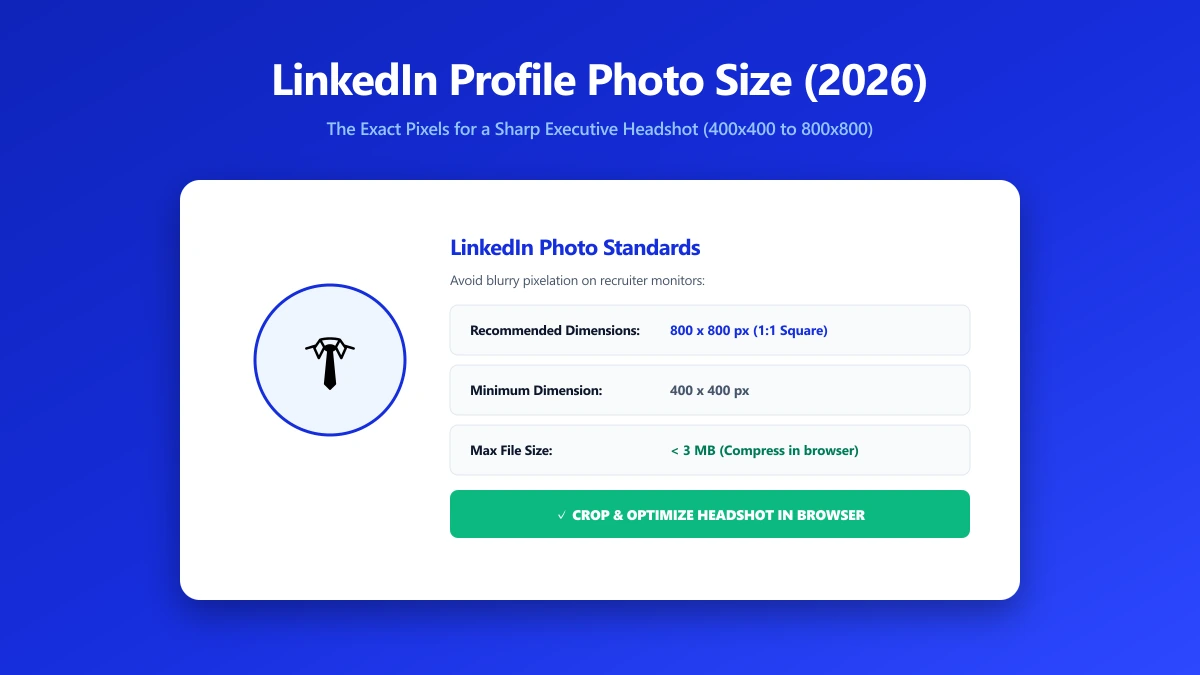
LinkedIn Profile Photo Size in 2026: The Exact Pixels for a Sharp Headshot
LinkedIn recommends 400x400 pixels for a profile photo, but sharper results need larger uploads. Here is the exact pixel spec for a professional headshot.
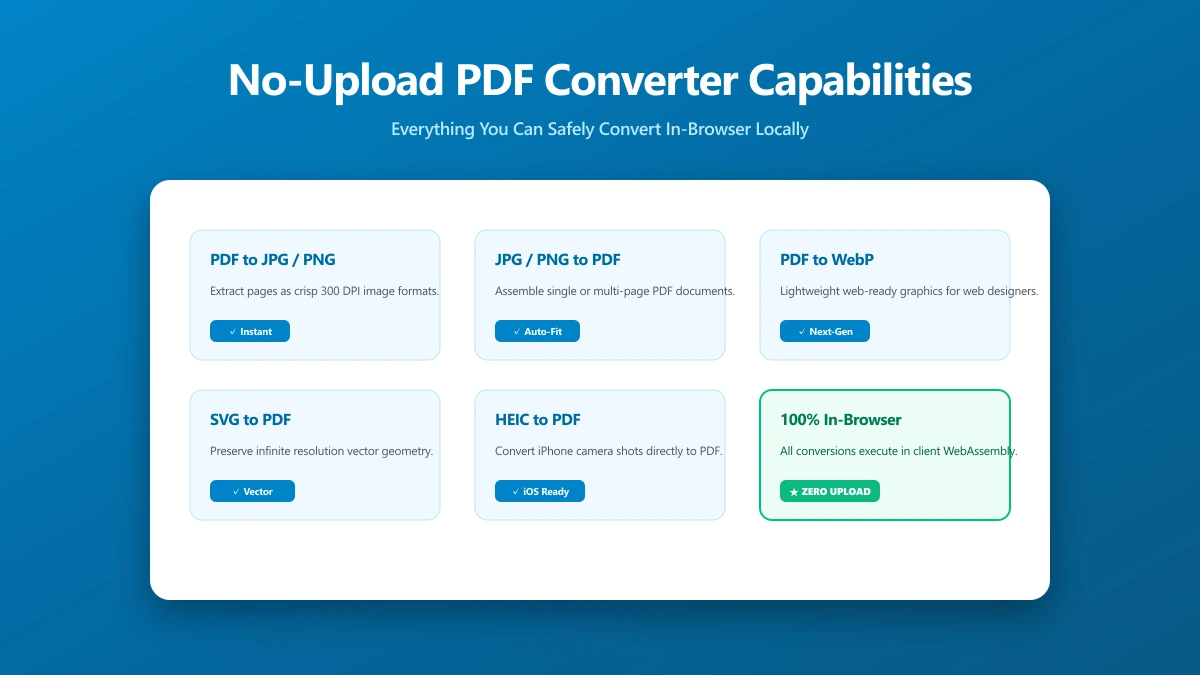
No-Upload PDF Converter: A Capability Checklist for What You Can Do Locally
Looking for a no-upload PDF converter? Here is a capability checklist, exactly which PDF tasks ImagePDF.Tools handles entirely in your browser, with nothing ever sent to a server.
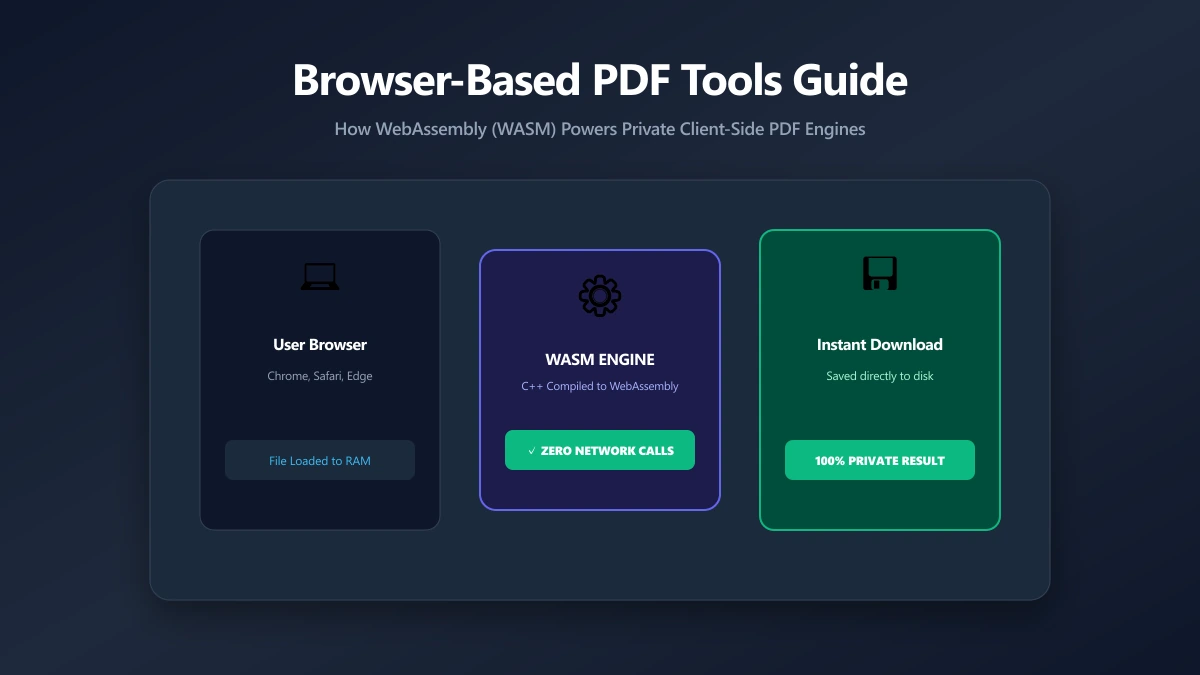
Browser-Based PDF Tools: What They Are and Why They Work Differently
What are browser-based PDF tools, and how are they different from the upload-based converters most people are used to? Here is how the architecture works, and where to find them.
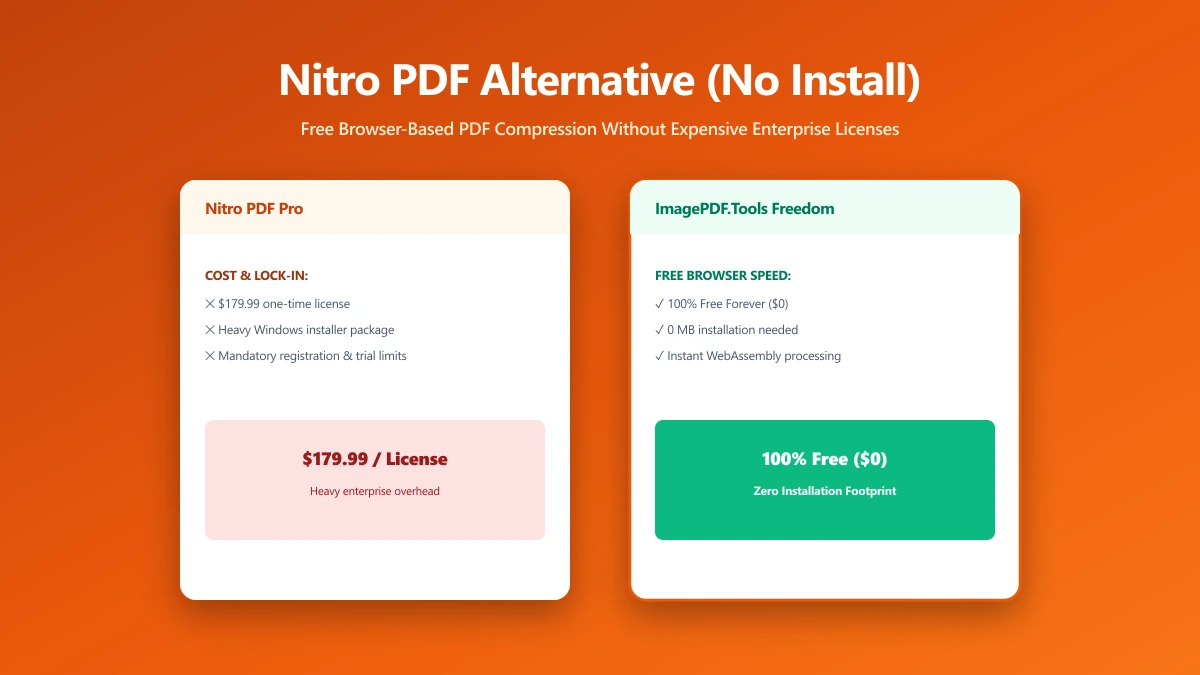
Nitro PDF Alternative: Free Browser-Based Compression Without the Install or Subscription
Nitro is a heavyweight paid suite, overkill for one PDF job. Here is a free, browser-based alternative for everyday tasks, no install, no subscription.
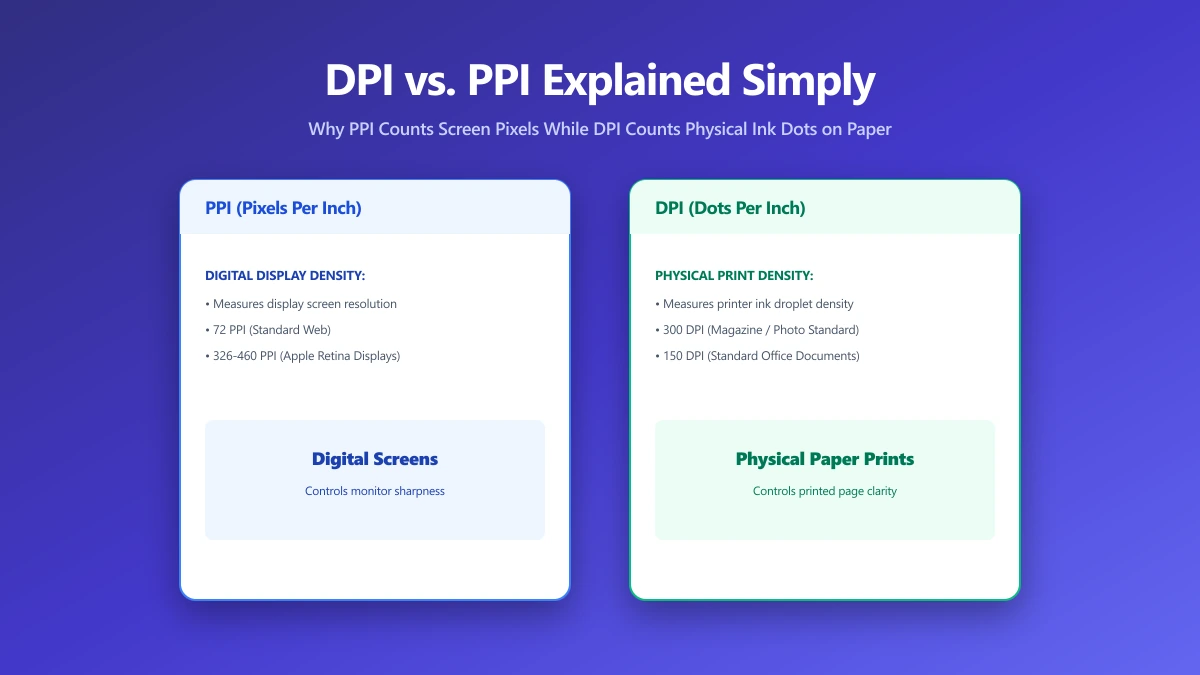
DPI vs PPI Explained: Why a "300 DPI" Image Looks Fine Online but Blurry When Printed
DPI and PPI measure different things, and mixing them up is why sharp on-screen images print blurry. Here is the actual difference, explained clearly.
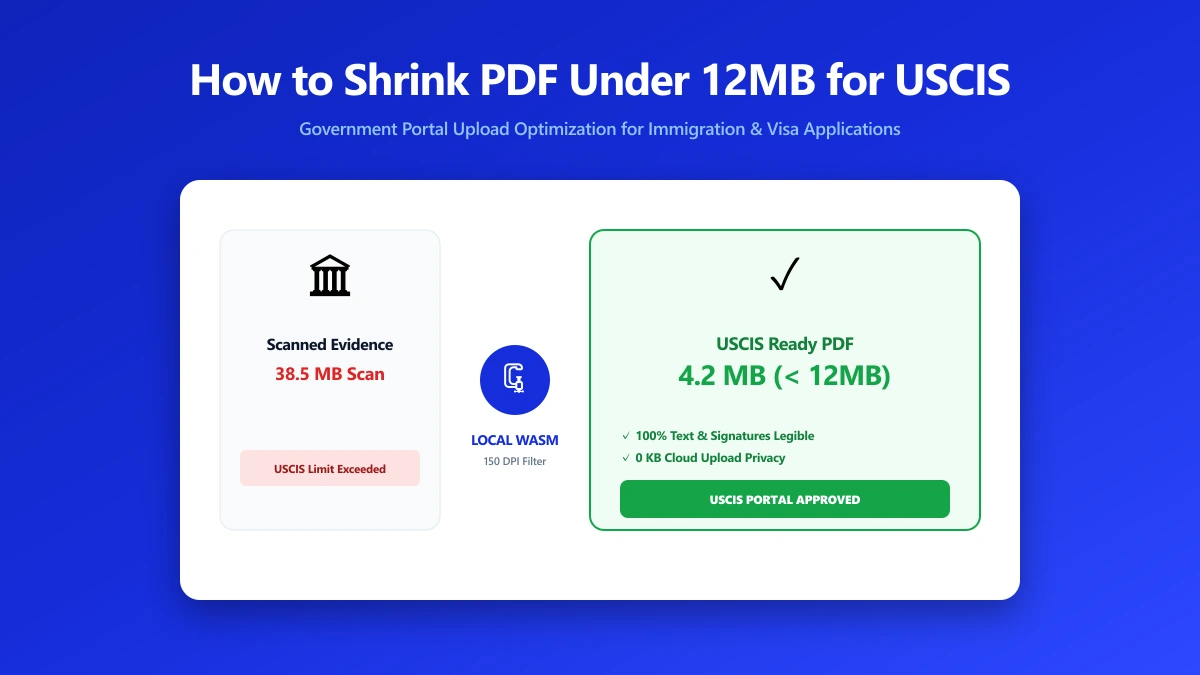
How to Shrink a PDF Under 12MB for USCIS and Other Government Upload Portals
USCIS and other government portals reject oversized or encrypted PDFs. Here is how to shrink your document under the size limit without losing legibility.
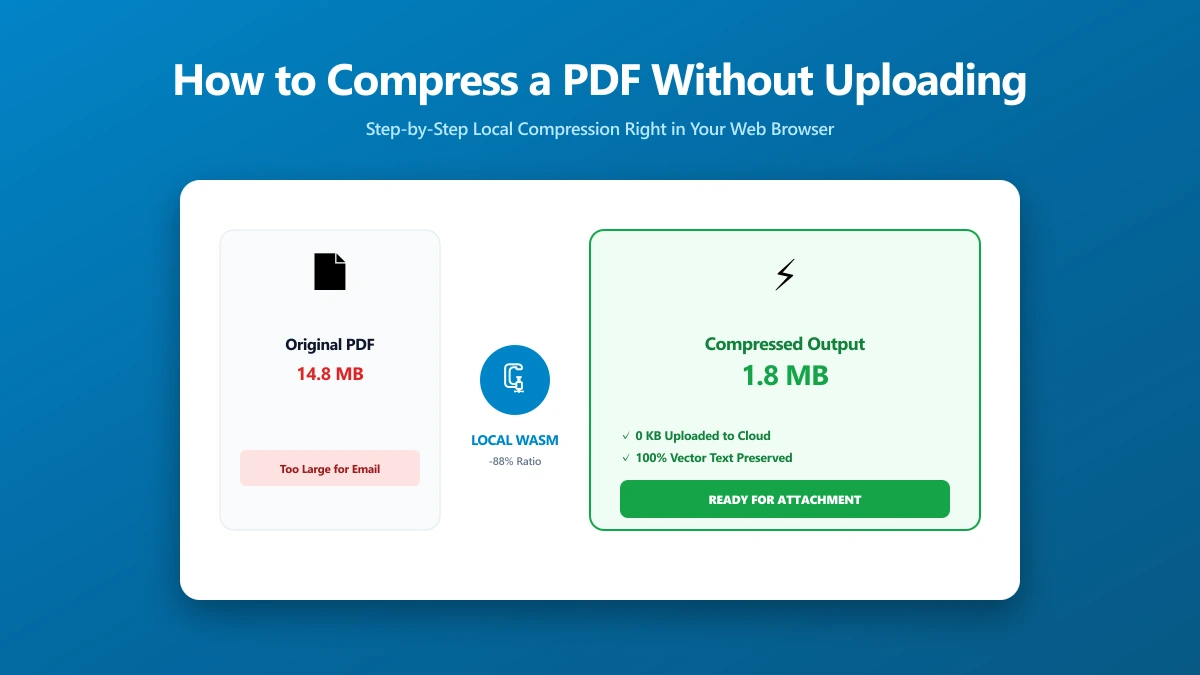
How to Compress a PDF Without Uploading It (Step by Step)
Want to compress a PDF without uploading it to a server? Here is exactly how, using a free browser-based tool that never sends your file anywhere, plus how to verify it yourself.
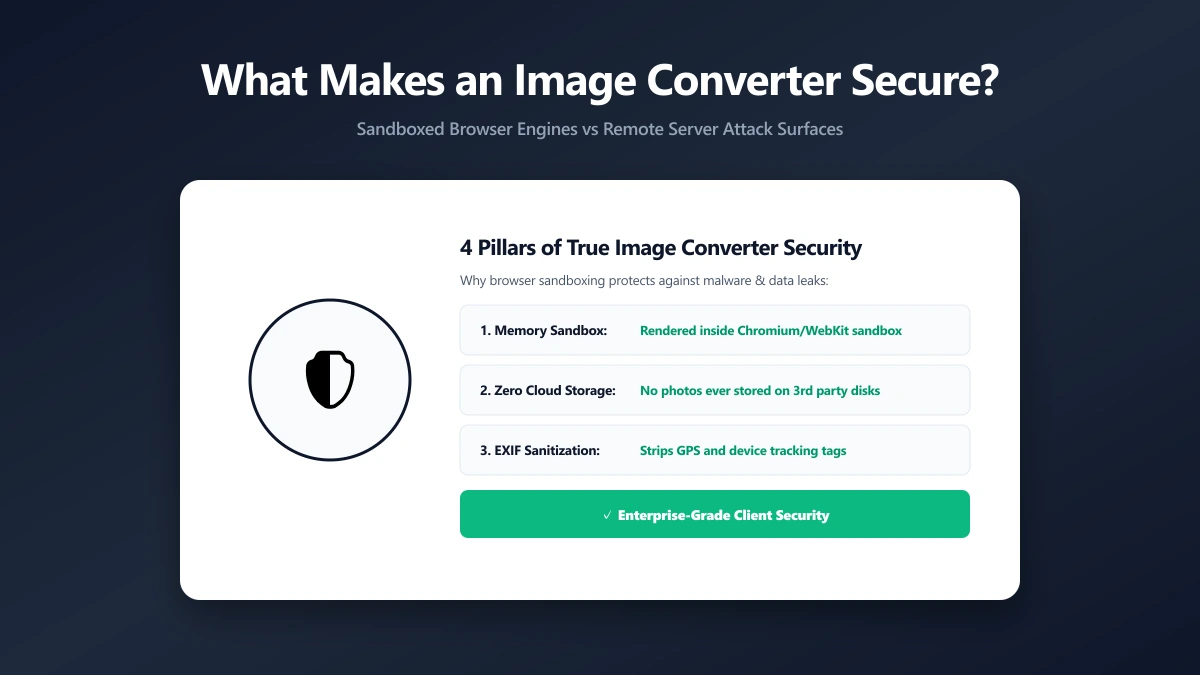
What Makes an Image Converter Actually Secure (It Is Not Just About Uploads)
A secure image converter is about more than whether it uploads your file. Malicious SVGs, decompression bombs, and crafted metadata are real risks, here is how they work and how to avoid them.
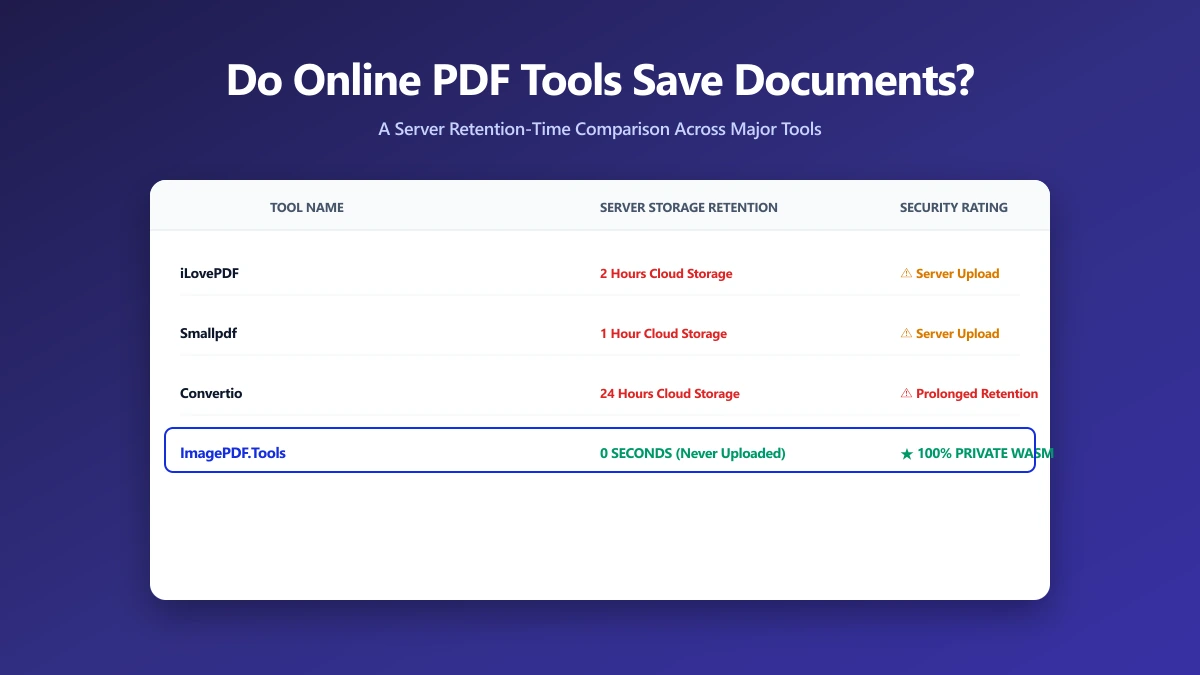
Do Online PDF Tools Save Your Documents? A Retention-Time Comparison
Do online PDF tools save your documents after you use them? Almost all of them, for anywhere from 1 hour to 24 hours. Here is a full, sourced comparison across every major tool, and the one that saves nothing at all.
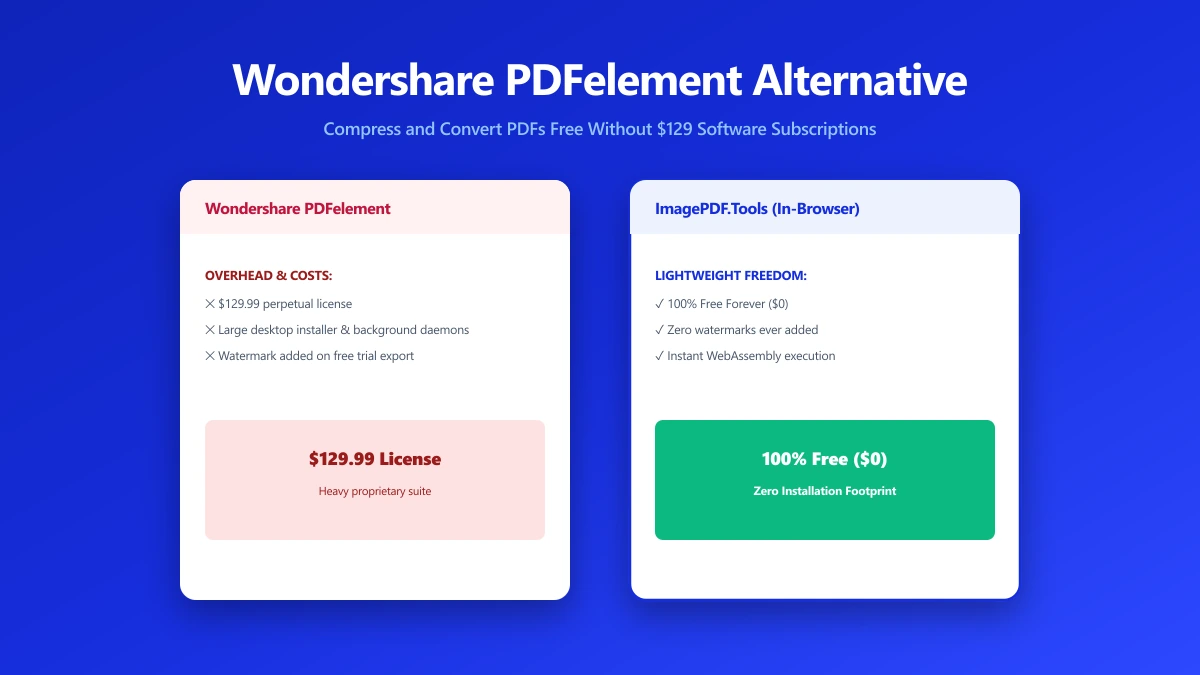
Wondershare PDFelement Alternative: When You Just Need to Shrink a File, Not Buy Software
PDFelement is a full paid PDF suite, often overkill for a single compression job. Here is a free, no-install alternative for everyday PDF tasks instead.
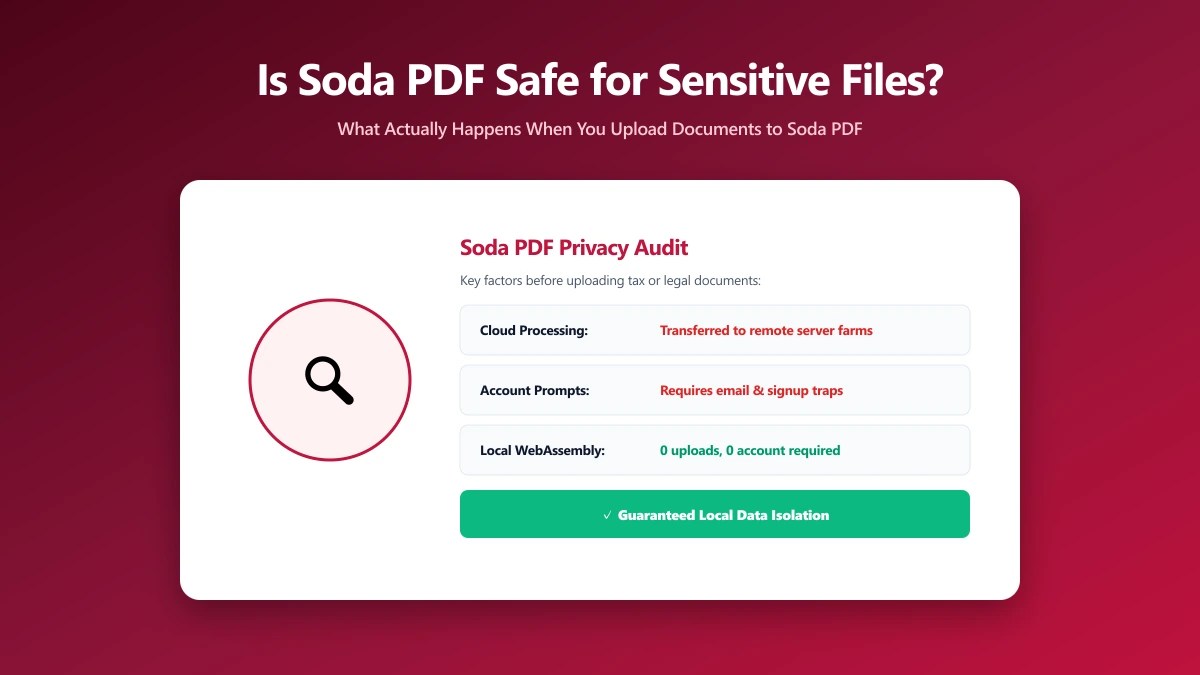
Is Soda PDF Safe? What Happens to Your File When You Upload It
Is Soda PDF safe to use? Here is exactly how it processes your file, what real user reviews say about the experience, and an alternative worth trying.
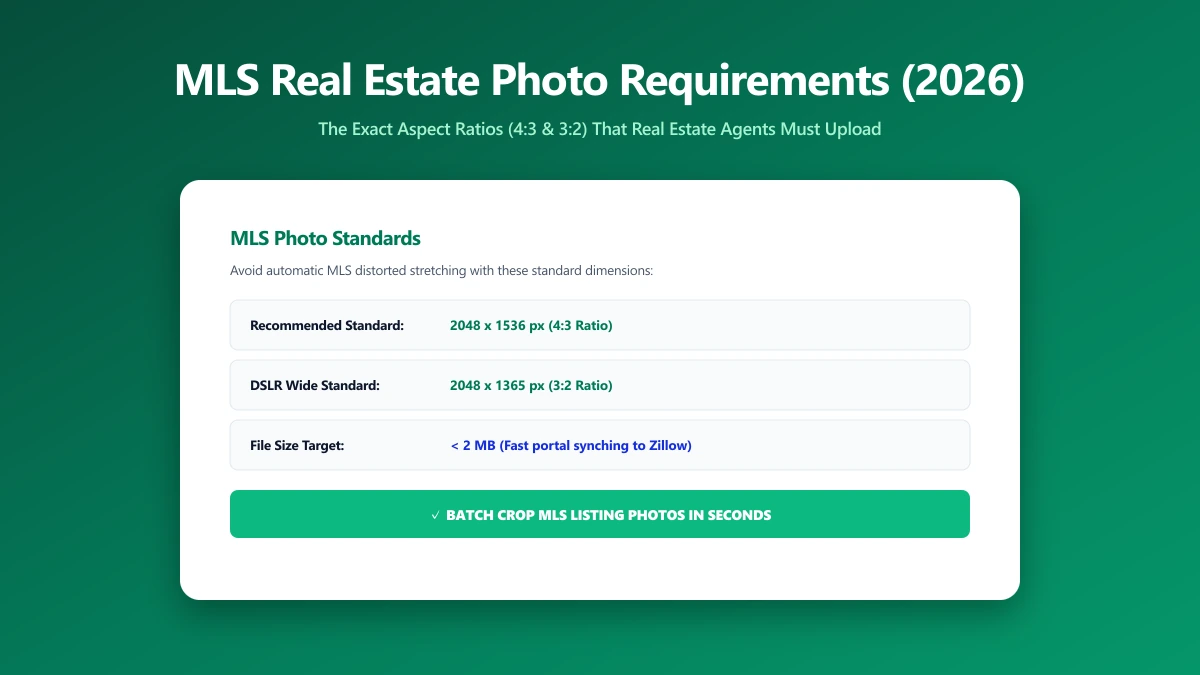
MLS Photo Size Requirements: The Exact Dimensions Agents Should Upload in 2026
Most MLS boards want listing photos near 2048x1365 pixels. Upload raw camera files instead and they often get badly auto-downscaled. Here is the spec.
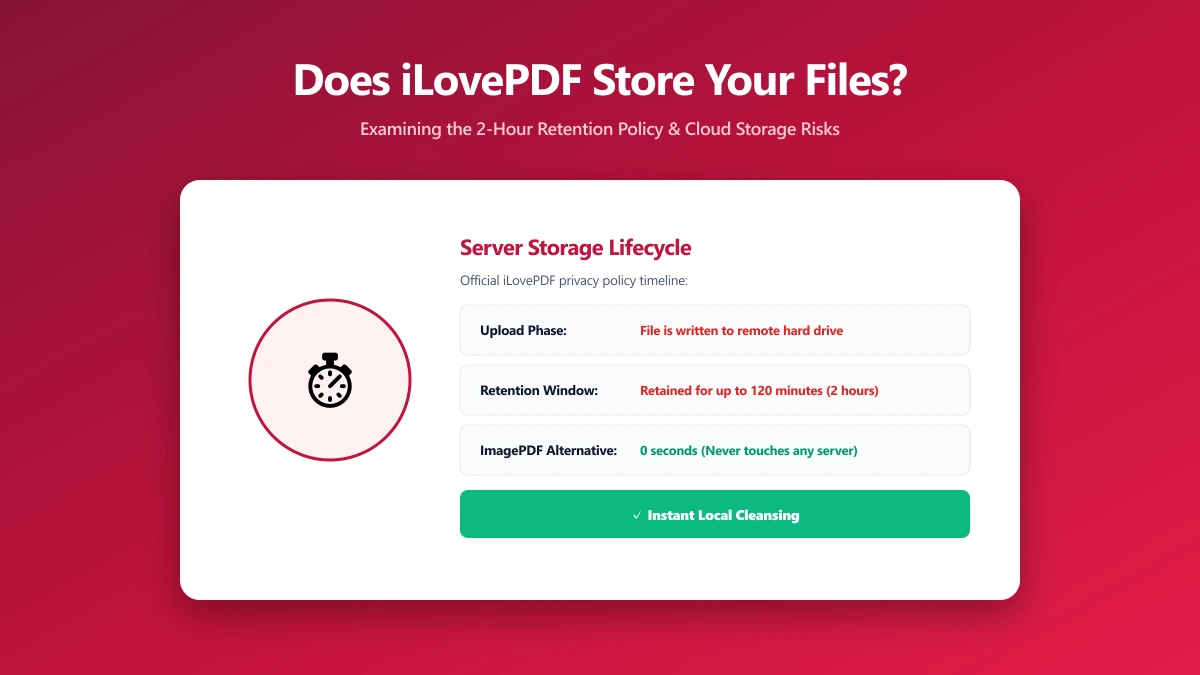
Does iLovePDF Store Your Files? Here Is Exactly How Long
Does iLovePDF store your files? Yes, standard tools for up to 2 hours, but e-signed documents are kept for 5 years. Here is exactly what iLovePDF's own policy says, and how ImagePDF.Tools avoids the question entirely.
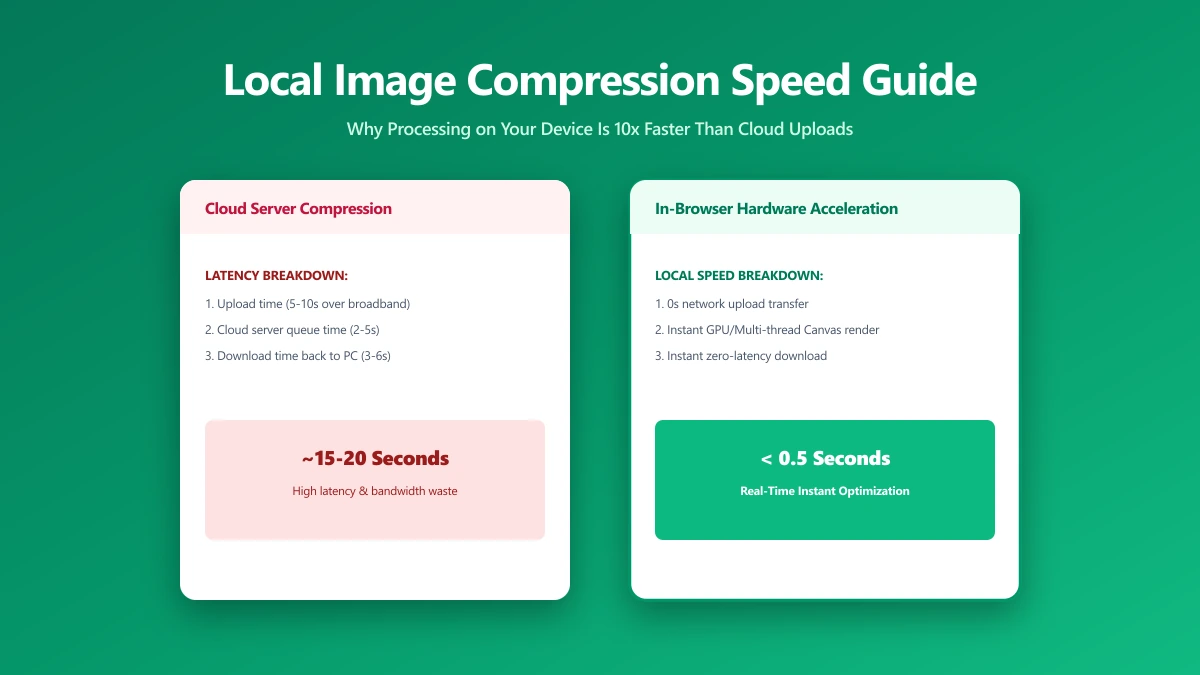
Local Image Compression: Why Processing on Your Device Is Often Faster, Too
Local image compression means your photo is compressed on your own device instead of a server. Here is what that means for quality, speed, and privacy, with a real-world comparison.
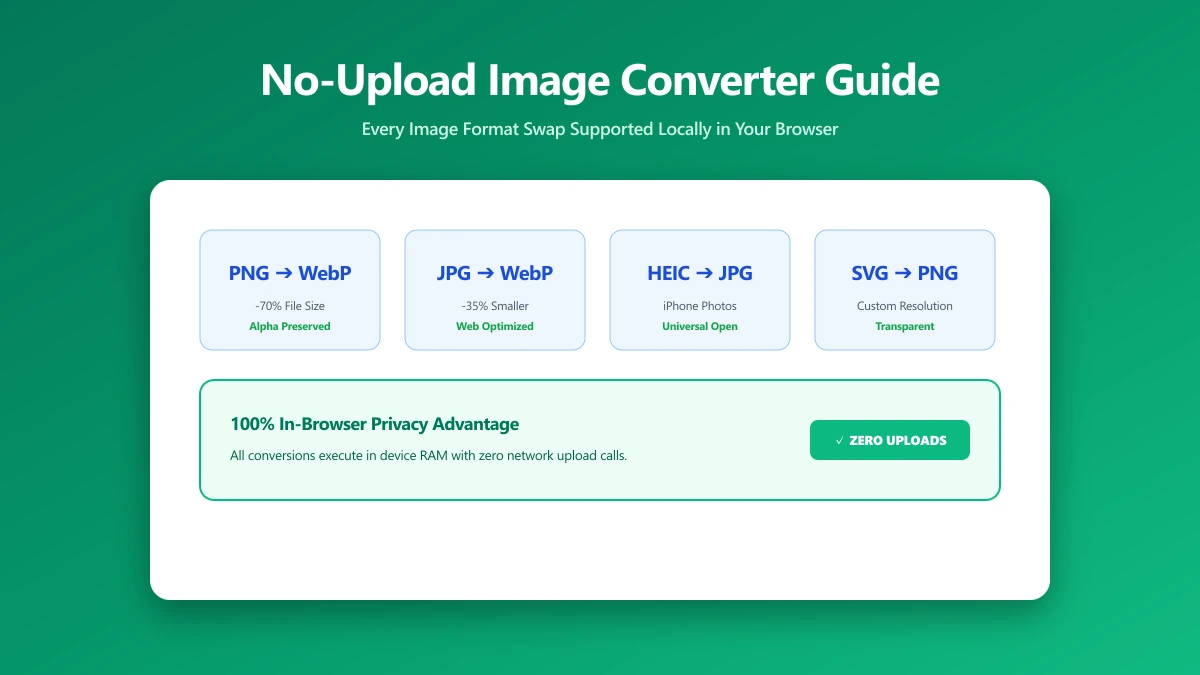
No-Upload Image Converter: Every Format Swap You Can Do Locally
Looking for a no-upload image converter? Here is exactly which image format conversions, JPG, PNG, WebP, SVG, and more, ImagePDF.Tools handles entirely in your browser.
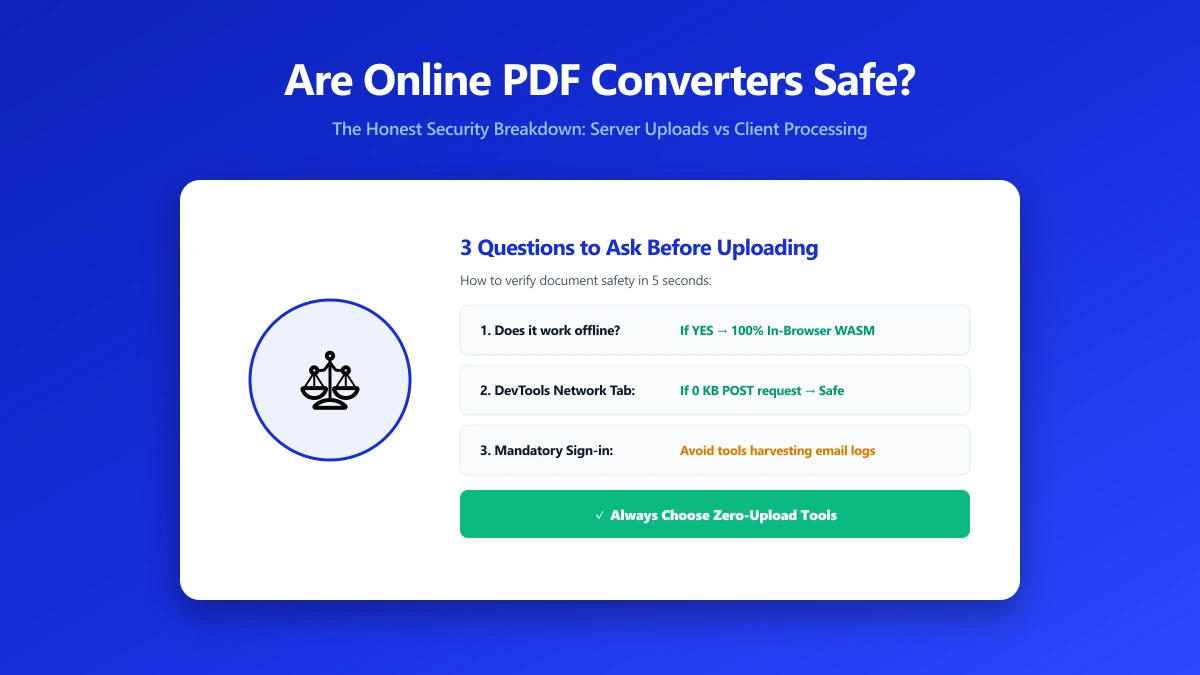
Are Online PDF Converters Safe? The Honest Answer
Are online PDF converters safe? Most are reasonably secure and will not steal your file, but nearly all of them upload it to a server first. Here is what that actually means, tool by tool.
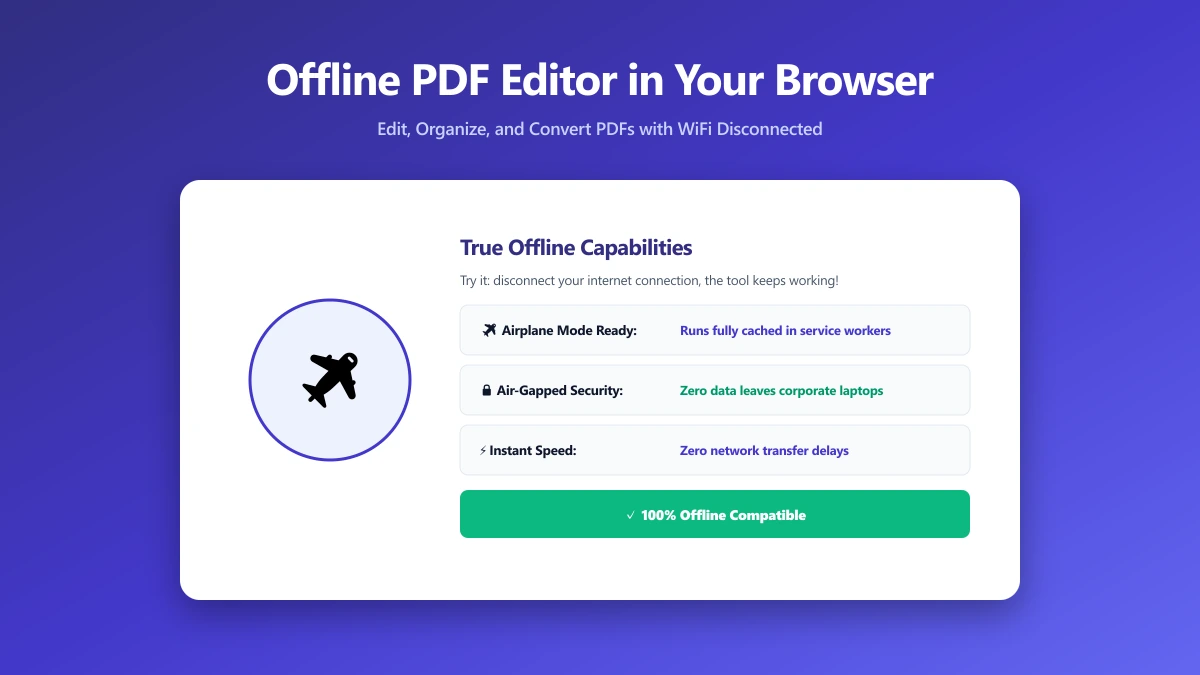
Looking for an Offline PDF Editor? Here Is One You Do Not Have to Install
Searching for an offline PDF editor for privacy or no-internet-dependency reasons? A browser-based editor gets you the same benefit, your file never leaves your device, with no download required.
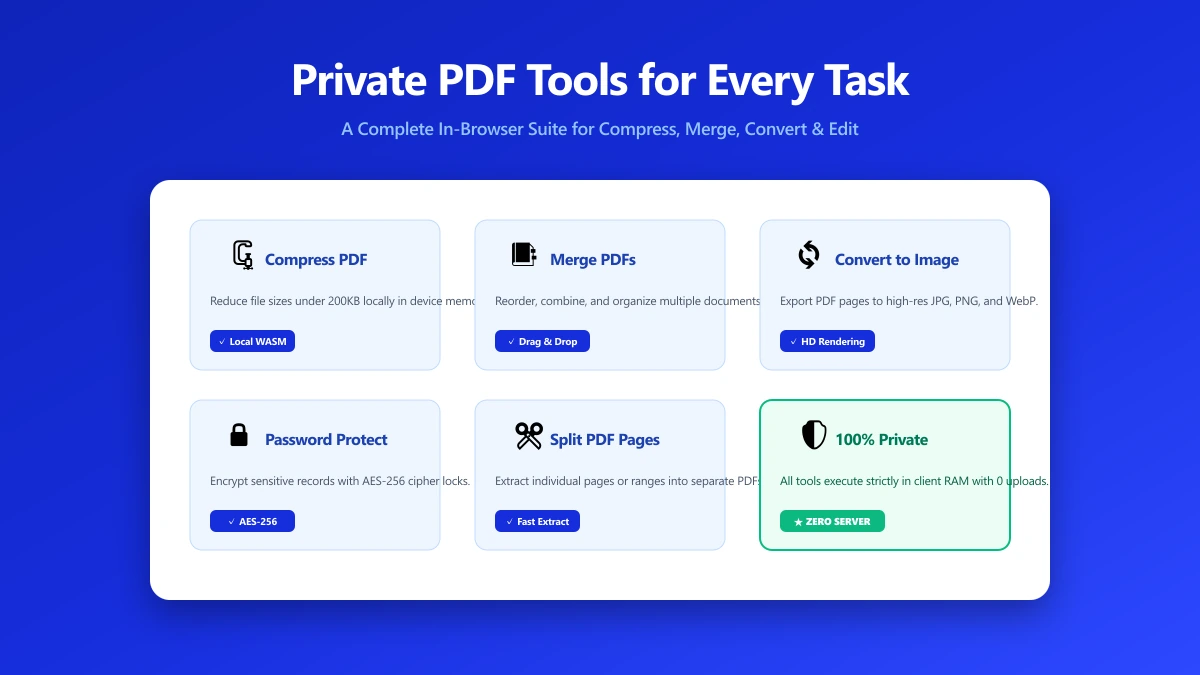
Private PDF Tools: A Practical Toolkit for Every Common Task
Looking for private PDF tools that never upload your file? Here is a practical, task-by-task list, merge, split, compress, edit, protect, and more, all running entirely in your browser.
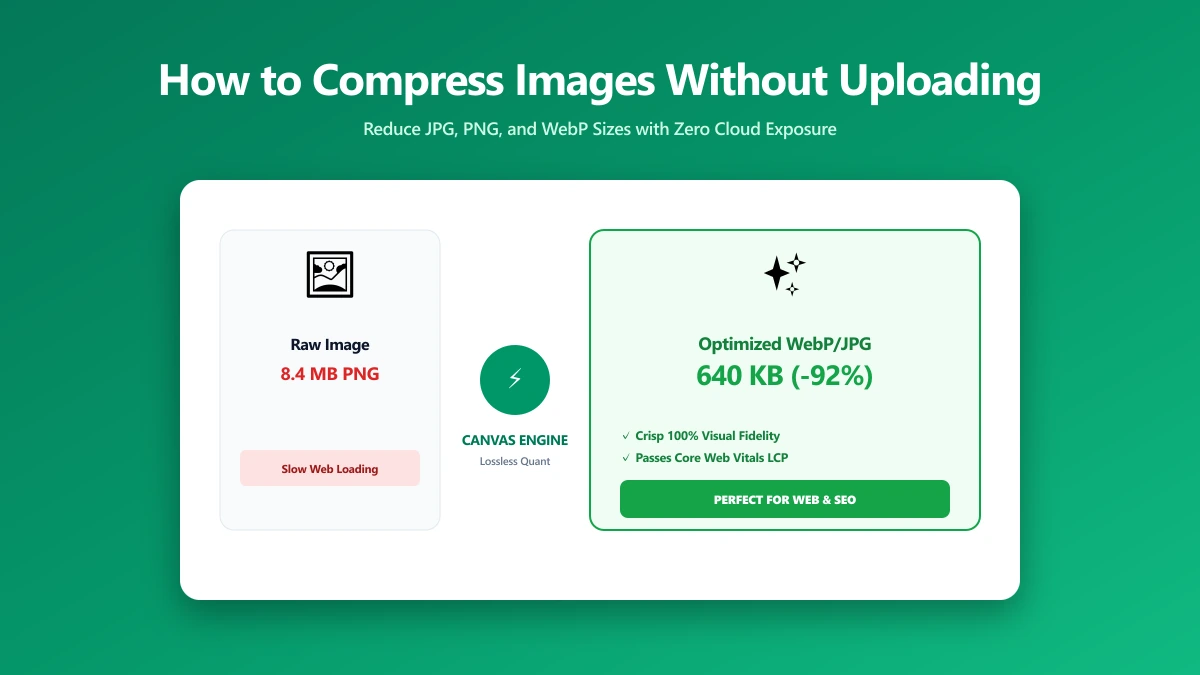
How to Compress an Image Without Uploading It (Step by Step)
Want to compress a photo or image without uploading it to a server? Here is exactly how, using a free browser-based compressor that never sends your file anywhere.
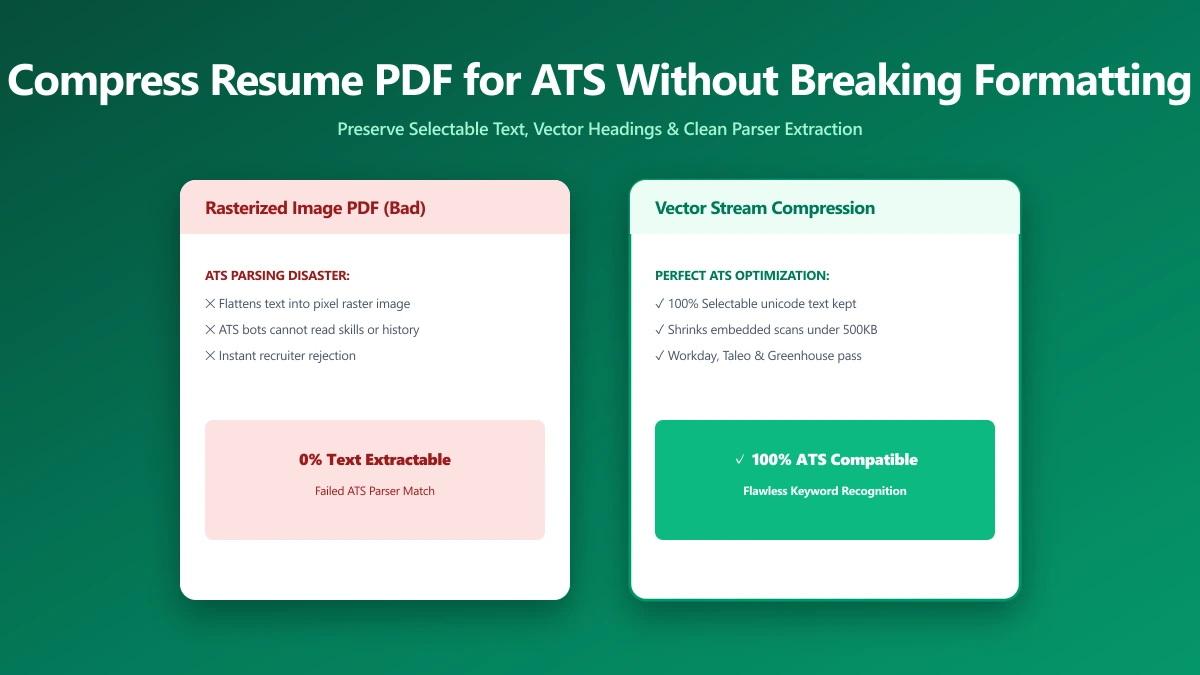
How to Compress a Resume PDF for ATS Without Breaking the Formatting
Most ATS platforms cap resume uploads near 1MB and reject oversized files outright. Here is how to shrink your resume without breaking the formatting.
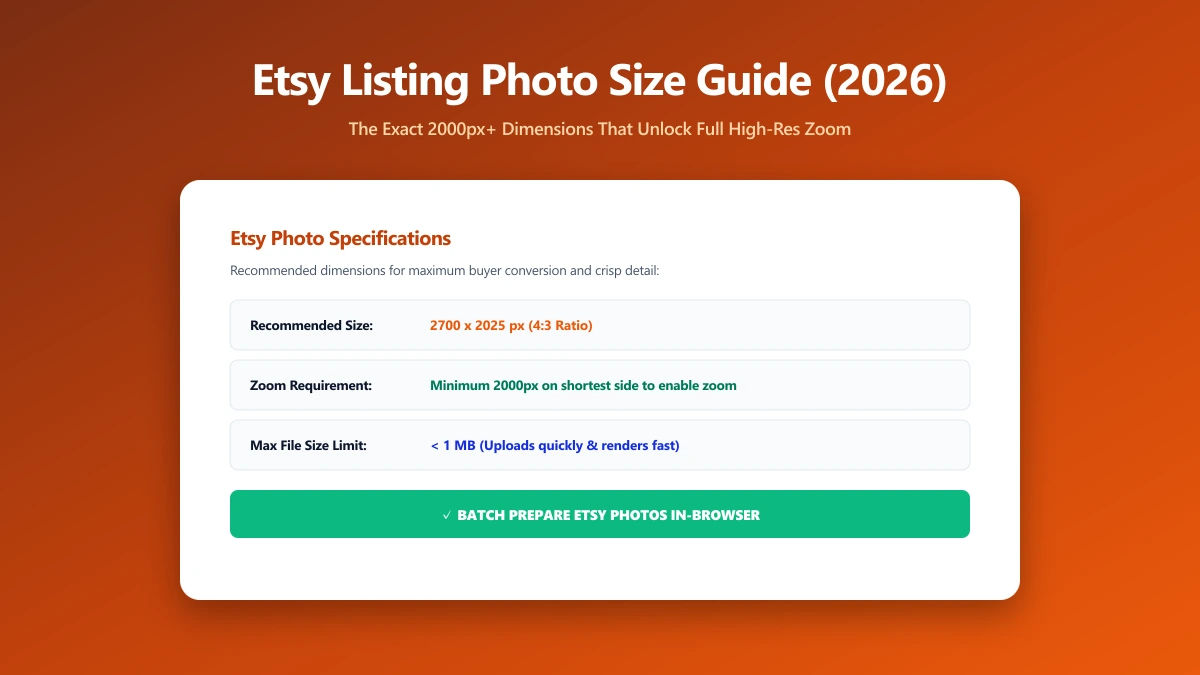
Etsy Listing Photo Size Guide 2026: The Exact Pixel Dimensions That Unlock Zoom
Etsy zoom only activates above a specific pixel size. See the exact dimensions so your listing photos look sharp, not flat and soft on shoppers' screens.
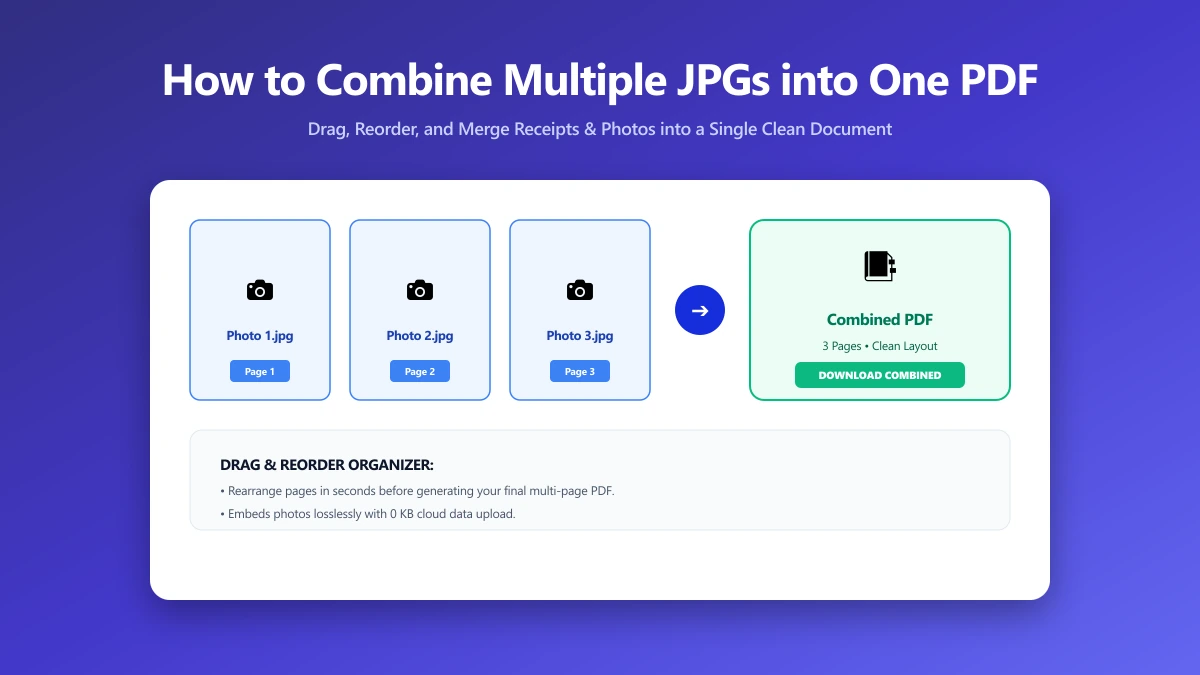
How to Combine Multiple JPGs into One PDF (Free, No Sign-Up)
Need to combine several JPG photos into one ordered PDF with no sign-up required? Here is exactly how, entirely inside your browser, in just a few seconds.
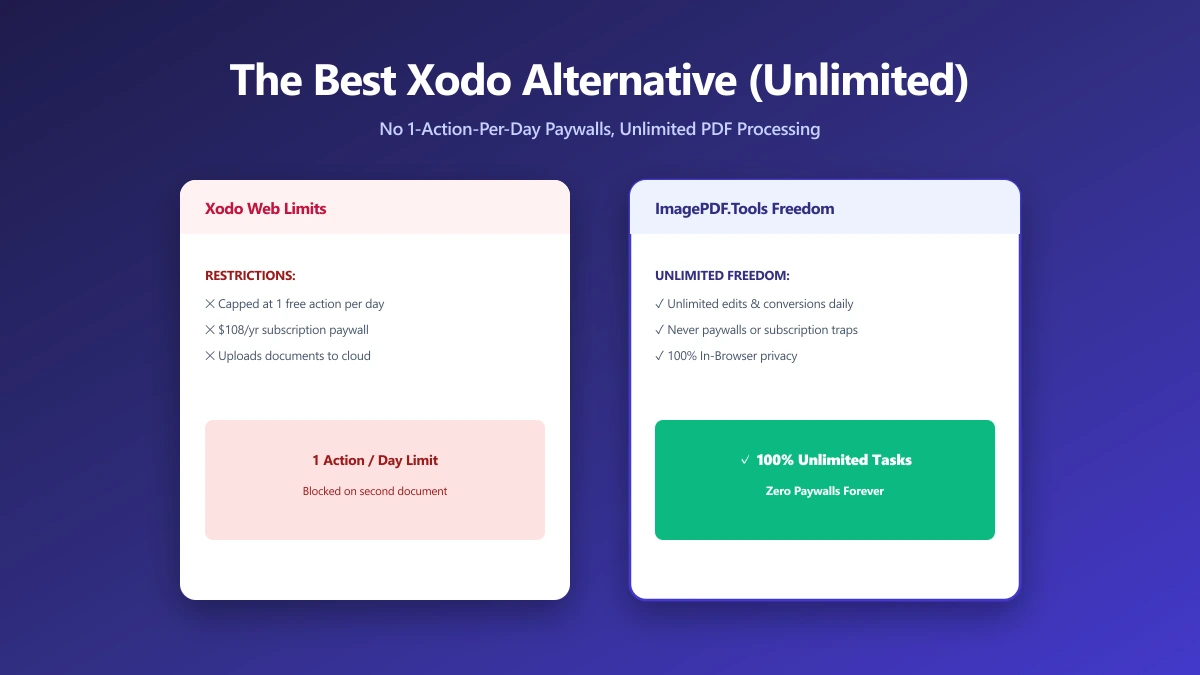
The Best Xodo Alternative If One Edit a Day Is Not Enough (2026)
Xodo Web limits free users to editing one document a day, and any tool that needs to upload holds the file for up to an hour. ImagePDF.Tools edits PDFs unlimited, free, entirely in your browser.
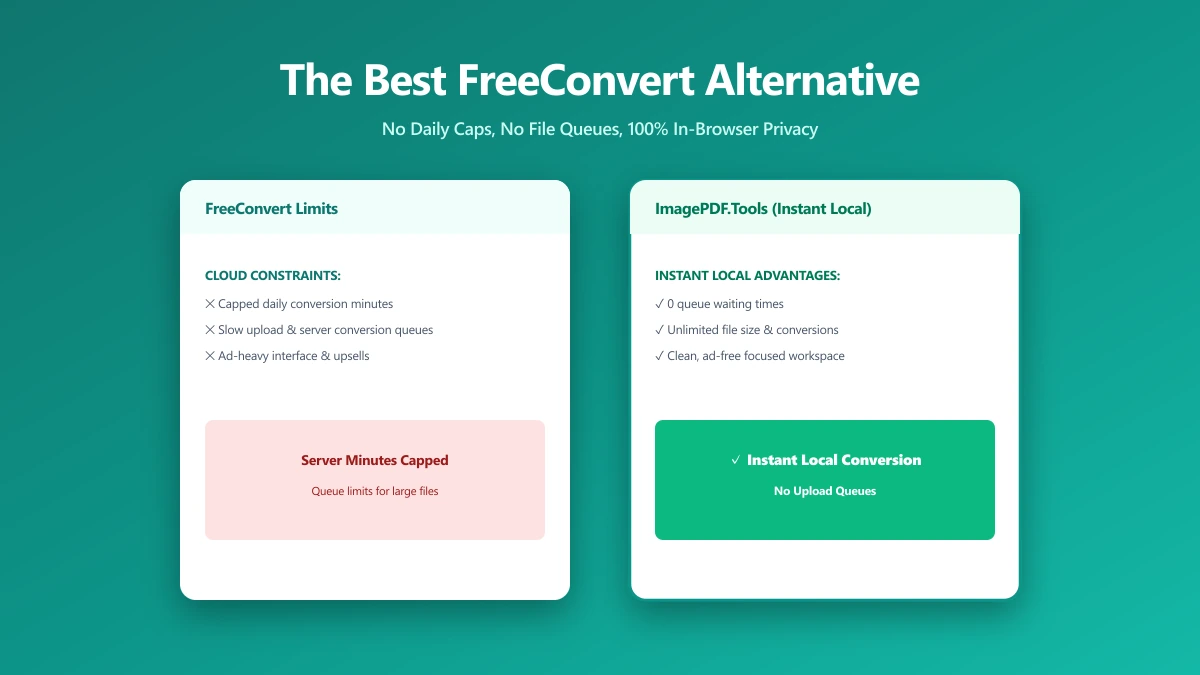
The Best FreeConvert Alternative for PDFs and Images (No Upload, No Daily Cap) (2026)
FreeConvert advertises 20 free minutes a day, but independent testing found the real-world cap is closer to 10 conversions, all uploaded to AWS servers. ImagePDF.Tools converts PDFs and images unlimited, locally.
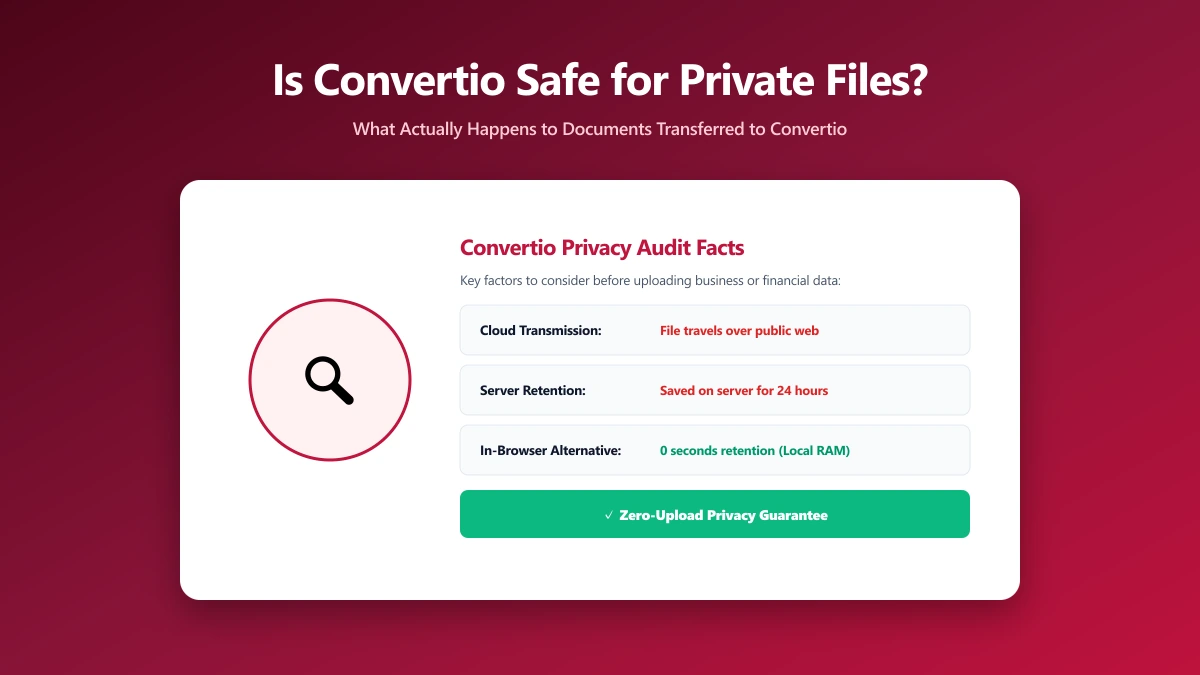
Is Convertio Safe? What Actually Happens to Your Files When You Convert Them
Is Convertio safe to use? Here is exactly what happens when you upload a file, where it goes, how long it is kept, and how ImagePDF.Tools does the same PDF and image jobs without ever uploading anything.
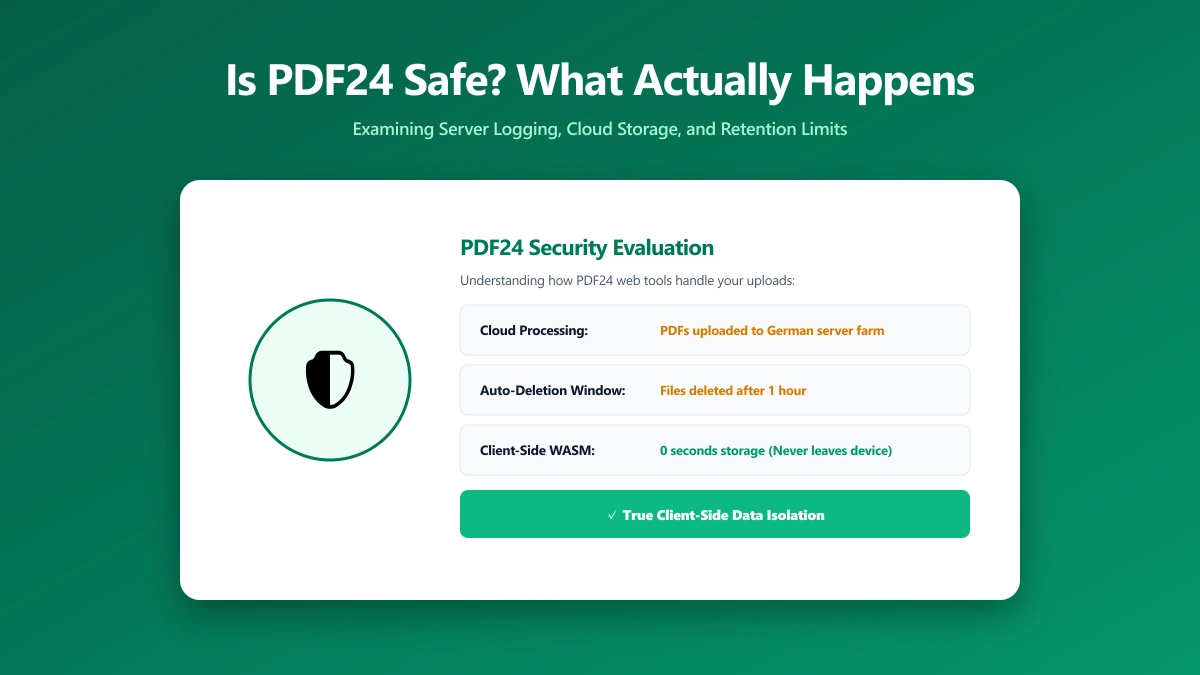
Is PDF24 Safe? What Actually Happens to Your PDFs When You Use It
Is PDF24 safe to use? Here is exactly what its own FAQ says happens to your file, how long it is kept, and how ImagePDF.Tools does the same PDF jobs without uploading anything at all.
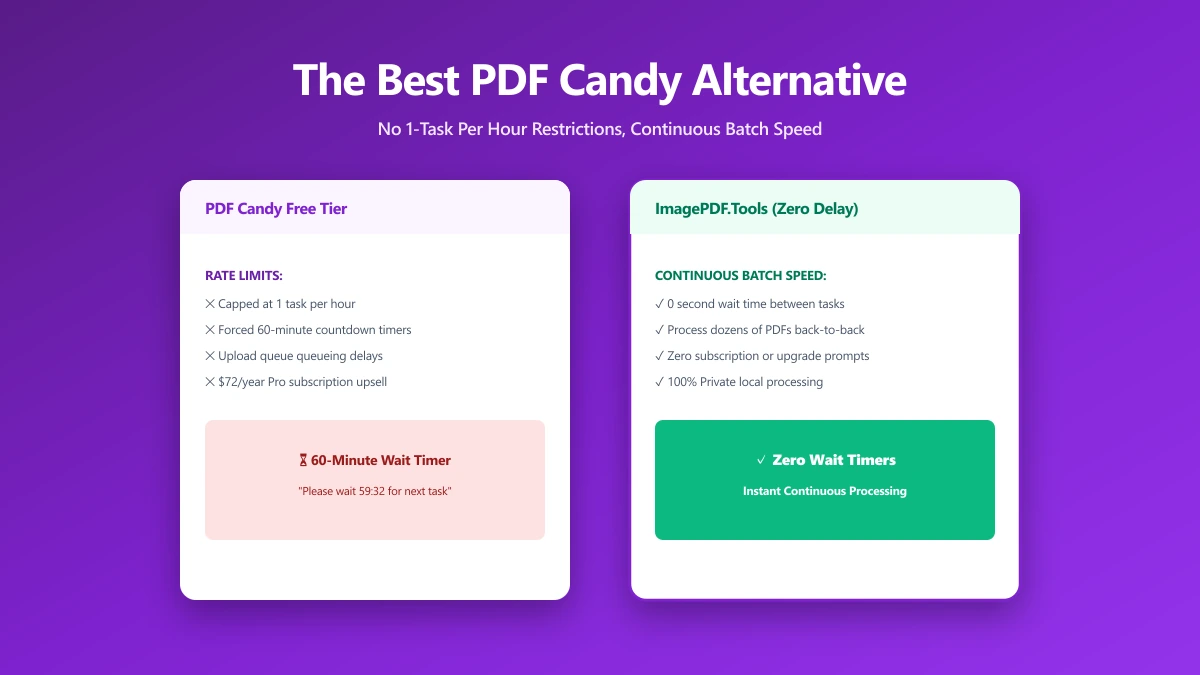
The Best PDF Candy Alternative If One Task an Hour Is Not Enough (2026)
PDF Candy's free plan allows one task per hour and holds files on its servers for up to two hours. ImagePDF.Tools compresses, merges, and edits PDFs unlimited, free, and entirely in your browser.
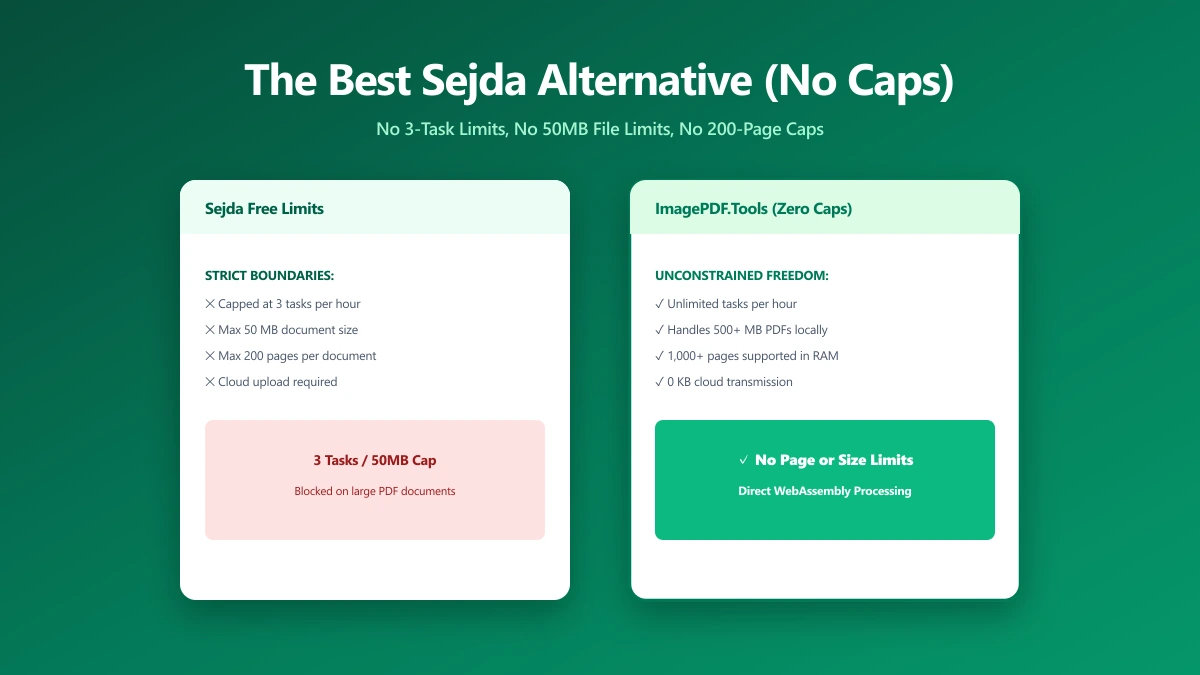
The Best Sejda Alternative If Three Tasks an Hour Is Not Enough (2026)
Sejda's free web plan caps you at 3 tasks an hour, 50 MB, and 200 pages, with files held on its servers for up to two hours. ImagePDF.Tools removes every one of those limits.
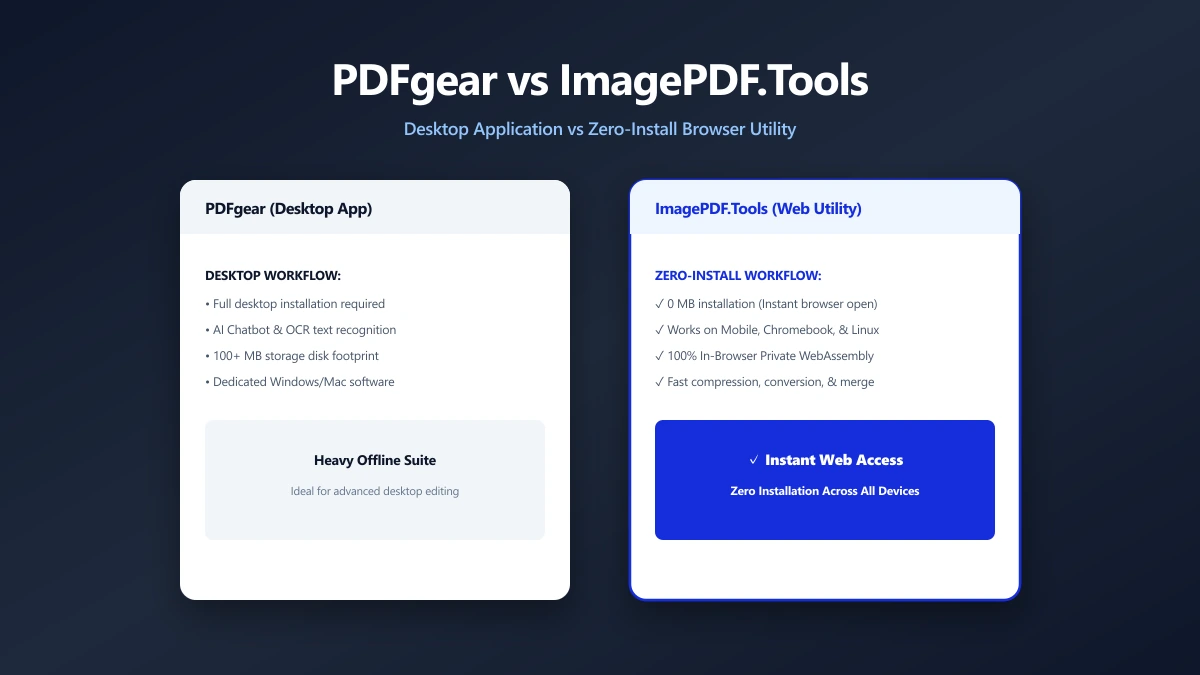
PDFgear vs ImagePDF.Tools: Two Browser-Based PDF Tools, Different Trade-Offs (2026)
PDFgear also processes several PDF tasks in your browser, but pushes a desktop app install and sits inside a growing multi-product AI suite. ImagePDF.Tools stays a single, install-free toolkit.
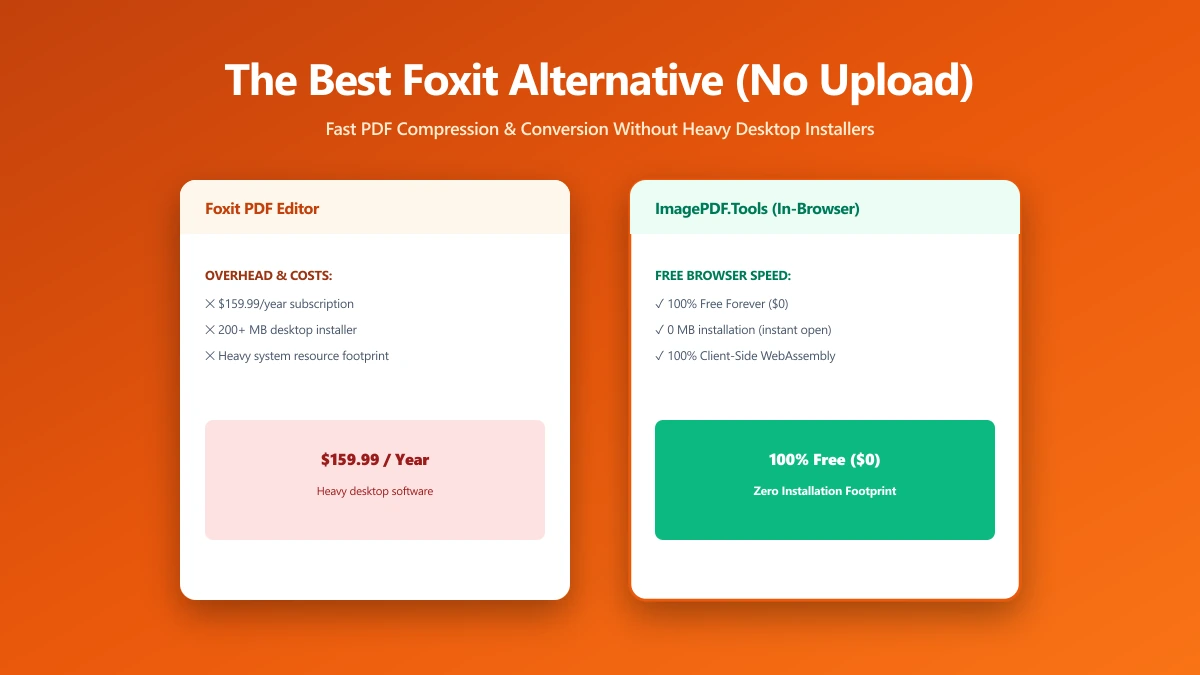
The Best Foxit Alternative for PDF Compression and Conversion Without the Upload (2026)
Foxit merges PDFs in your browser but uploads files to its cloud servers for compression and conversion. ImagePDF.Tools keeps every operation, including those two, entirely on your device.
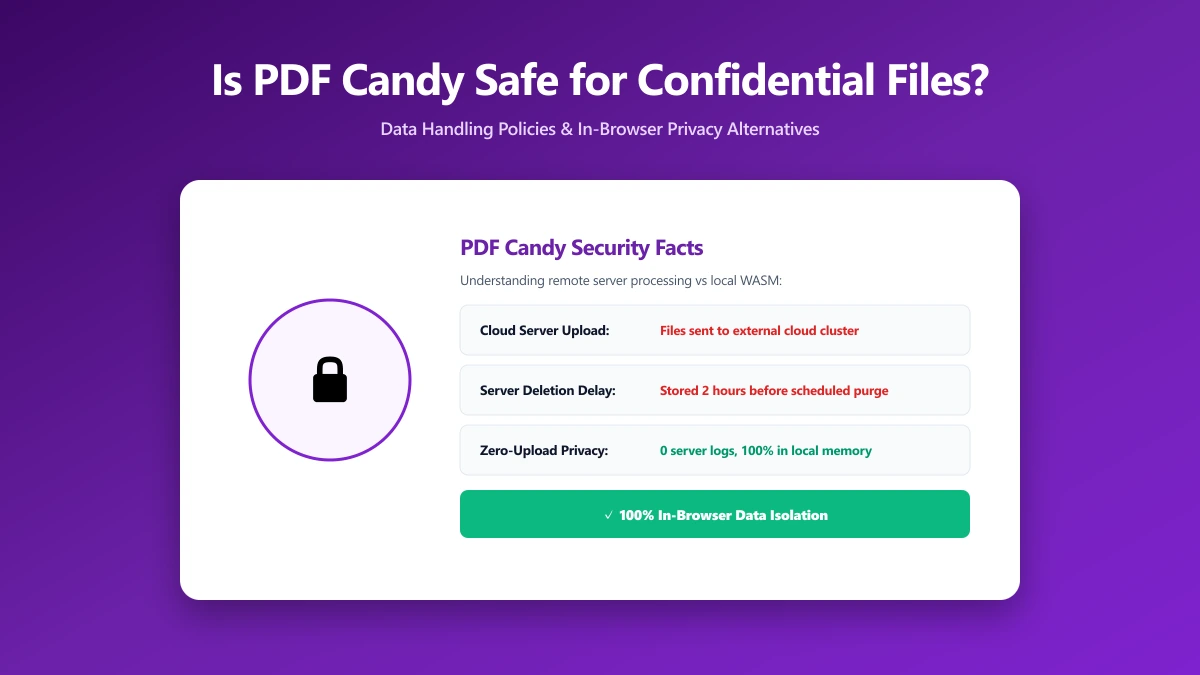
Is PDF Candy Safe? What Actually Happens to Your Files When You Convert Them
Is PDF Candy safe to use? Here is what its own security page says about encryption and file retention, and how ImagePDF.Tools does the same PDF jobs without uploading anything at all.
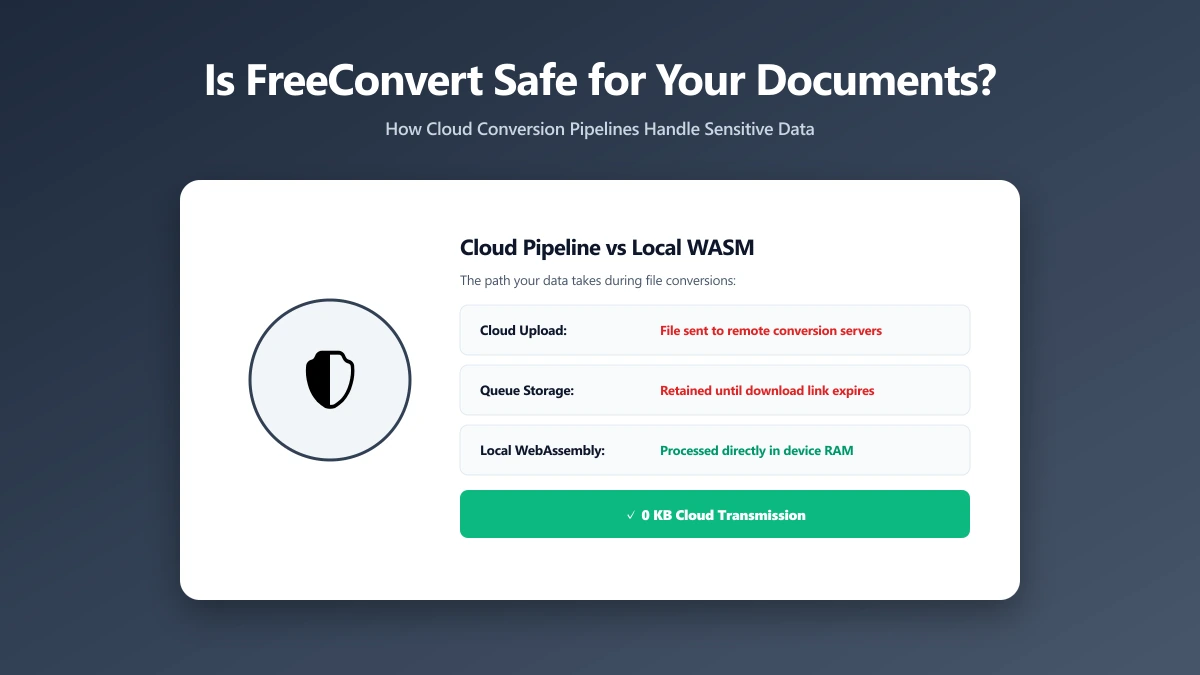
Is FreeConvert Safe? What Actually Happens to Your Files When You Upload Them
Is FreeConvert safe to use? Here is where your file actually goes, how long it is kept, and how ImagePDF.Tools converts PDFs and images without uploading anything at all.
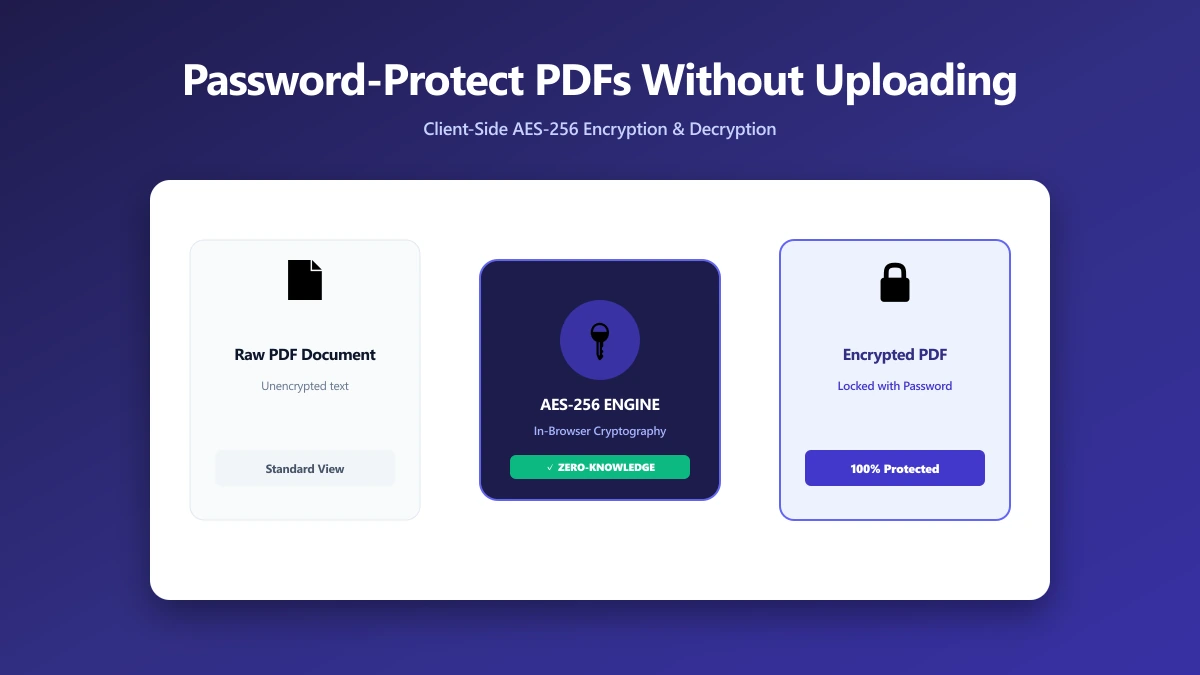
How to Password-Protect (and Unlock) a PDF Without Uploading It Anywhere
Most tools make you upload a sensitive PDF and its password to a server to encrypt it. Here is how to password-protect or unlock a PDF entirely in your browser, with nothing uploaded.
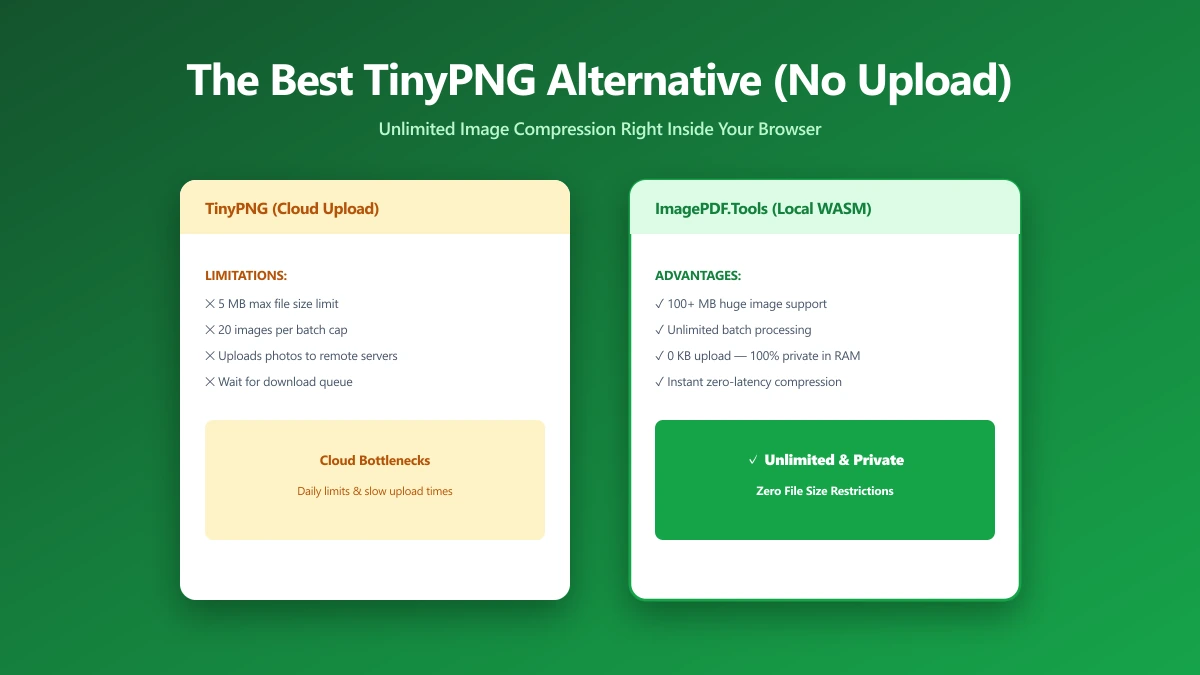
The Best TinyPNG Alternative That Never Uploads Your Images (2026)
Looking for a TinyPNG alternative? ImagePDF.Tools compresses PNG and JPEG in your browser, no upload, no batch cap, no account. Here is how it compares and how to verify it.
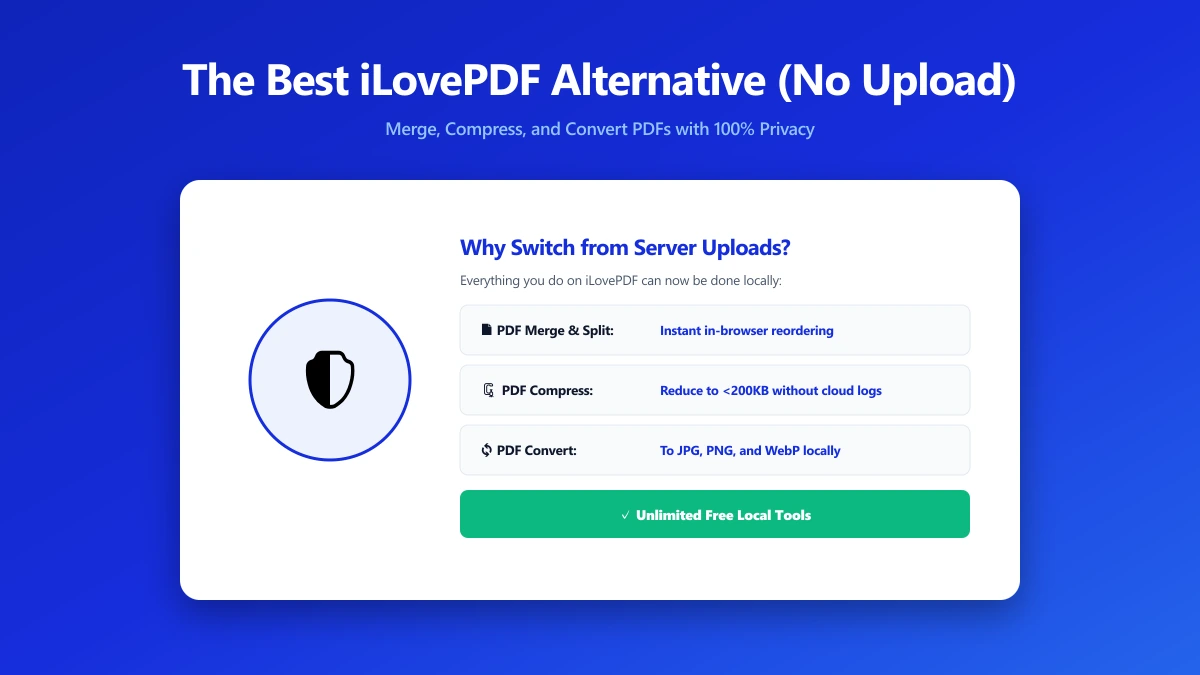
The Best iLovePDF Alternative for Anyone Who Would Rather Not Upload Their PDF (2026)
Looking for an iLovePDF alternative? ImagePDF.Tools merges, splits, compresses, and edits PDFs entirely in your browser, no upload, no account, no daily limit. Full comparison inside.
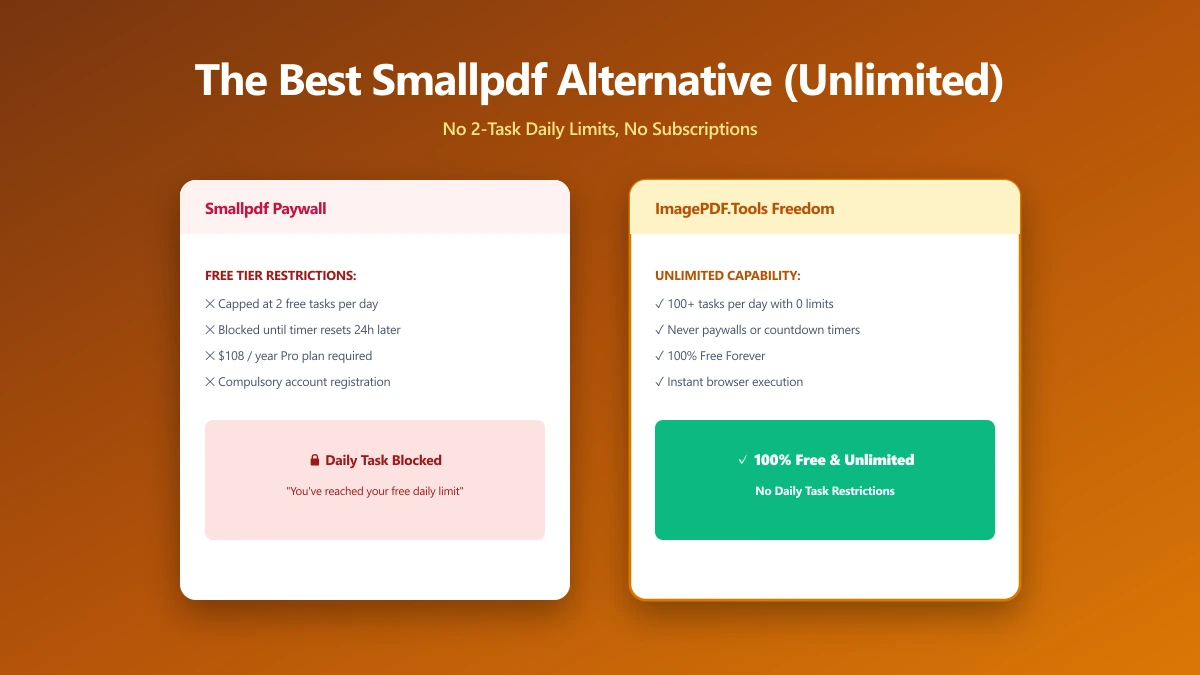
The Best Smallpdf Alternative If Two Free Tasks a Day Is Not Enough (2026)
Smallpdf caps free use at 2 tasks a day and watermarks some conversions. ImagePDF.Tools compresses, merges, and converts PDFs unlimited, free, and entirely in your browser.
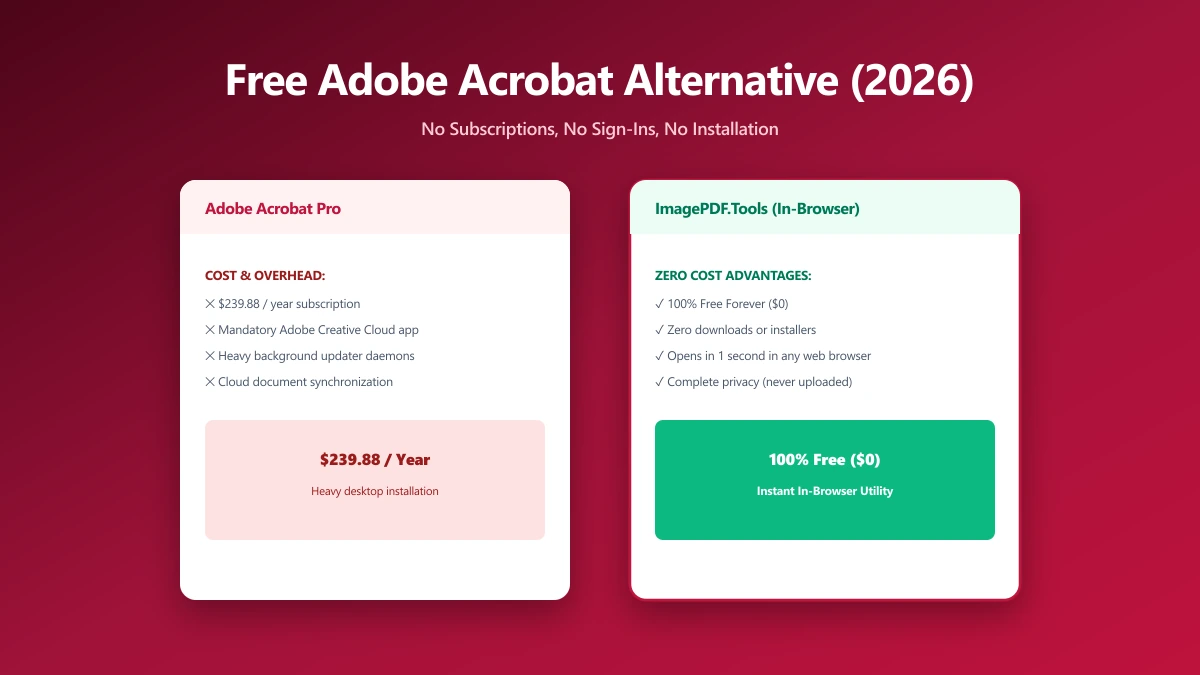
The Best Free Adobe Acrobat Alternative (No Sign-In, No Subscription) in 2026
Adobe Acrobat's free web tools allow one transaction before requiring sign-in, then one every 30 days after that. ImagePDF.Tools compresses, merges, and edits PDFs unlimited, free, in your browser.
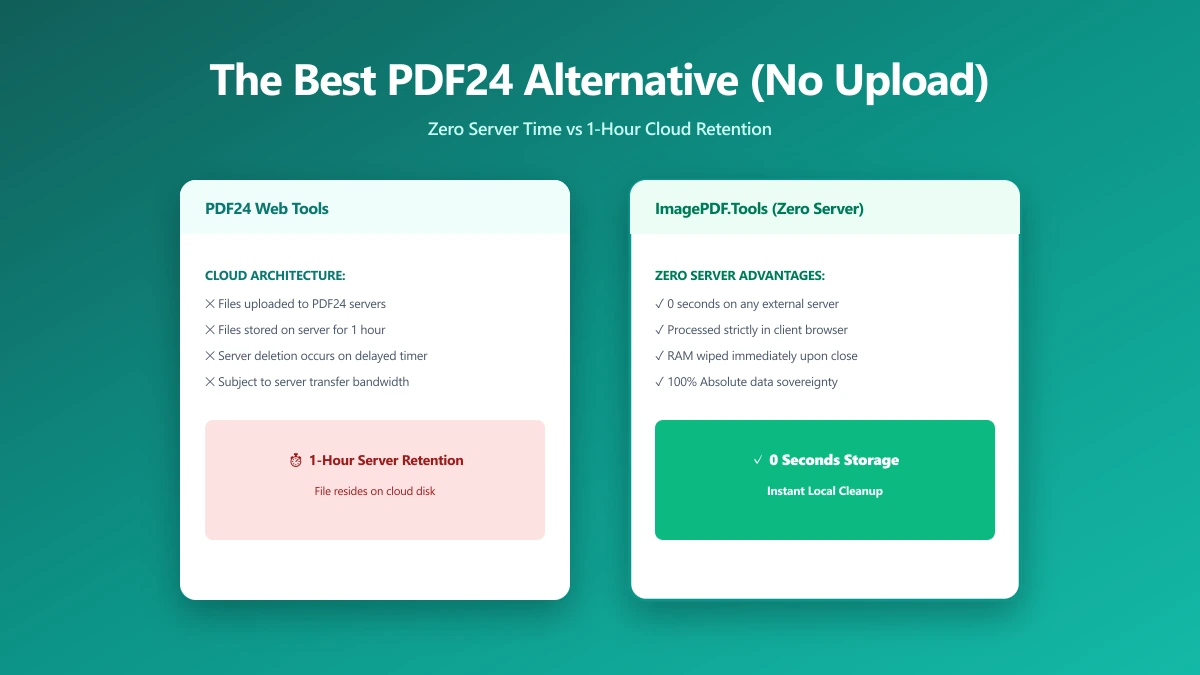
The Best PDF24 Alternative If You Want Zero Server Time, Not Just One Hour (2026)
PDF24 is unlimited and free, rare among PDF tools, but its own FAQ confirms files are uploaded and held on its servers for up to an hour. ImagePDF.Tools processes PDFs with zero upload, ever.
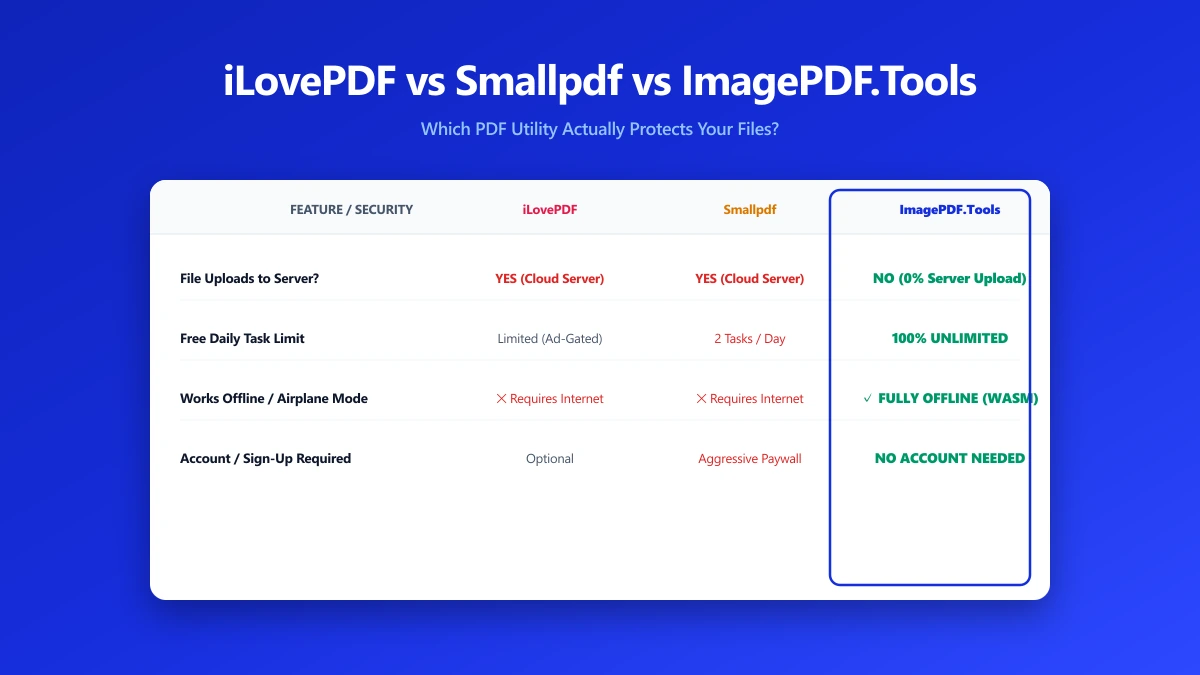
iLovePDF vs Smallpdf vs ImagePDF.Tools: Which One Actually Protects Your Files?
iLovePDF vs Smallpdf vs ImagePDF.Tools compared on price, watermarks, and what happens to your file. See why ImagePDF.Tools is the only one that never uploads it.
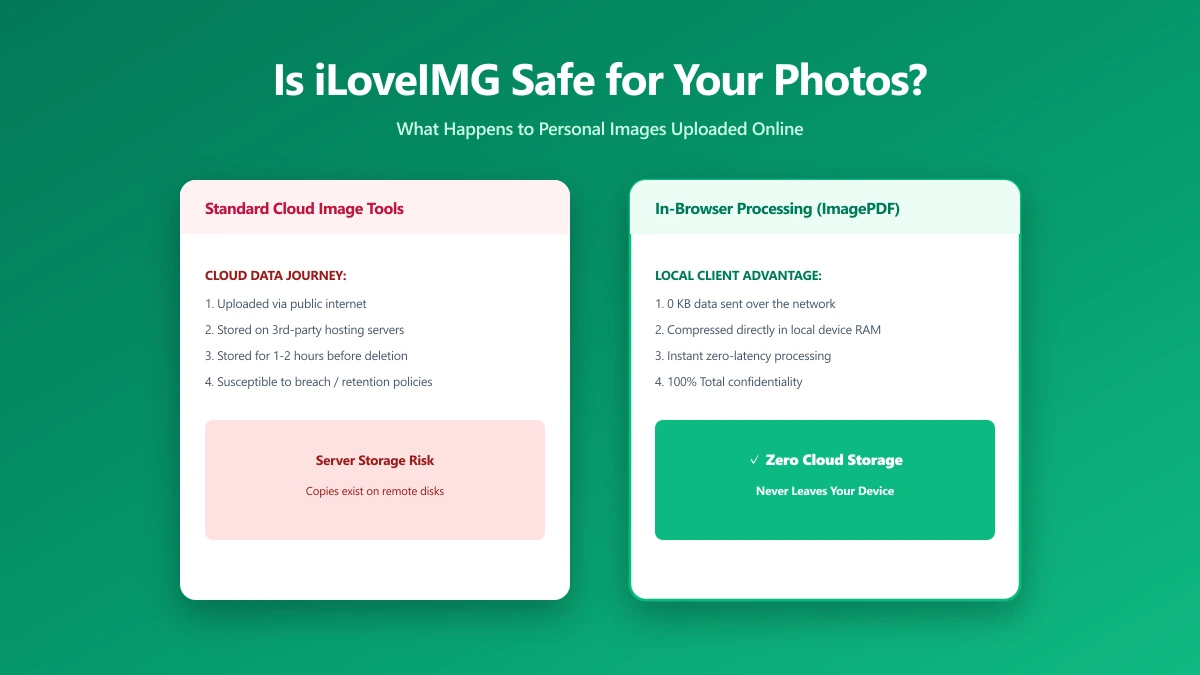
Is iLoveIMG Safe? What Actually Happens to Your Photos When You Upload Them
Is iLoveIMG safe to use? Here is exactly what happens when you upload a photo, what travels with it, and how to check any image tool yourself in 30 seconds.
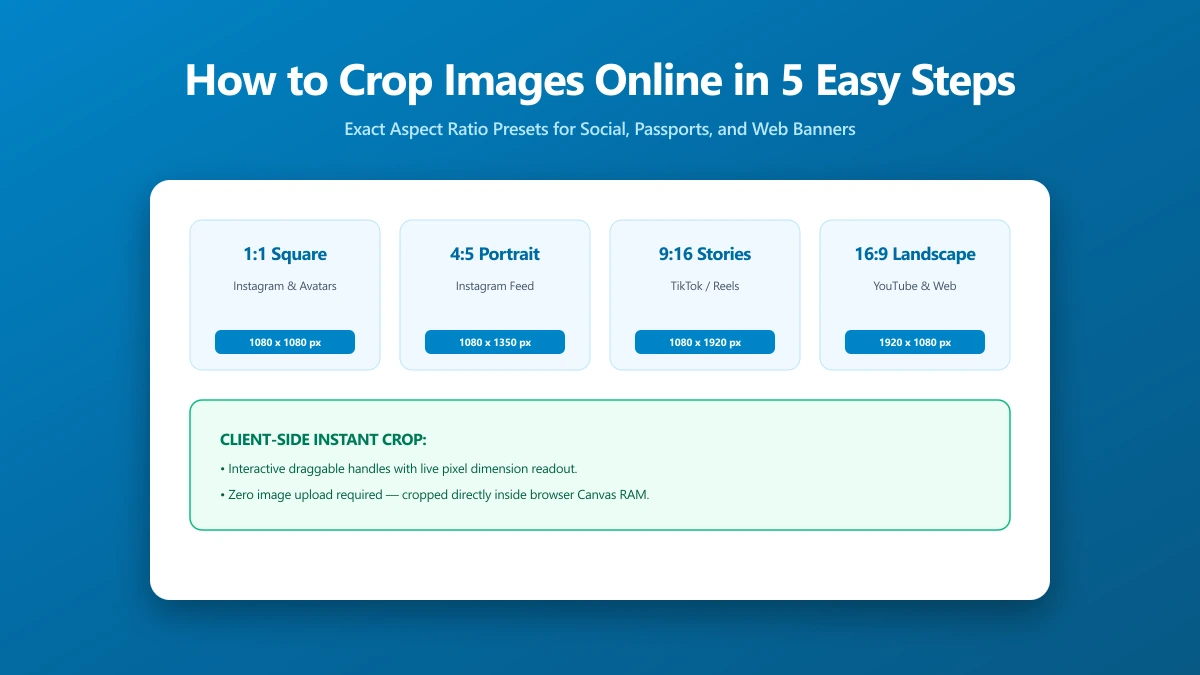
How to Crop Images Online in 5 Easy Steps
Cropping removes distracting edges, tightens composition, and sizes to exact social ratios. All in-browser, no upload, no sign-in, no software to install.
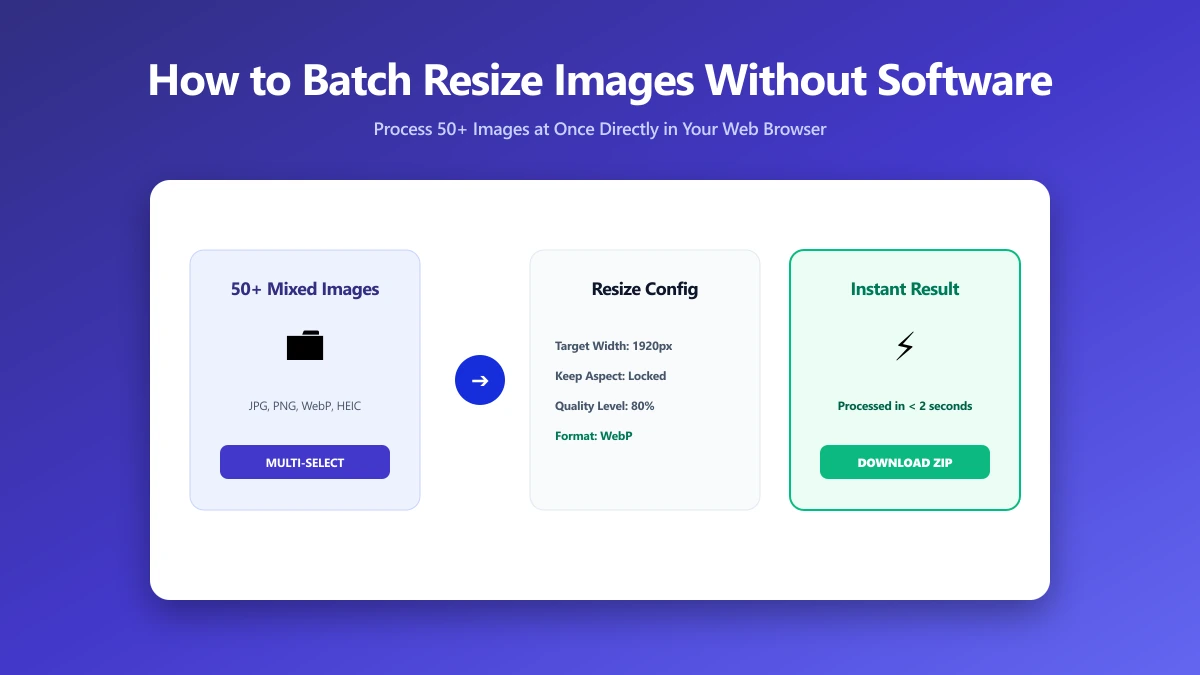
How to Batch Resize Images Without Installing Software
Resizing a folder of images to consistent dimensions fixes broken grids, speeds uploads, and keeps your CMS tidy, all in your browser, no software needed.
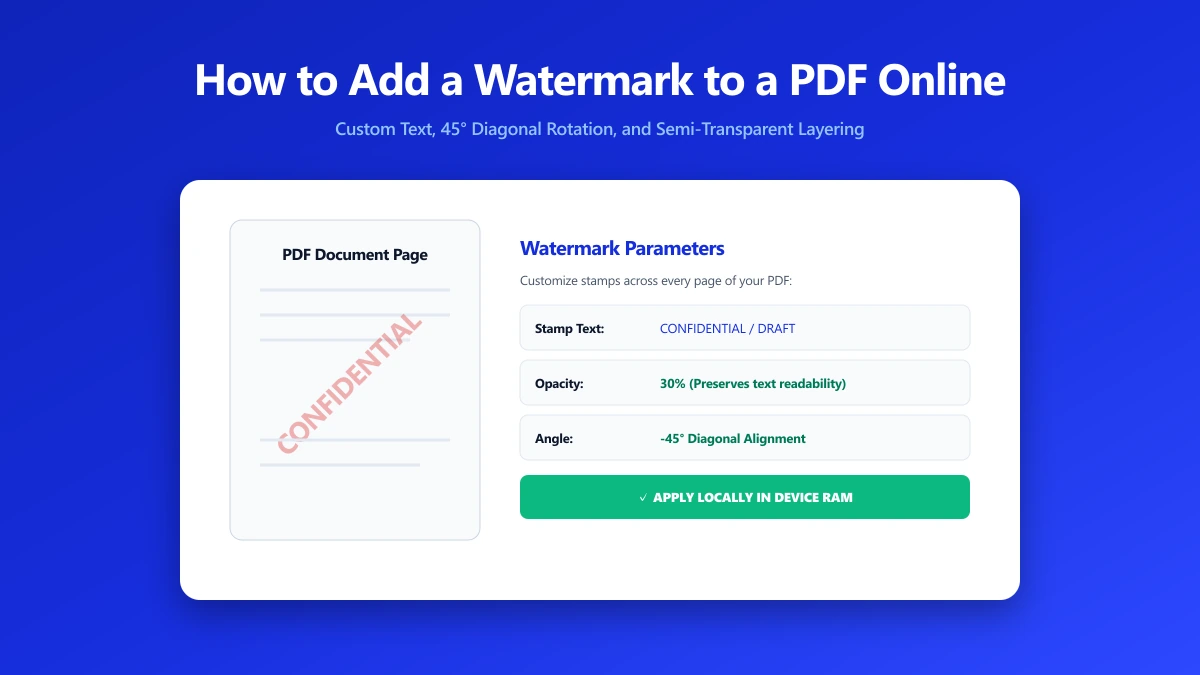
How to Add a Watermark to a PDF Online
A watermark marks status and establishes ownership on every PDF page. Add CONFIDENTIAL, DRAFT, or your company name in seconds, nothing leaves your browser.
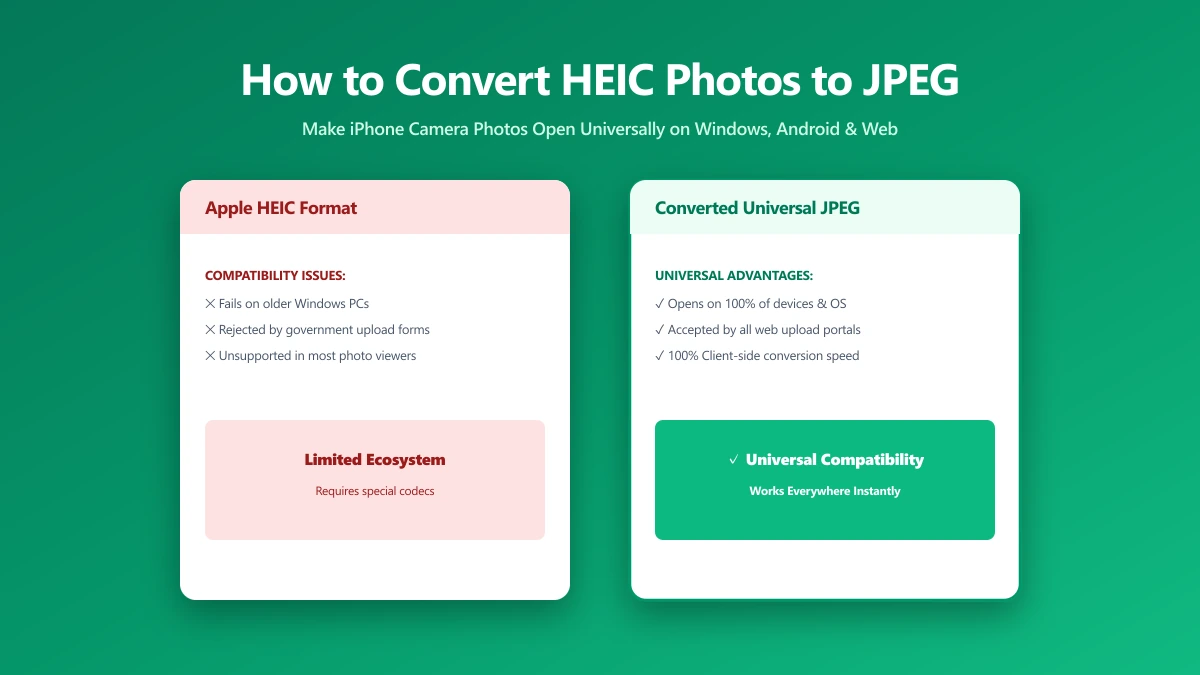
How to Convert HEIC Photos to JPEG (A Simple Guide)
iPhone HEIC photos won't open on Windows or most web platforms. Here is every way to convert HEIC to universally compatible JPEG, and the iPhone setting that avoids it.
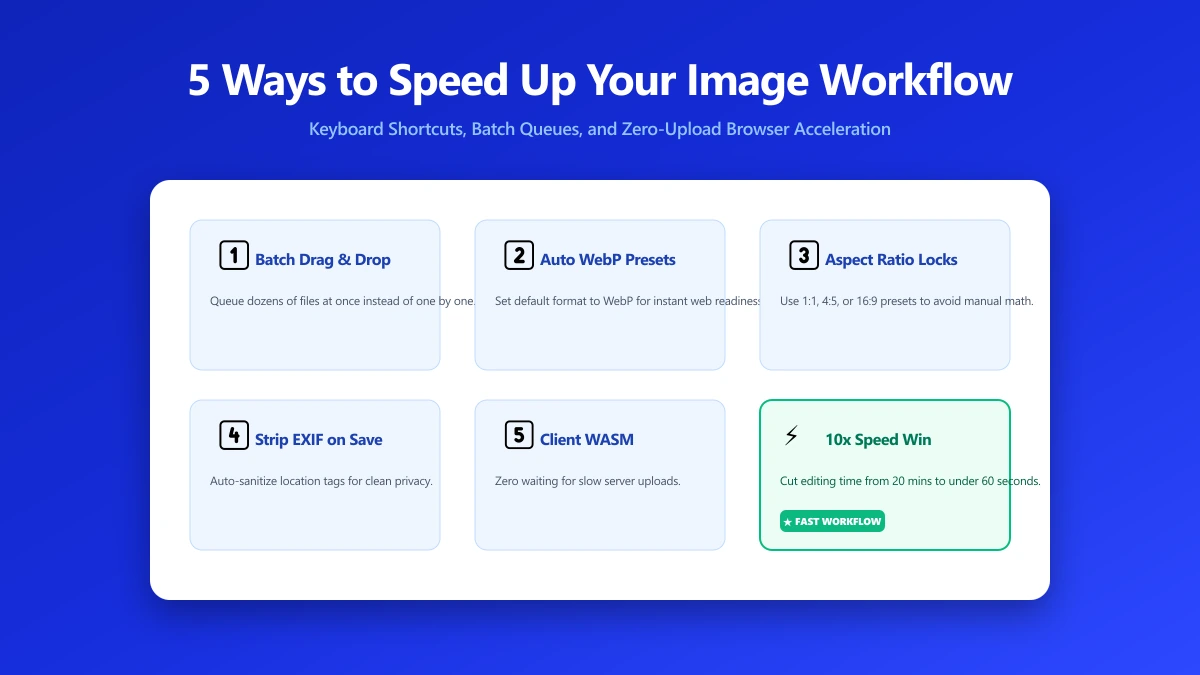
5 Ways to Speed Up Your Image Editing Workflow
Resize, compress, convert, and strip metadata, image prep compounds across a project. Five habits that cut this mechanical work from hours to seconds.
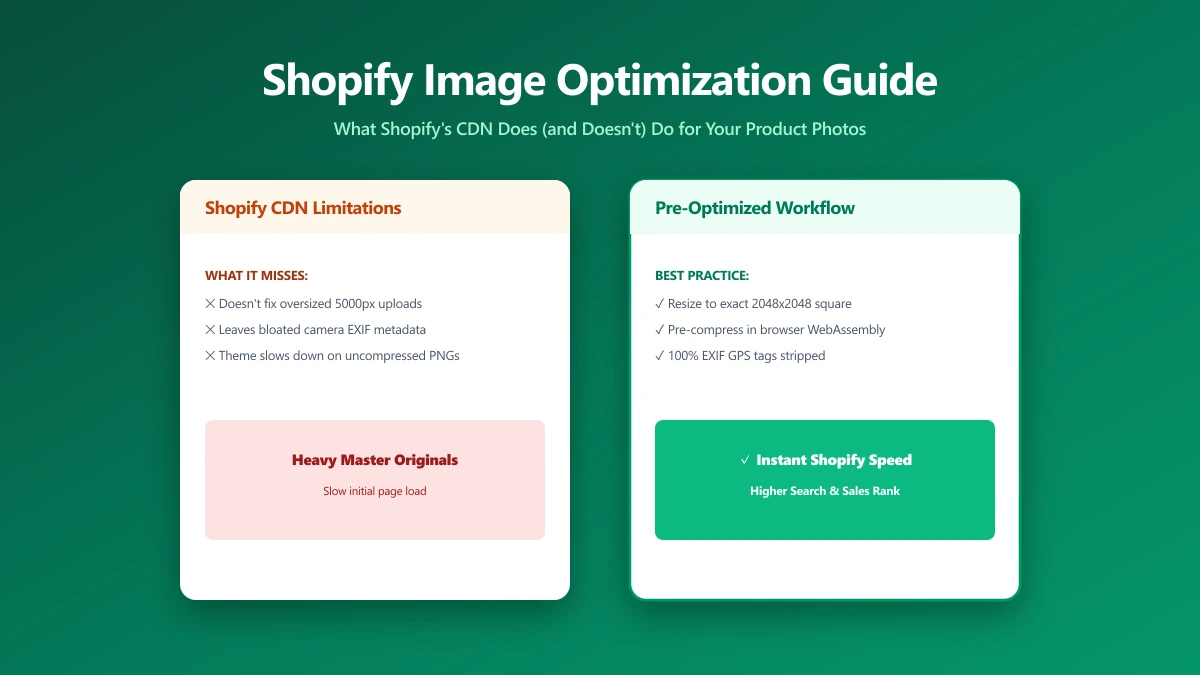
Shopify Image Optimization: What the Platform Does (and Doesn't Do) For You
Shopify serves WebP and has a CDN, but it won't resize a 14 MB banner or fix your LCP. Here's the checklist that actually moves your PageSpeed score.
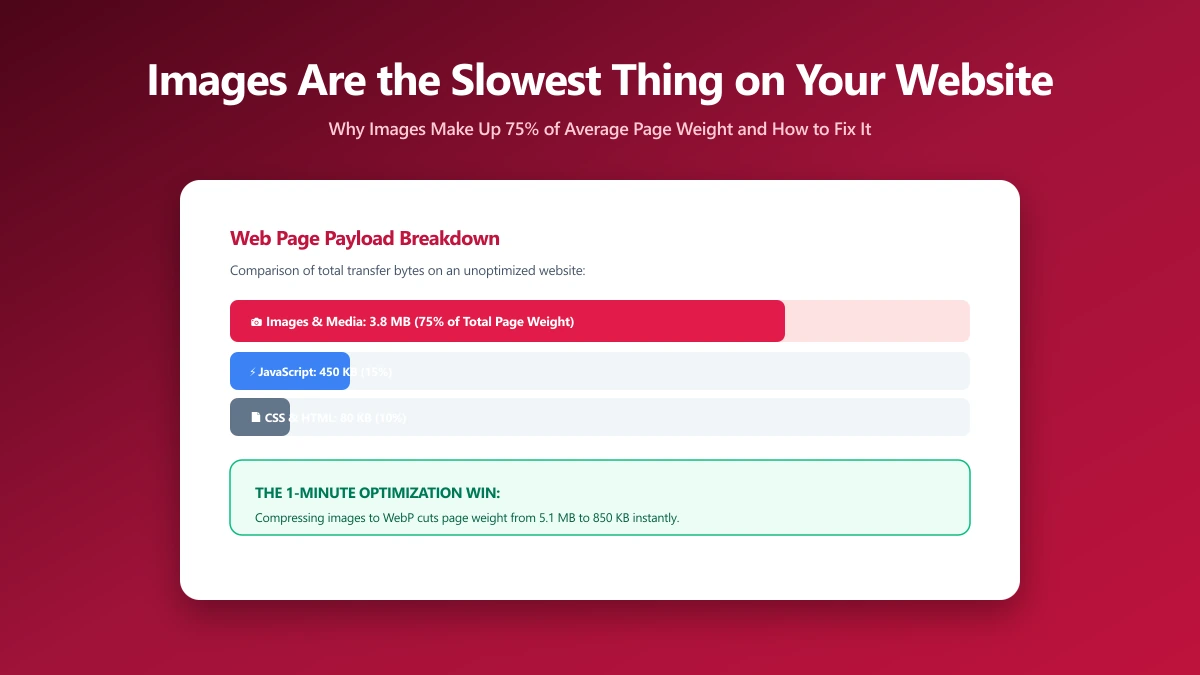
Your Images Are Probably the Slowest Thing on Your Website
Developers check JS first when pages are slow. Images are almost always the real bottleneck. Five DevTools steps identify exactly which images to fix.
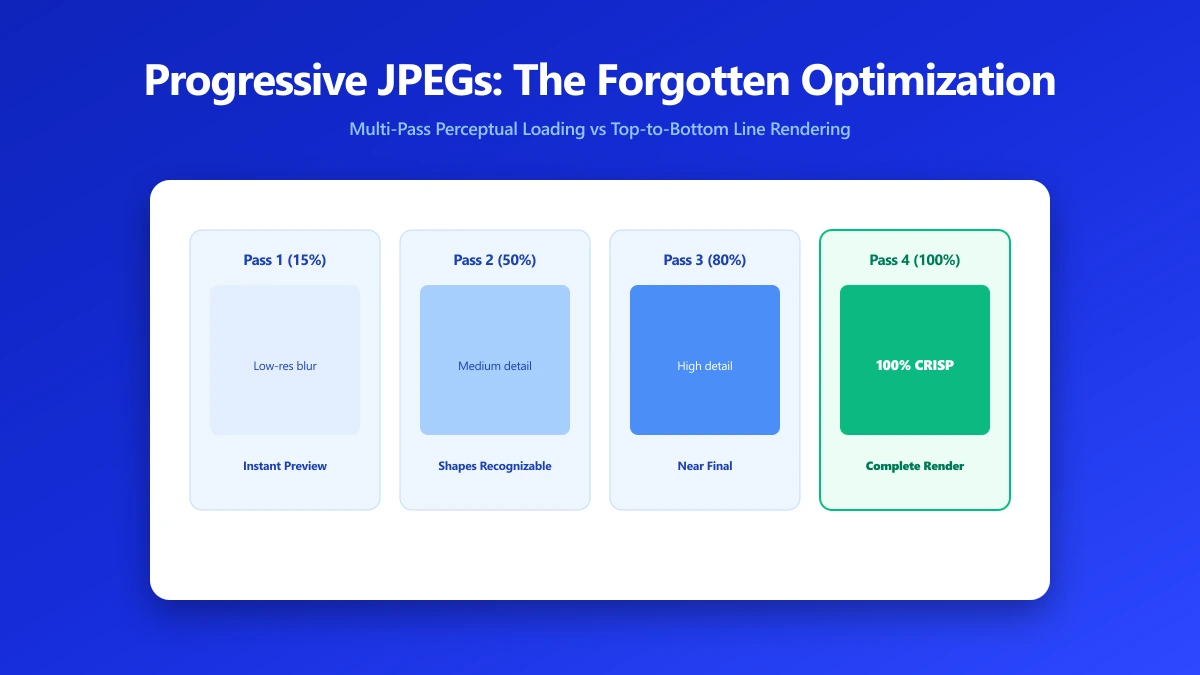
Progressive JPEGs: The Forgotten Optimization That Still Matters
Progressive JPEGs show a full-image blurry preview instantly, then sharpen. They're 2–8% smaller than baseline and make images feel faster. Here's how to use them.
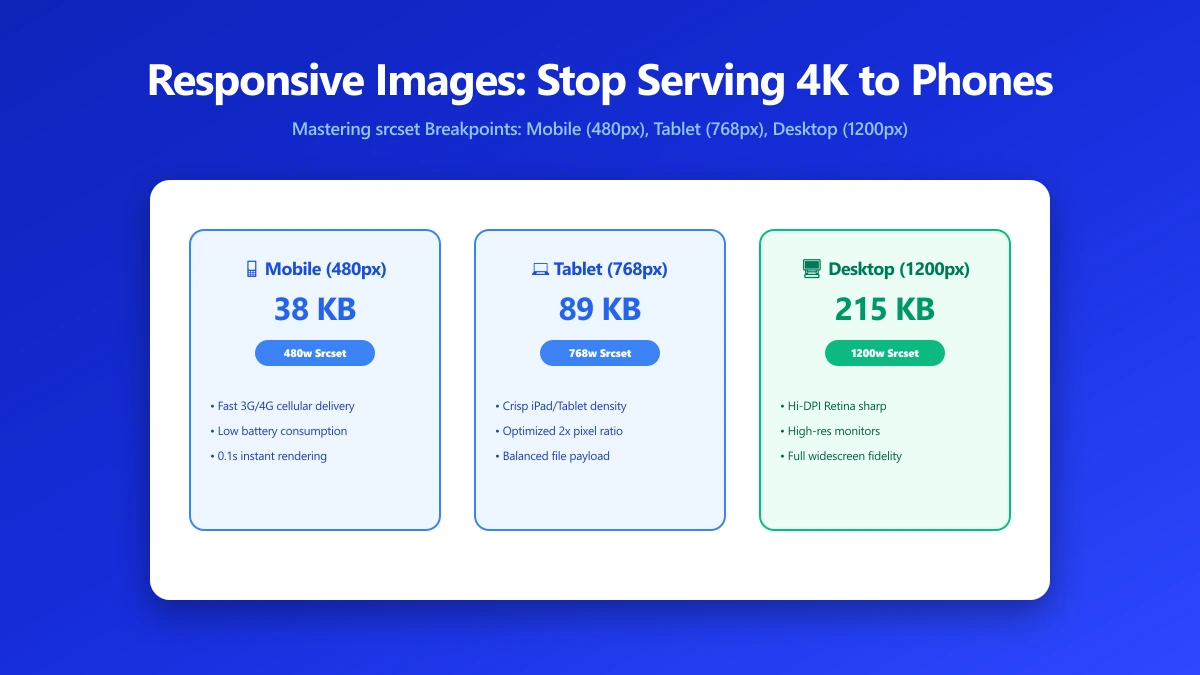
Responsive Images: Stop Serving Desktop Photos to Phone Screens
Serving a 2 MB desktop photo to every mobile screen wastes 95% of bandwidth. Add srcset, sizes, and picture in minutes to cut mobile load time in half.
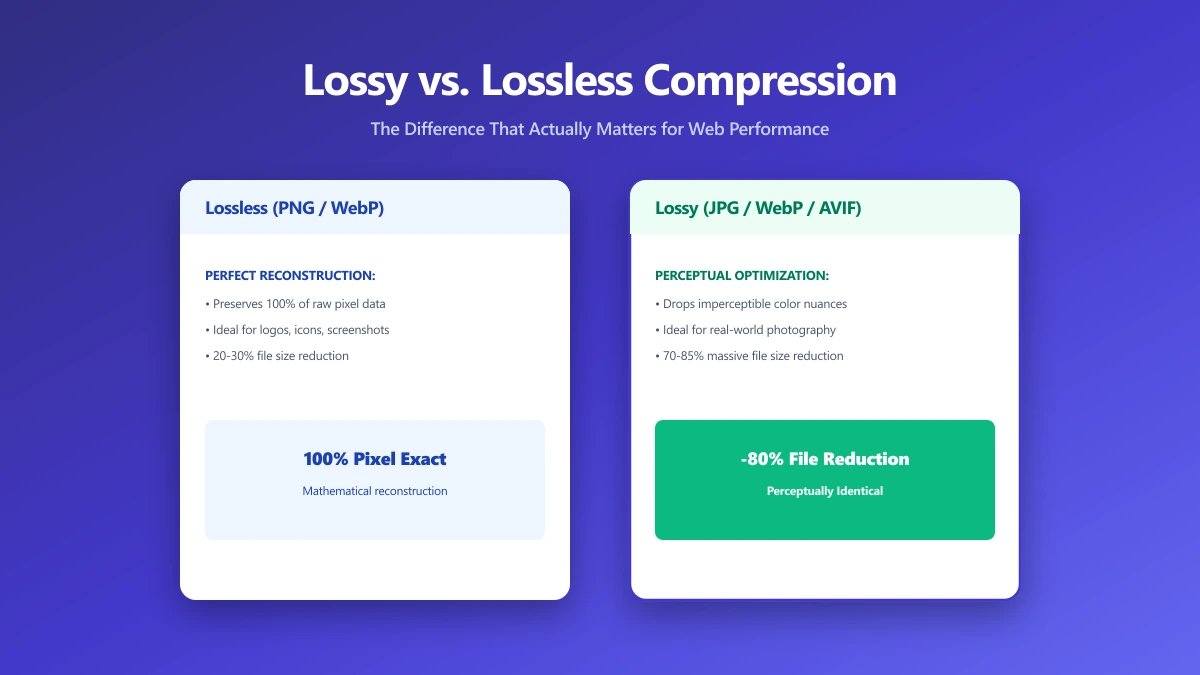
Lossy vs. Lossless Compression: The Difference That Actually Matters
Lossy trades quality for size; lossless trades size for perfect fidelity. Pick the wrong one and you're wasting bandwidth or permanently degrading your assets.
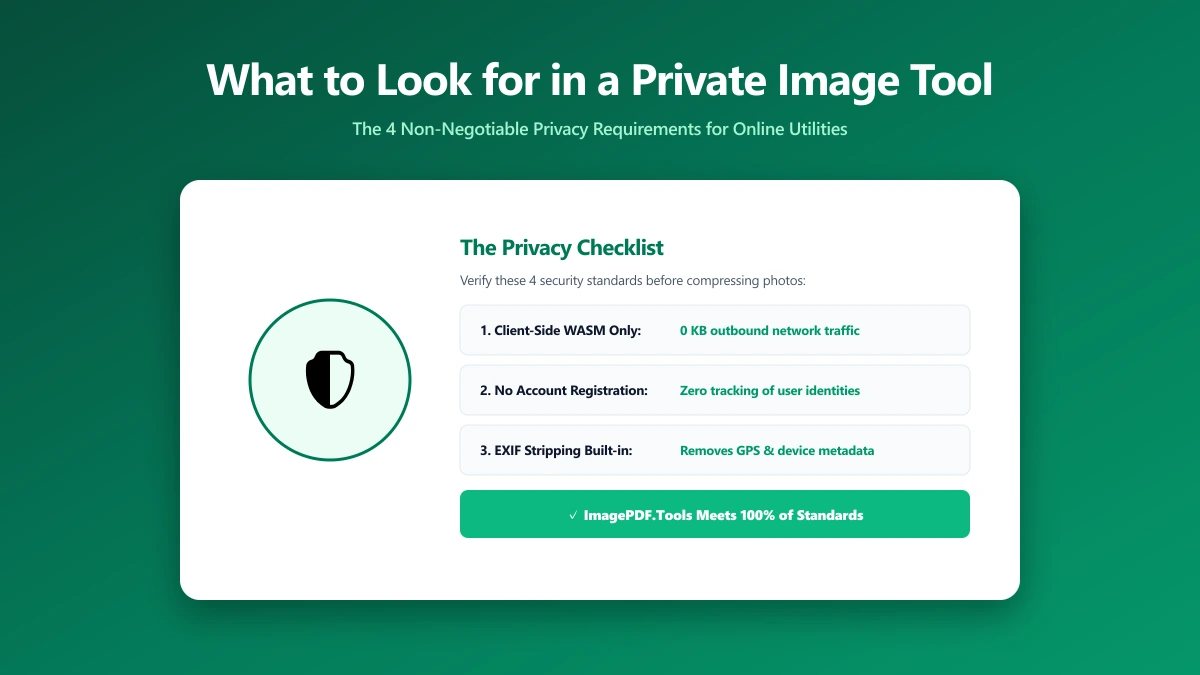
What to Look for in a Private Image Compression Tool
Most "free" online image tools upload your files to their servers. Here's how to verify in 30 seconds whether a tool is genuinely private and client-side.
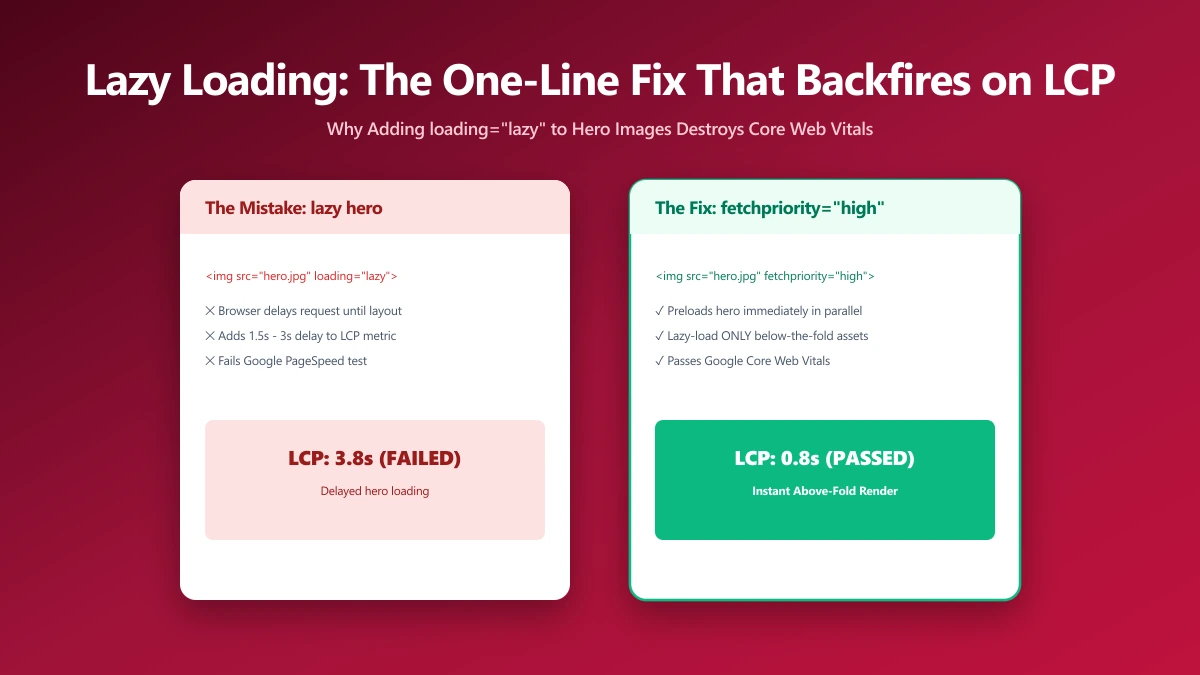
Lazy Loading Images: The One-Line Fix That Backfires on LCP
loading="lazy" on your hero image is one of the most common LCP killers. Here's exactly why it happens, how to find it, and how to fix the damage.
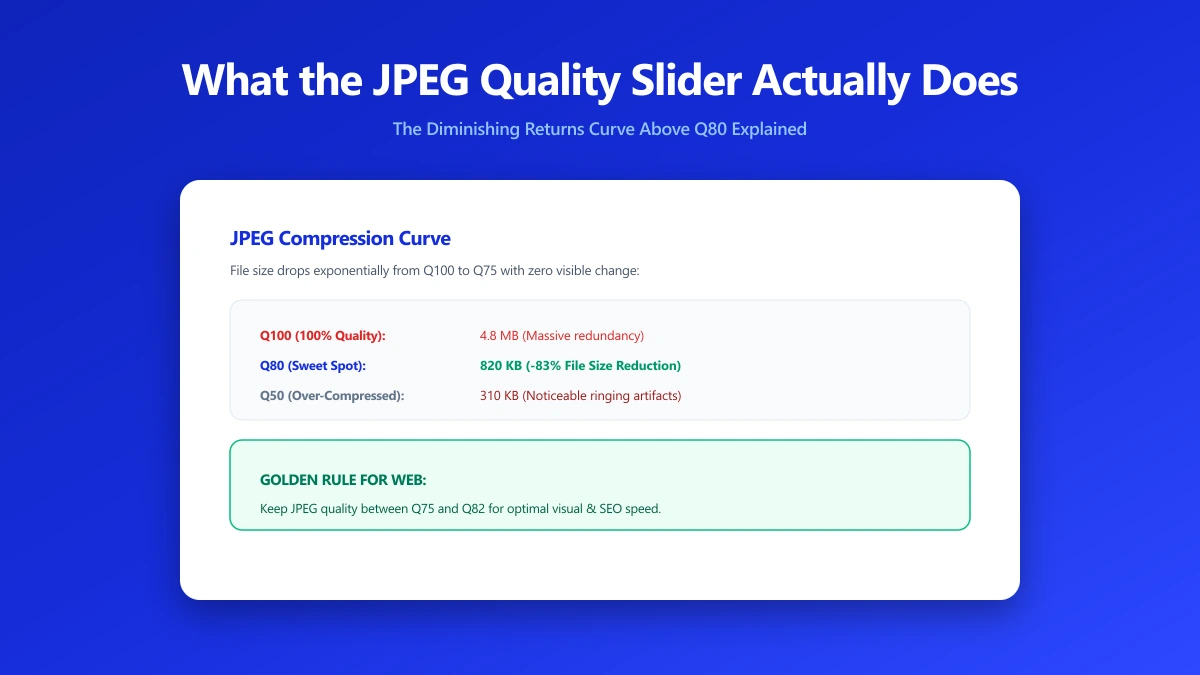
What the JPEG Quality Slider Actually Does (It's Not What You Think)
Quality 80 is not "80% of the original". It's a quantisation table scalar. Here's how the DCT-based encoding actually works and what settings to use.
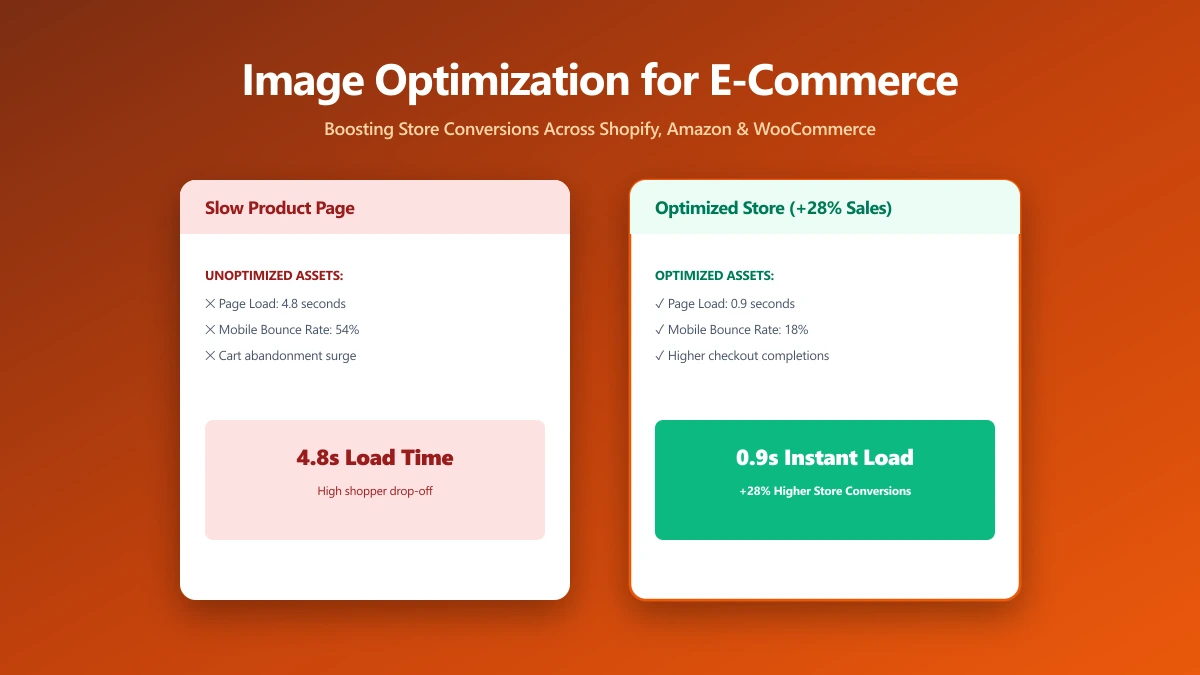
Image Optimization for E-Commerce: The Multi-Platform Reality
Product images on Shopify, WooCommerce, Amazon, and Etsy all have different requirements. Compress once, deploy everywhere without quality loss.
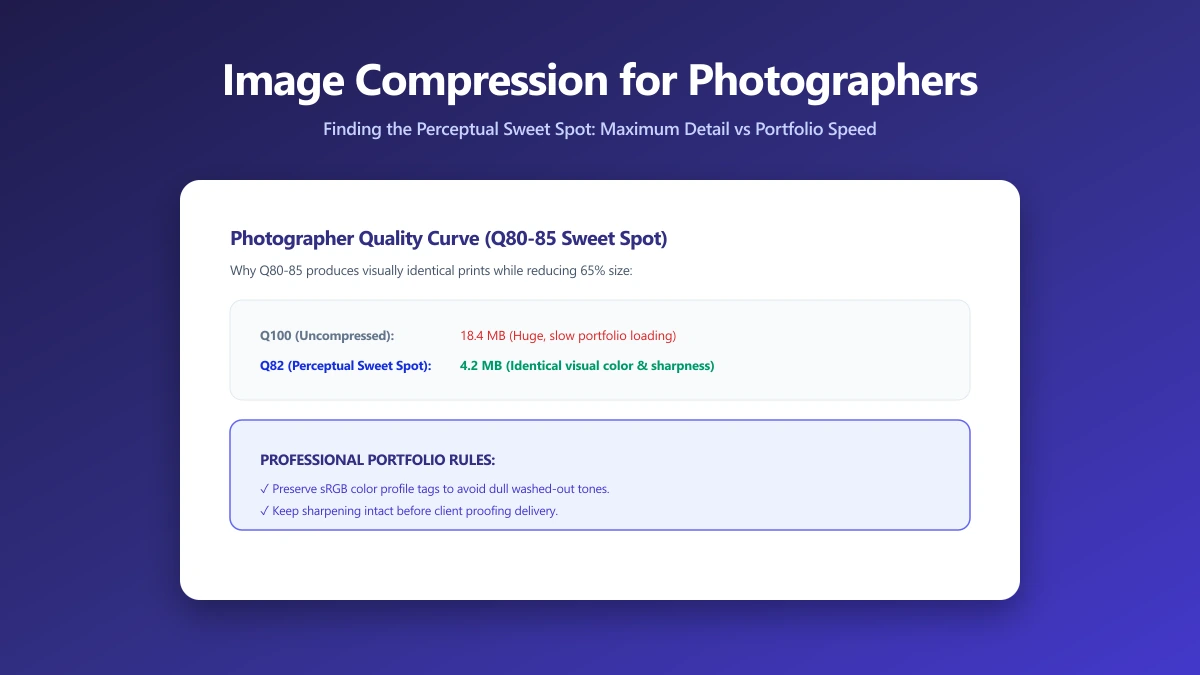
Image Compression for Photographers: A Guide for People Who Actually Care About Quality
JPEG quality, colour profiles, generation loss, WebP for portfolios, the complete export guide for photographers who care about colour accuracy and fine detail.
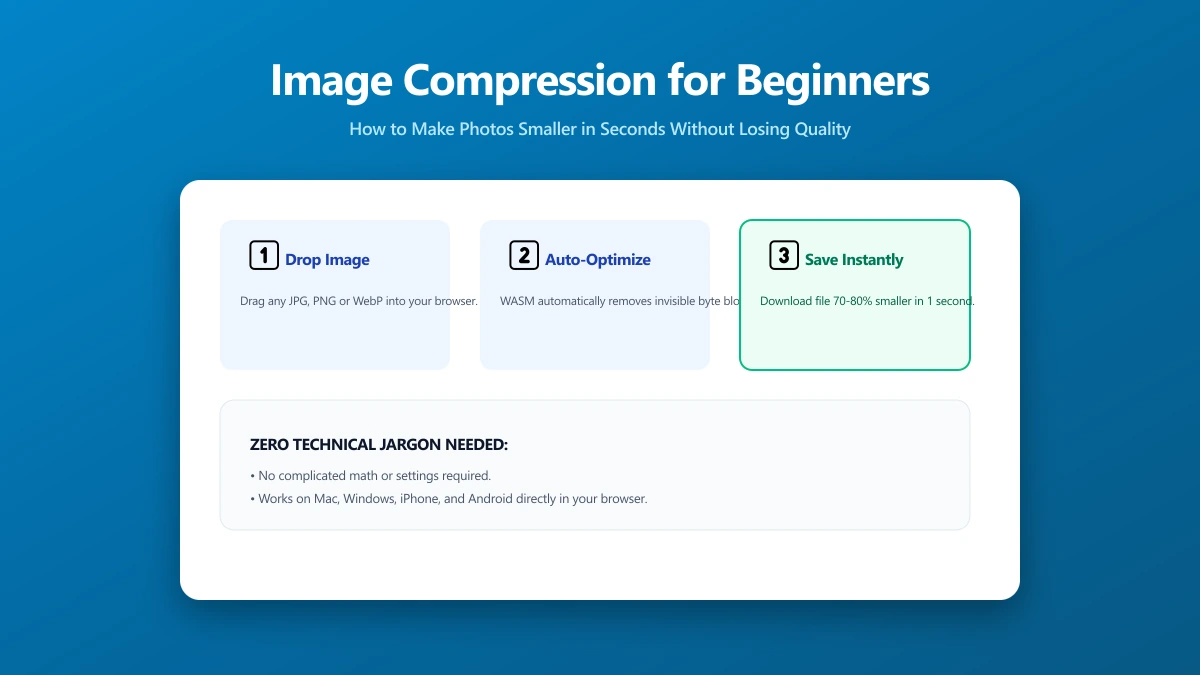
Image Compression for People Who Just Want Smaller Photos
No technical jargon. Make your photos smaller so they send faster, upload without errors, and stop clogging your device. Free browser tool, nothing to install.
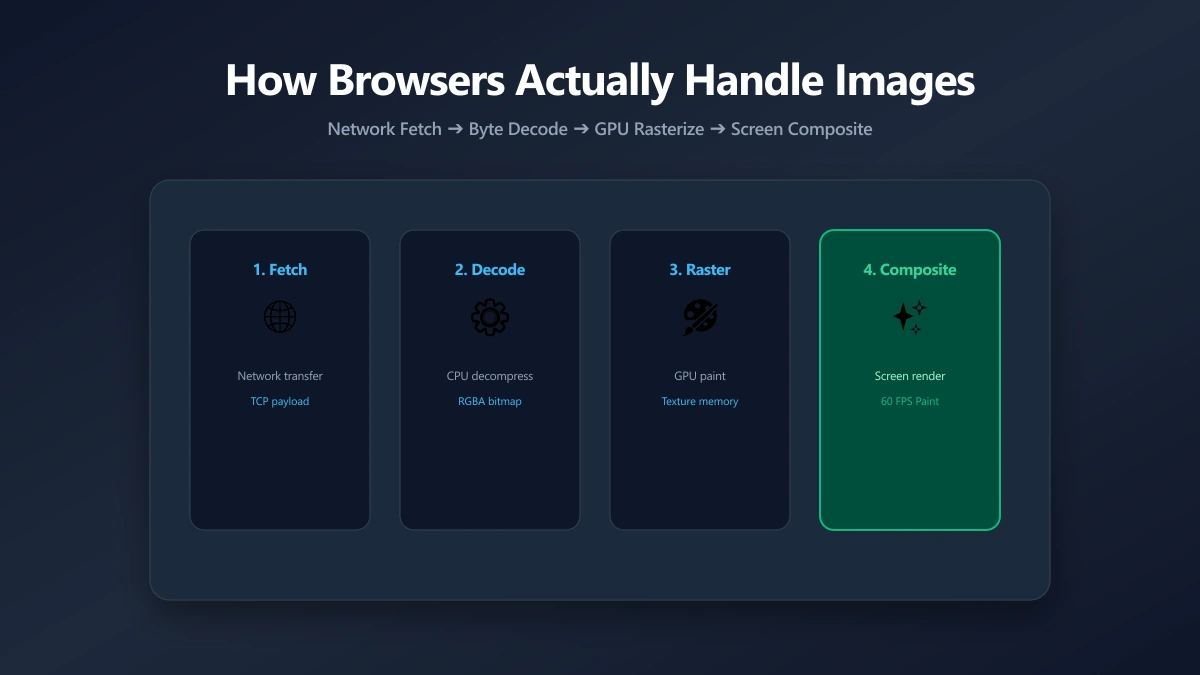
How Browsers Actually Handle Your Images
File size is half the story. After bytes arrive, browsers decode and composite images in ways that affect memory and rendering. Here's what actually happens.
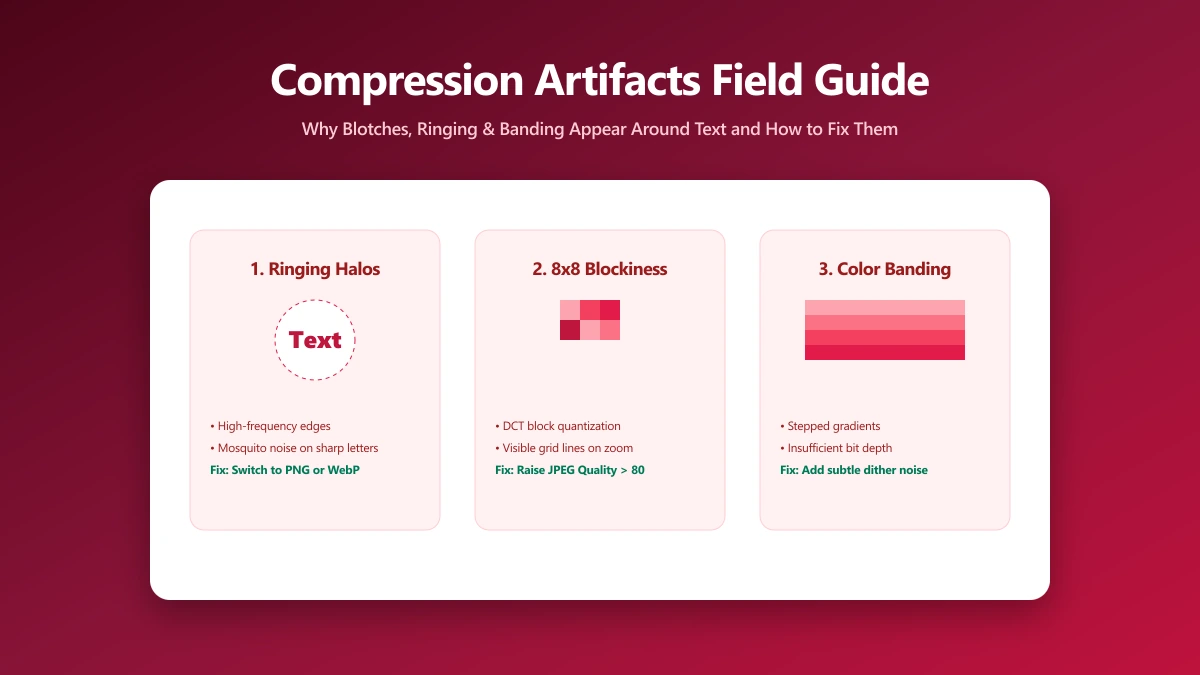
Those Weird Blotches Around Text: A Field Guide to Compression Artifacts
Blotchy gradients, halos around text, pixelated blocks, compression artifacts have specific names and causes. Learn what triggers each one and how to avoid them.
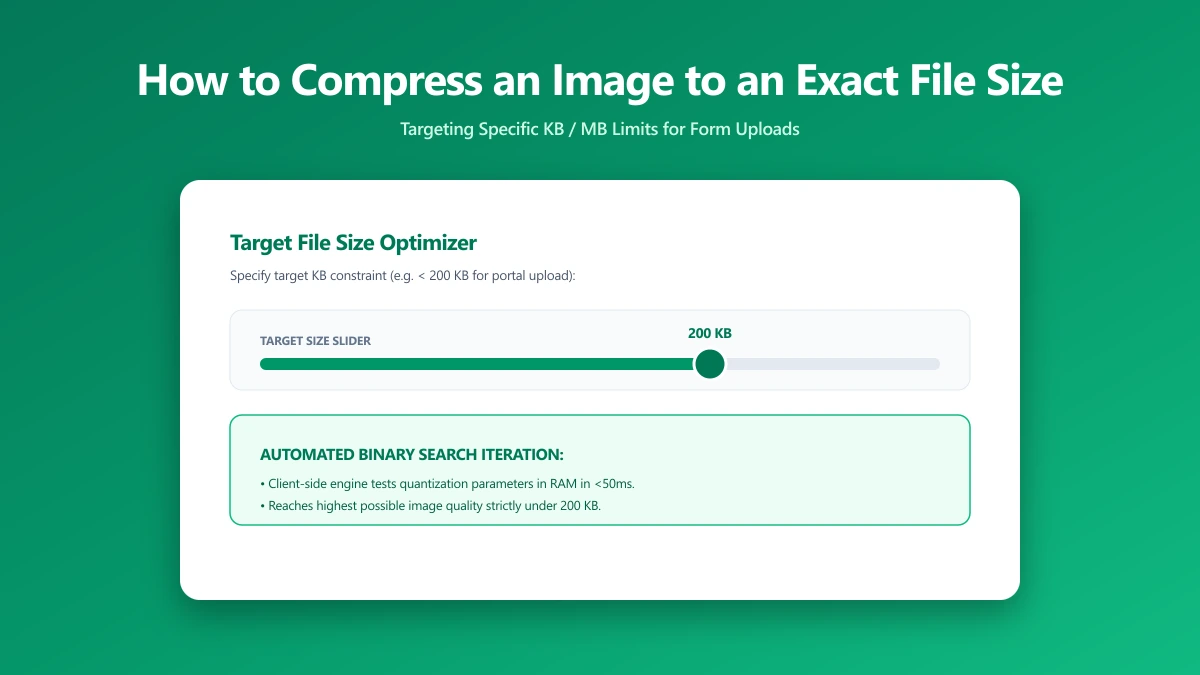
How to Compress an Image to an Exact File Size, And Why It's Harder Than You Think
Need a photo under 200 KB or 1 MB? Learn the binary search method for hitting exact file size targets every time. Free browser tool included.
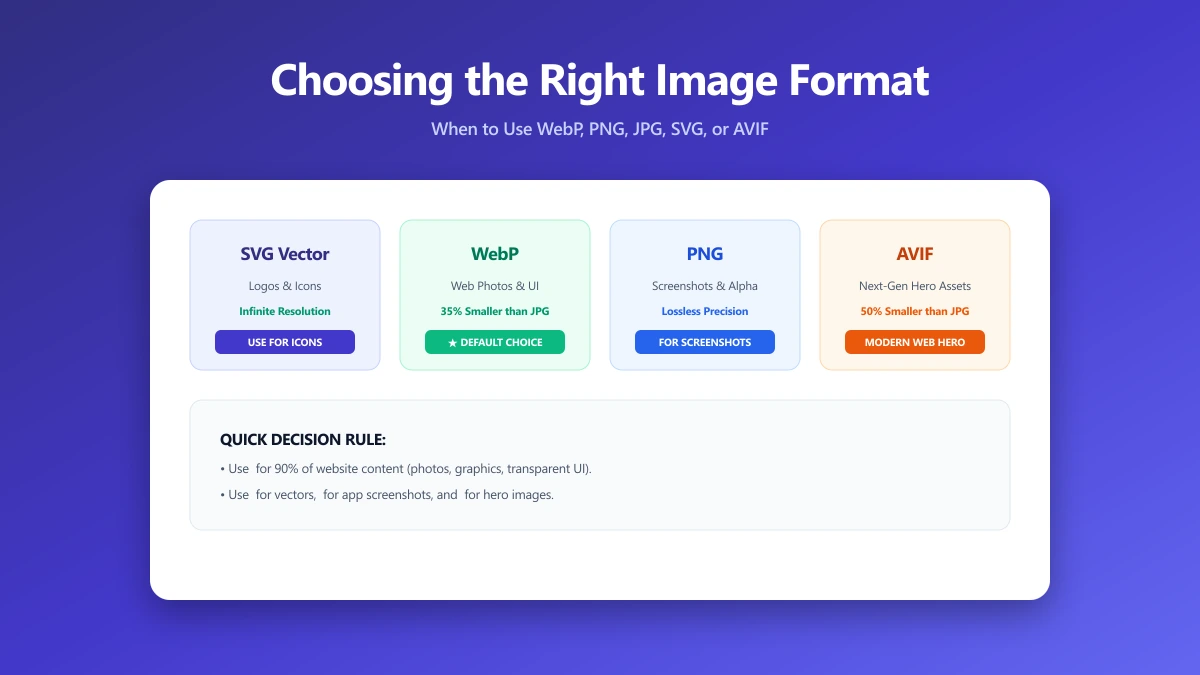
Choosing the Right Image Format: A Practical Guide From the Compression Side
JPEG, PNG, WebP, or AVIF? This practical guide explains every format's compression model so you pick the right one every time. Free converter included.
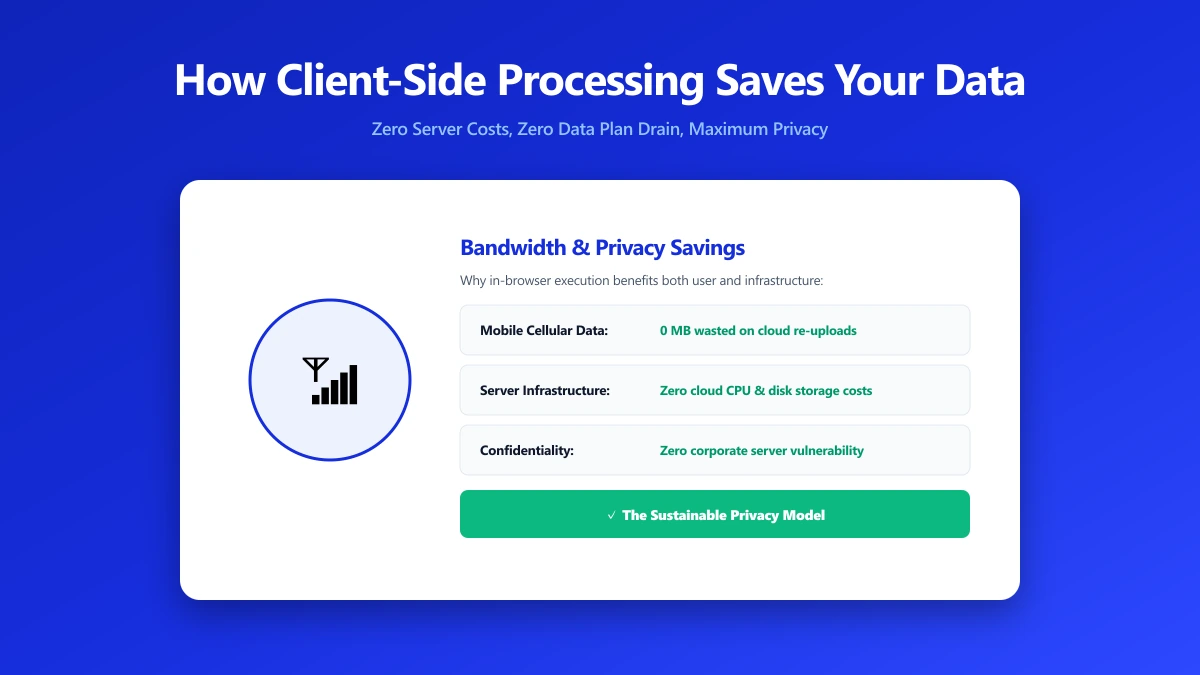
How Client-Side Processing Saves Your Data (And Our Server Costs)
When a browser tool processes your files locally, your data never leaves your device. A transparent look at the privacy, business, and engineering case for client-side processing.
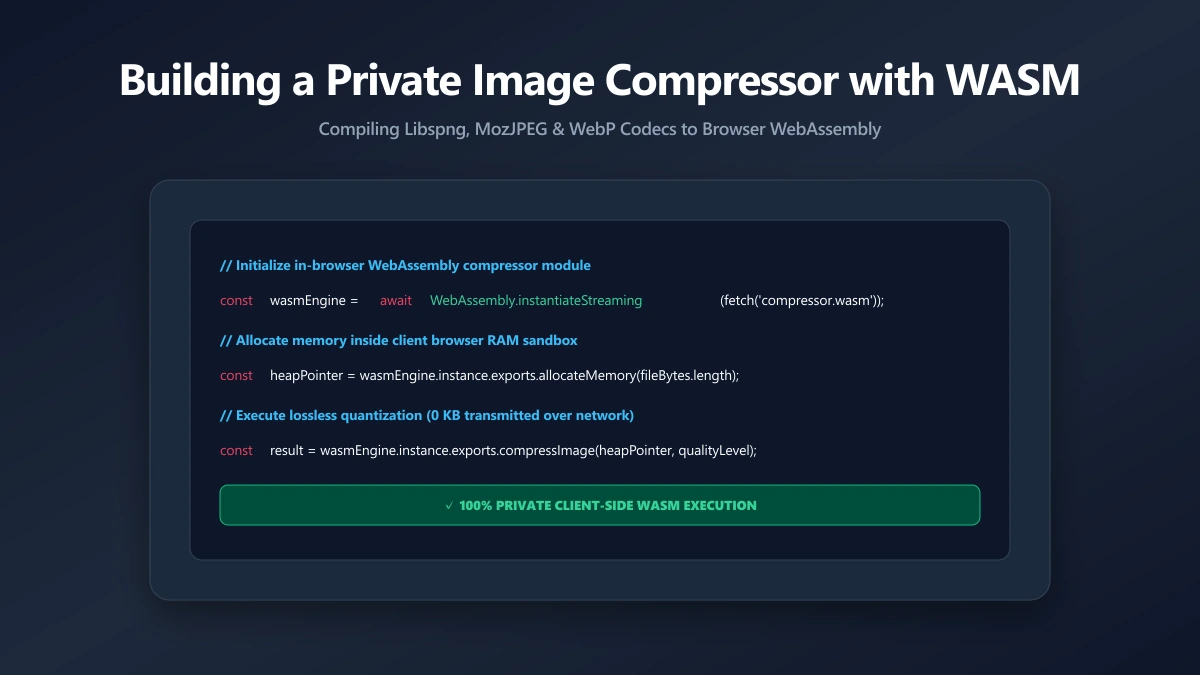
Building a Private Image Compressor with WebAssembly
How ImagePDF.Tools uses UPNG.js, MozJPEG and libwebp compiled to WebAssembly, and Web Workers to compress images entirely in the browser, zero server uploads, full privacy.
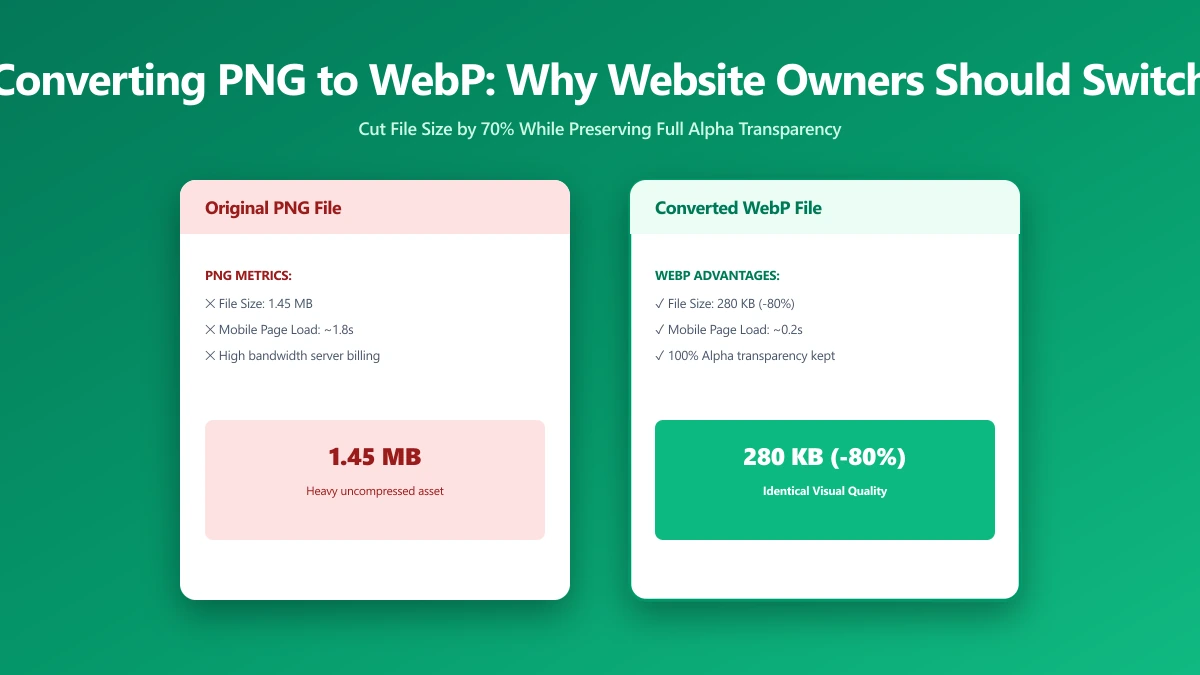
Converting PNG to WebP: Why Every Website Owner Should Do It
PNG files are 2–5× larger than WebP at equivalent quality. Learn when to switch, when to keep PNG, and how to migrate your entire image library in minutes.
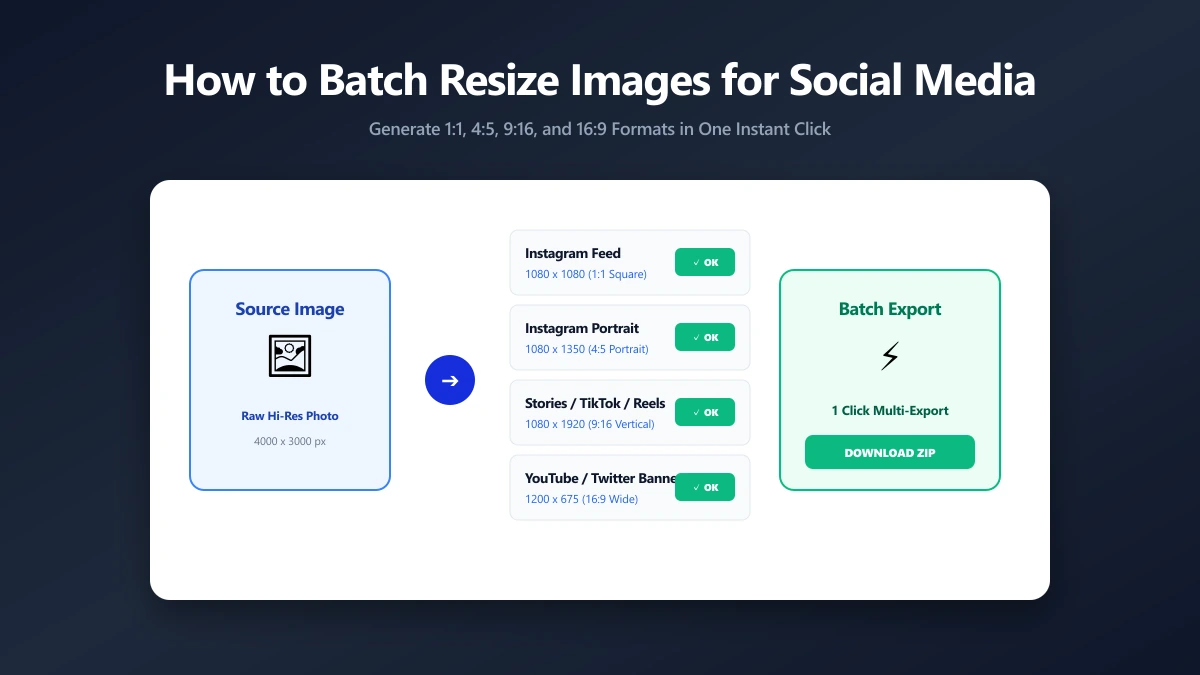
How to Batch Resize Images for Social Media Quickly
The complete 2026 guide to image dimensions for Instagram, X, LinkedIn, TikTok, YouTube, and more, plus batch resizing methods without quality loss.
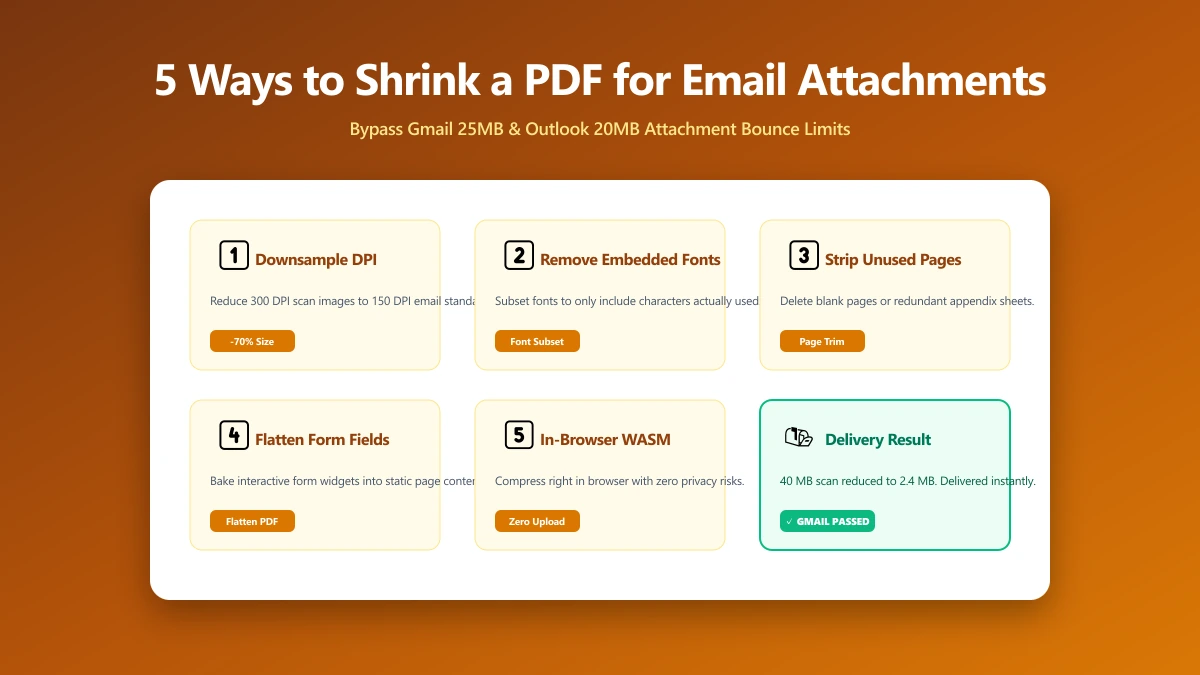
5 Ways to Shrink a PDF for Email Attachments
Gmail caps at 25 MB, Outlook at 20 MB, corporate servers often at 10 MB. Five proven techniques to get any PDF under the limit, from browser tools to CLI.
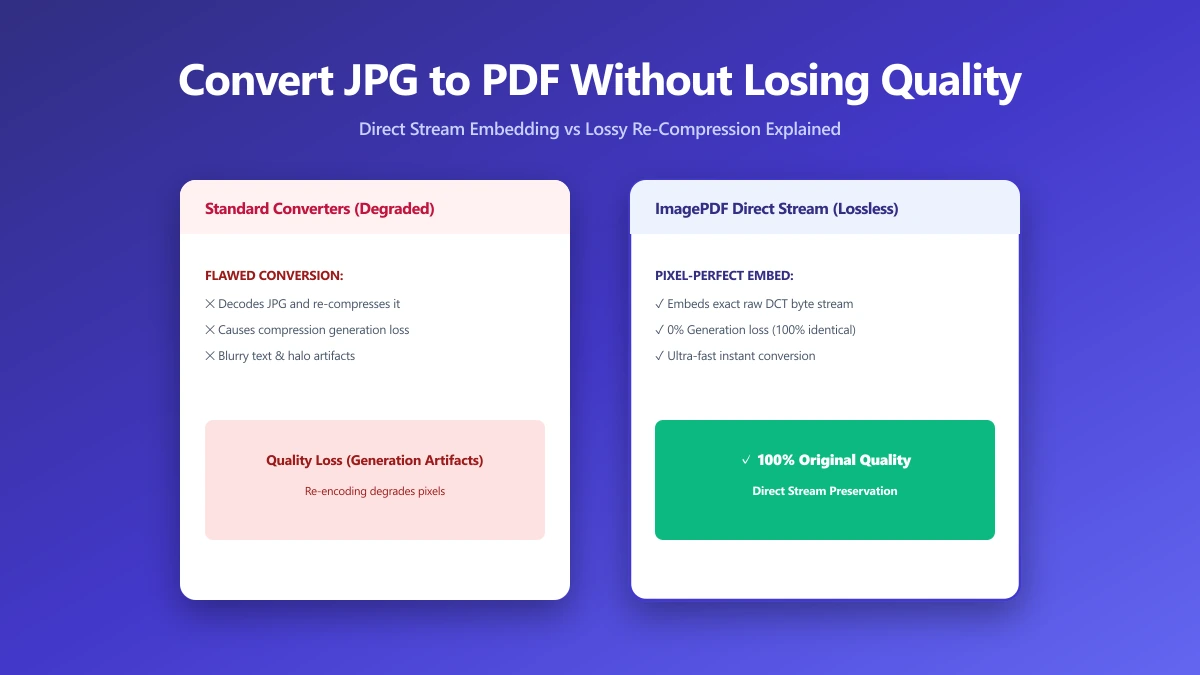
How to Convert JPG to PDF Without Losing Quality
Most JPG-to-PDF tools silently recompress your image, destroying quality. Learn the correct method that embeds JPEG data without re-encoding, zero quality loss.
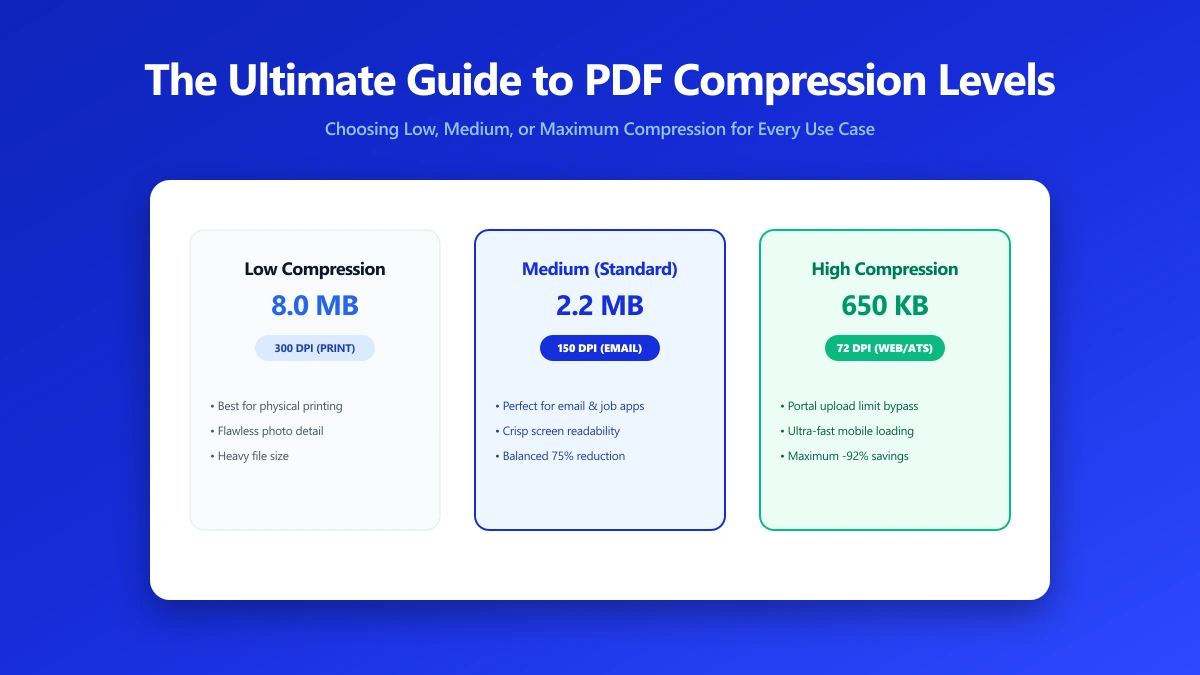
The Ultimate Guide to PDF Compression Levels
Screen, eBook, Printer, Prepress, what these PDF compression presets actually do, which to use for email vs print, and how to shrink any PDF without ruining quality.
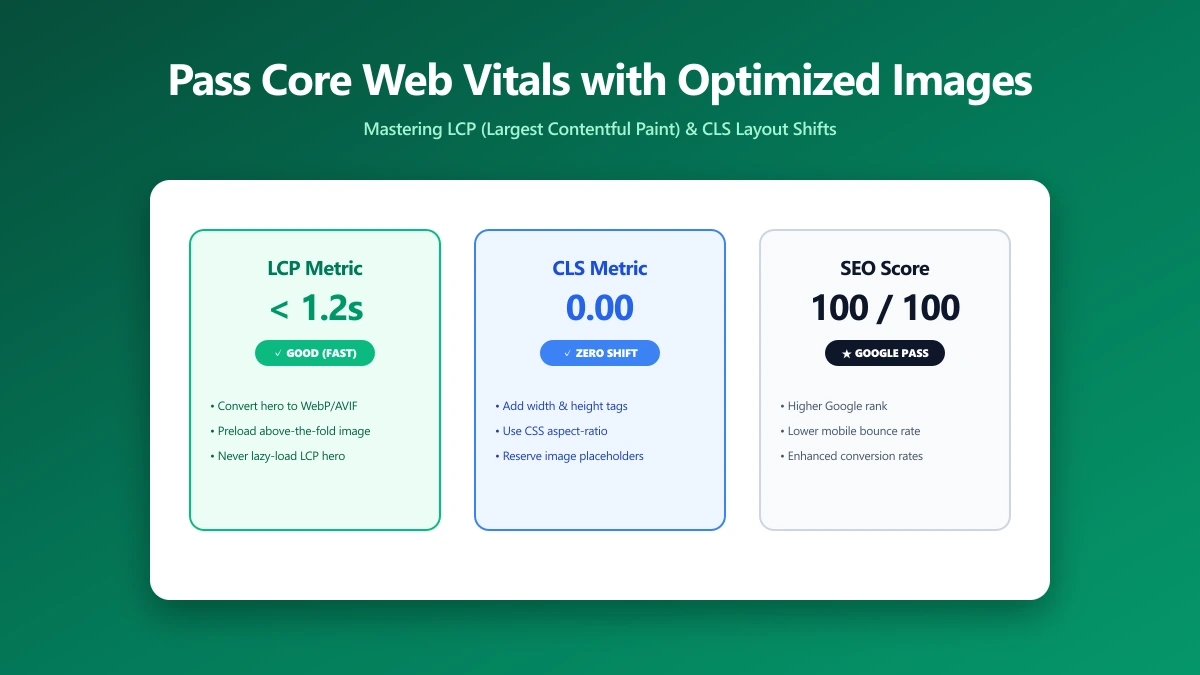
How to Pass Core Web Vitals with Optimized Images
Images cause 70% of LCP failures. This step-by-step guide diagnoses and fixes image-related Core Web Vitals issues to improve your Google ranking.
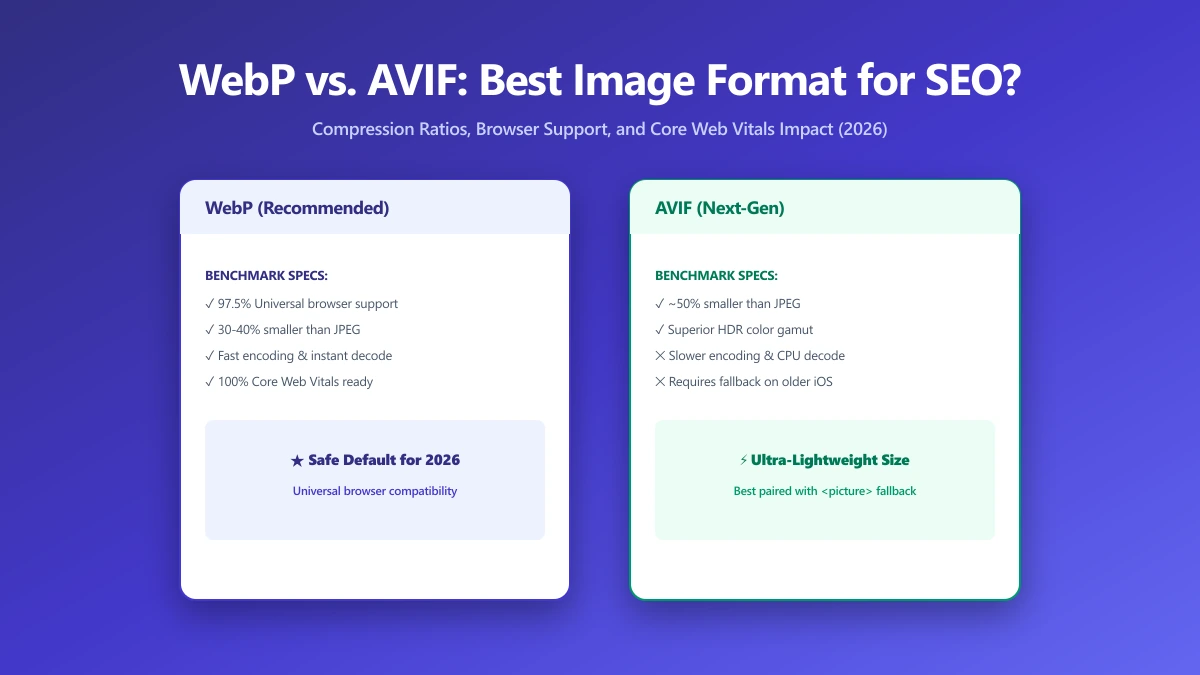
WebP vs. AVIF: Which Image Format Is Best for SEO in 2026?
AVIF compresses smaller than WebP but encodes 10× slower. Find out which format wins for LCP, CDN support, and real-world SEO in this 2026 comparison.
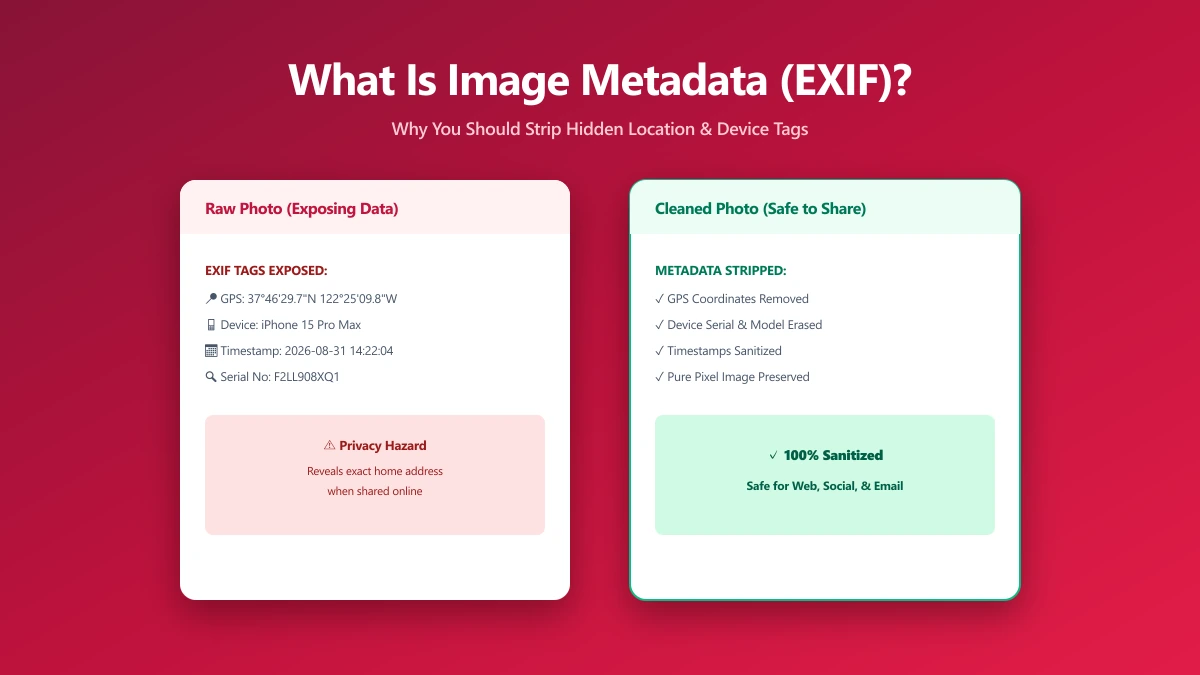
What Is Image Metadata? (And Why You Should Remove It Before Sharing)
Every JPEG you share embeds hidden EXIF data, GPS location, device model, timestamp. Learn what image metadata reveals and how to strip it in seconds.
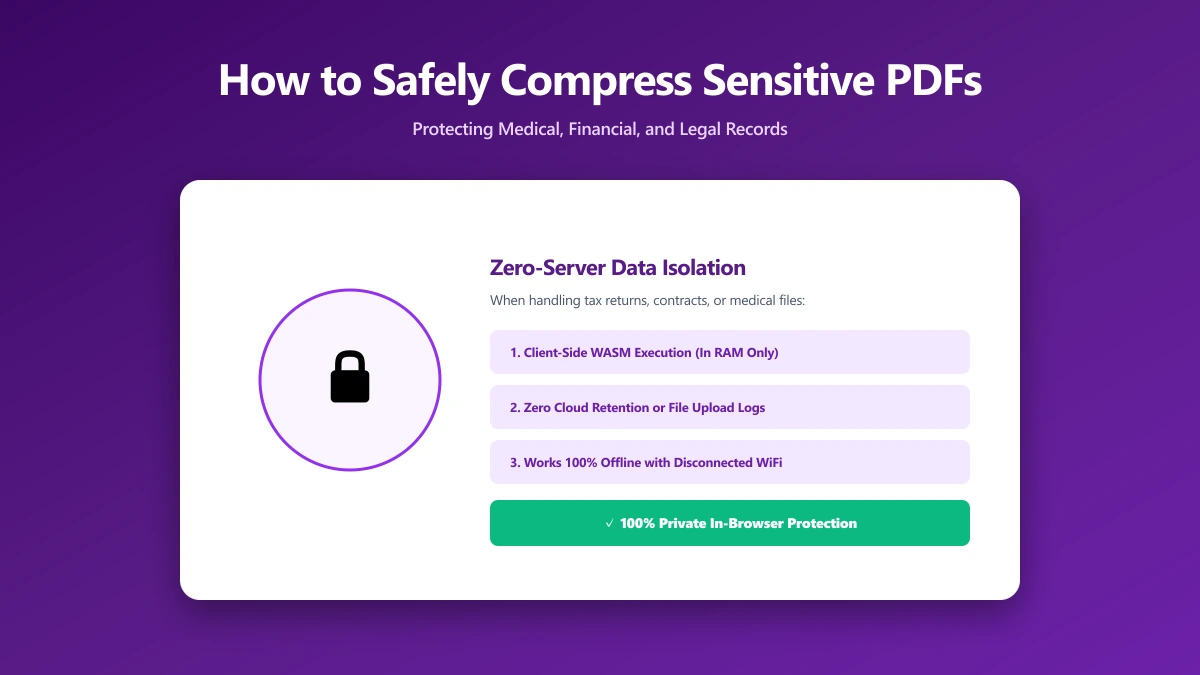
How to Safely Compress Sensitive PDF Documents
Compress sensitive PDFs, bank statements, contracts, medical records, without uploading them. Learn how to shrink them safely, right in your browser.
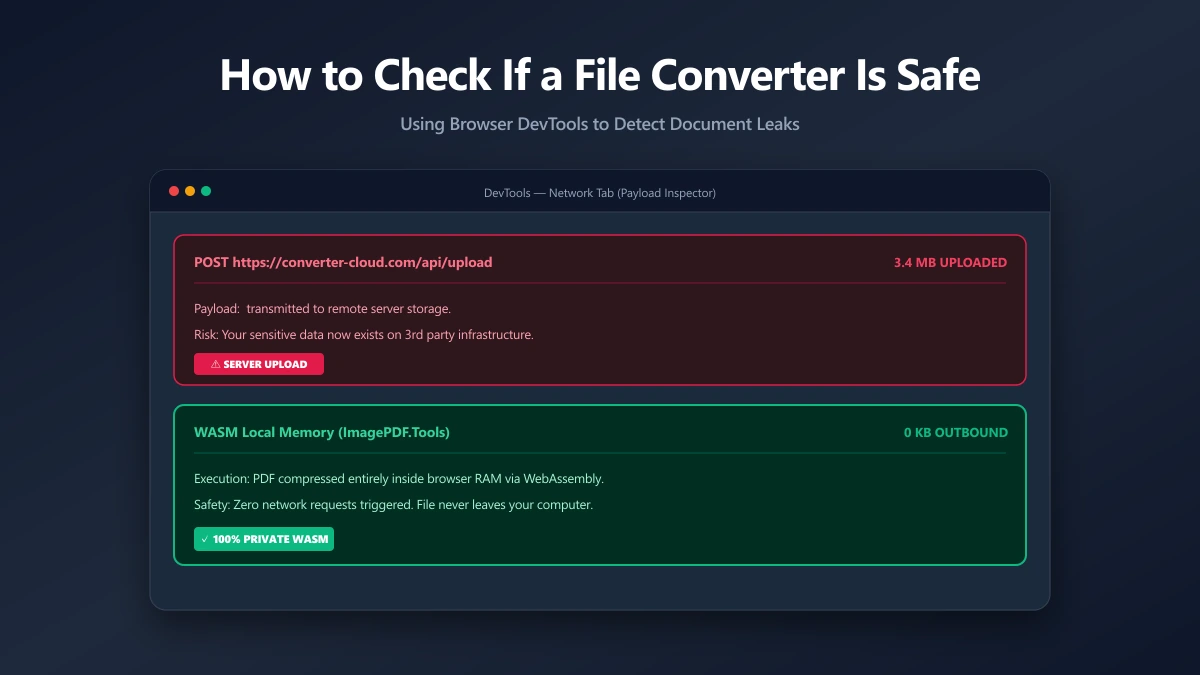
How to Check If an Online File Converter Is Safe
Are online file converters safe? Many upload your files to a server. Learn to spot the risk, verify in-browser processing, and pick a private tool.